 Back
BackChapter 1: Chemistry in Our Lives – Foundations and Skills
Study Guide - Smart Notes
 Tailored notes based on your materials, expanded with key definitions, examples, and context.
Chemistry in Our Lives
Introduction to Chemistry
Chemistry is the scientific study of the composition, structure, properties, and reactions of matter. It is a central science that connects physical sciences with life and applied sciences, impacting daily life, medicine, industry, and the environment.
Chemistry investigates what substances are made of, how they interact, and the changes they undergo.
Matter refers to anything that has mass and occupies space, including solids, liquids, and gases.
Everyday examples of matter include water, air, antacid tablets, and living organisms.

Chemicals in Everyday Life
Chemicals are substances with a definite composition and set of properties, whether naturally occurring or synthesized by chemists. Many products used daily, such as toothpaste, contain a variety of chemicals with specific functions.
Chemicals have the same composition and properties wherever they are found.
Examples: Water, oxygen, carbon dioxide, and the ingredients in toothpaste.
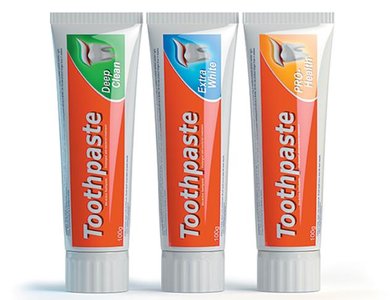
Table: Chemicals Commonly Used in Toothpaste
Chemical | Function |
|---|---|
Calcium carbonate | Abrasive to remove plaque |
Sorbitol | Prevents loss of water and hardening |
Sodium lauryl sulfate | Loosens plaque |
Titanium dioxide | Makes toothpaste white and opaque |
Sodium fluorophosphate | Prevents cavities by strengthening enamel |
Methyl salicylate | Provides wintergreen flavor |
Hemoglobin: A Chemical in the Body
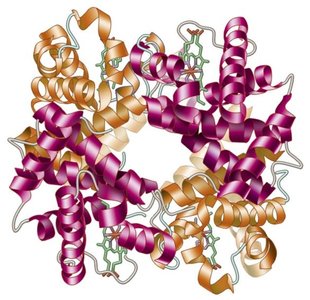
Hemoglobin is a protein in blood responsible for transporting oxygen from the lungs to tissues and returning carbon dioxide from tissues to the lungs.
Chemical Reactions in Daily Life
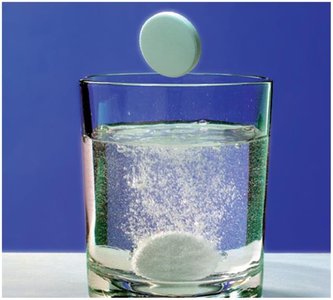
Chemical reactions are processes in which substances (reactants) are transformed into new substances (products). For example, antacid tablets react with water to relieve stomach acidity.
The Scientific Method
Steps of the Scientific Method
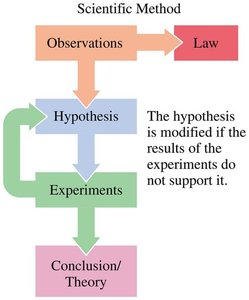
The scientific method is a systematic approach used by scientists to explore observations, answer questions, and solve problems. It involves making observations, forming hypotheses, conducting experiments, and drawing conclusions.
Observation: Gathering information about phenomena.
Hypothesis: Proposing a tentative explanation based on observations.
Experiment: Testing the hypothesis through controlled investigation.
Conclusion/Theory: Analyzing results to support or refute the hypothesis; repeated confirmation may lead to a theory.
Example: Everyday Scientific Thinking
Suppose you visit a friend and start sneezing and itching. You hypothesize you might be allergic to cats. By leaving the house and observing your symptoms, and repeating the experiment at another friend's house with a cat, you confirm your hypothesis.

Strategies for Success in Chemistry
Effective Study Habits
Success in chemistry requires active learning and consistent study habits. Connecting new information to prior knowledge, self-testing, and regular review are essential strategies.
Ask yourself questions as you read.
Practice with problems and quizzes.
Study regularly, not just before exams.
Relate new concepts to what you already know.
Making a Study Plan
Watch lecture videos and review learning objectives.
Keep a problem notebook and attempt sample problems before checking solutions.
Work through practice problems and review key math and chemistry skills.
Seek help from instructors during office hours.
Key Math Skills for Chemistry
Identifying Place Values
Understanding place values is essential for interpreting measurements and performing calculations in chemistry. Each digit in a number has a specific place value, which determines its contribution to the overall value.
For whole numbers: 2518 grams – 2 (thousands), 5 (hundreds), 1 (tens), 8 (ones).
For decimals: 6.407 grams – 6 (ones), 4 (tenths), 0 (hundredths), 7 (thousandths).

Calculating Percentages
Percentages are used to express proportions and concentrations in chemistry. To calculate a percentage, divide the part by the whole and multiply by 100%.
Formula:
Example: If an aspirin tablet contains 325 mg of aspirin and has a total mass of 545 mg, the percentage of aspirin is .

Solving Equations
Algebraic manipulation is often required to solve for unknown variables in chemical equations. Rearranging equations and isolating variables are key skills.
Example: Solve for x in
Interpreting Graphs
Graphs are used to represent relationships between variables, such as the volume of a gas versus its temperature. Understanding axes and trends is crucial for data analysis in chemistry.
The x-axis is the horizontal axis (independent variable).
The y-axis is the vertical axis (dependent variable).
Example: As temperature increases, the volume of a balloon increases, showing a direct relationship.

Scientific Notation
Writing Numbers in Scientific Notation
Scientific notation is used to express very large or very small numbers in a compact form. It consists of a coefficient (between 1 and 10) multiplied by a power of 10.
General form: where and is an integer.
Example: 0.000008 m = m; 100,000 =

Powers of 10
Understanding positive and negative powers of 10 is essential for converting between standard and scientific notation.
Standard Number | Scientific Notation |
|---|---|
10,000 | |
1,000 | |
100 | |
10 | |
1 | |
0.1 | |
0.01 | |
0.001 | |
0.0001 |
Examples of Scientific Notation in Measurements
Measured Quantity | Standard Number | Scientific Notation |
|---|---|---|
Volume of gasoline used in the US/year | 550,000,000,000 L | L |
Diameter of Earth | 12,800,000 m | m |
Average volume of blood pumped/day | 8,500 L | L |
Time for light from Sun to Earth | 500 s | s |
Mass of a typical human | 68 kg | kg |
Mass of stirrup bone in ear | 0.003 g | g |
Diameter of chickenpox virus | 0.0000003 m | m |
Mass of bacterium (mycoplasma) | 0.0000000000000000001 kg | kg |
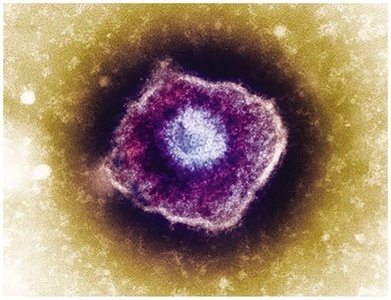
Comparing Standard and Scientific Notation
Diameter of Earth: 12,800,000 m = m
Mass of human: 68 kg = kg
Diameter of chickenpox virus: 0.0000003 cm = cm
Summary
This chapter introduces the foundational concepts of chemistry, the scientific method, and essential math skills such as place value, percentages, interpreting graphs, and scientific notation. Mastery of these topics is crucial for success in further studies of chemistry and its applications in everyday life and scientific research.
