 Back
Chapter 1: Chemistry in Our Lives – Foundations and Measurements
Study Guide - Smart Notes
 Tailored notes based on your materials, expanded with key definitions, examples, and context.
Chemistry in Our Lives
The Role of Chemistry in Modern Society
Chemistry is a central science that impacts various aspects of daily life, technology, health, and the environment. Its applications range from medical advancements to energy solutions and material innovations.
Health and Medicine: Chemistry has enabled the development of sanitation systems, anesthesia for surgery, vaccines, antibiotics, and gene therapy, all of which have greatly improved human health and longevity.
Energy and the Environment: Chemistry is crucial in understanding and developing energy sources such as fossil fuels, solar energy, and nuclear energy, as well as addressing environmental challenges.
Materials and Technology: Advances in chemistry have led to the creation of polymers, ceramics, liquid crystals, and the exploration of room-temperature superconductors and molecular computing.
Food and Agriculture: Chemistry contributes to genetically modified crops, natural pesticides, and specialized fertilizers, enhancing food production and safety.

The Study of Chemistry
What is Chemistry?
Chemistry is the study of matter and the changes it undergoes. Matter is anything that occupies space and has mass. A substance is a form of matter with a definite composition and distinct properties.
Matter: Anything that occupies space and has mass.
Mass: A measure of the quantity of matter (SI unit: kilogram, kg).
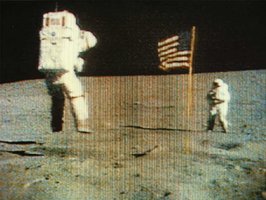
Weight: The force that gravity exerts on an object; varies with location (e.g., less on the Moon than on Earth).
The Scientific Method
Steps in Scientific Investigation
The scientific method is a systematic approach to research, involving observation, hypothesis formation, experimentation, and theory development.
Hypothesis: A tentative explanation for a set of observations.
Qualitative Data: General observations about the system.
Quantitative Data: Numerical measurements of the system.
Law: A concise statement of a relationship between phenomena that is always the same under the same conditions.
Theory: A unifying principle that explains a body of facts and/or laws based on them.

Properties and Classification of Matter
Extensive and Intensive Properties
Properties of matter are classified as either extensive or intensive:
Extensive Properties: Depend on the amount of matter (e.g., mass, length, volume).
Intensive Properties: Do not depend on the amount of matter (e.g., density, temperature, color).
States of Matter
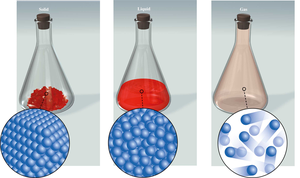
Matter exists in three common states: solid, liquid, and gas. Each state has distinct characteristics based on the arrangement and movement of particles.
Solid: Definite shape and volume; particles are closely packed in a fixed arrangement.
Liquid: Definite volume but no definite shape; particles are close but can move past one another.
Gas: No definite shape or volume; particles are far apart and move freely.
Physical and Chemical Changes
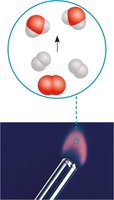
Changes in matter can be classified as physical or chemical:
Physical Change: Does not alter the composition or identity of a substance (e.g., ice melting).
Chemical Change: Alters the composition or identity of the substance(s) involved (e.g., hydrogen burning in air to form water).
Classification of Matter
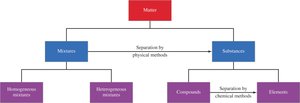
Matter can be classified as mixtures or pure substances:
Mixture: A combination of two or more substances in which the substances retain their distinct identities.
Homogeneous Mixture: Composition is uniform throughout (e.g., saltwater).
Heterogeneous Mixture: Composition is not uniform throughout (e.g., sand and iron filings).
Pure Substance: Has a definite composition and distinct properties; can be an element or a compound.
Separation of Mixtures
Physical means can be used to separate mixtures into their pure components, such as using a magnet to separate iron filings from sand.
Elements and Compounds
Element: A substance that cannot be separated into simpler substances by chemical means. There are 118 known elements, with 82 occurring naturally and 36 created by scientists.
Compound: A substance composed of atoms of two or more elements chemically united in fixed proportions. Compounds can only be separated into their elements by chemical means.
Chemical Measurements and Calculations
International System of Units (SI)
The SI system is the standard for scientific measurements. Key base units include the meter (length), kilogram (mass), second (time), and kelvin (temperature).
Prefixes Used with SI Units
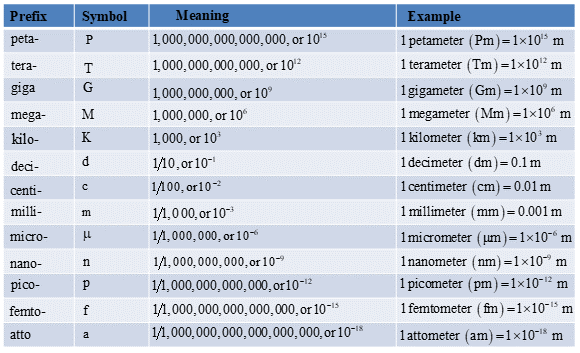
Prefixes are used to indicate multiples or fractions of SI units. The following table summarizes common prefixes:
Prefix | Symbol | Meaning | Example |
|---|---|---|---|
peta- | P | 1,000,000,000,000,000, or | 1 petameter (Pm) = m |
tera- | T | 1,000,000,000,000, or | 1 terameter (Tm) = m |
giga- | G | 1,000,000,000, or | 1 gigameter (Gm) = m |
mega- | M | 1,000,000, or | 1 megameter (Mm) = m |
kilo- | k | 1,000, or | 1 kilometer (km) = m |
deci- | d | 1/10, or | 1 decimeter (dm) = 0.1 m |
centi- | c | 1/100, or | 1 centimeter (cm) = 0.01 m |
milli- | m | 1/1,000, or | 1 millimeter (mm) = 0.001 m |
micro- | \u03bc | 1/1,000,000, or | 1 micrometer (\u03bcm) = m |
nano- | n | 1/1,000,000,000, or | 1 nanometer (nm) = m |
pico- | p | 1/1,000,000,000,000, or | 1 picometer (pm) = m |
femto- | f | 1/1,000,000,000,000,000, or | 1 femtometer (fm) = m |
atto- | a | 1/1,000,000,000,000,000,000, or | 1 attometer (am) = m |
Accuracy and Precision
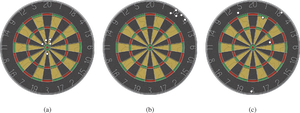
Accuracy refers to how close a measurement is to the true value, while precision refers to how close a set of measurements are to each other.
Scientific Notation
Scientific notation is used to express very large or very small numbers in the form , where is a number between 1 and 10, and is an integer.
Addition/Subtraction: Quantities must have the same exponent before combining.
Multiplication: Multiply the numbers and add the exponents.
Division: Divide the numbers and subtract the exponents.
Significant Figures
Significant figures reflect the precision of a measured quantity. Rules for determining significant figures include:
All nonzero digits are significant.
Zeros between nonzero digits are significant.
Leading zeros are not significant.
Trailing zeros in a number with a decimal point are significant.
When performing calculations:
Addition/Subtraction: The answer cannot have more digits to the right of the decimal point than any of the original numbers.
Multiplication/Division: The result should have the same number of significant figures as the measurement with the fewest significant figures.
Dimensional Analysis
Dimensional analysis is a method for solving problems by converting units using conversion factors. Units are carried through the calculation, and if all units cancel except for the desired unit, the problem is solved correctly.
Temperature Scales
There are three common temperature scales: Celsius (°C), Kelvin (K), and Fahrenheit (°F). The relationships are:
Density
Density is defined as mass per unit volume. The SI unit for density is kg/m3, but g/cm3 or g/mL are commonly used in chemistry.
The formula for density is:
Volume
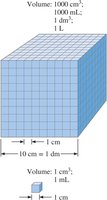
The SI derived unit for volume is the cubic meter (m3), but liters (L) and milliliters (mL) are commonly used in chemistry. The relationships are:
1 L = 1 dm3 = 1000 mL = 1000 cm3
Summary Table: Classification of Matter
Type | Definition | Examples |
|---|---|---|
Element | Cannot be separated into simpler substances by chemical means | Gold, Oxygen |
Compound | Composed of two or more elements chemically combined in fixed proportions | Water (H2O), Sodium chloride (NaCl) |
Homogeneous Mixture | Uniform composition throughout | Saltwater, Air |
Heterogeneous Mixture | Non-uniform composition | Sand and iron filings, Salad |
Additional info: This chapter provides foundational concepts for all subsequent topics in GOB Chemistry, including the nature of matter, measurement, and the scientific approach to understanding chemical phenomena.
