 Back
BackChapter 1: Matter and Measurement – Study Notes
Study Guide - Smart Notes
 Tailored notes based on your materials, expanded with key definitions, examples, and context.
Matter and Measurement
Introduction to Chemistry and Matter
Chemistry is the study of matter, which includes its composition, properties, and the transformations it undergoes. Matter is defined as anything that has mass and occupies volume. It can be naturally occurring (e.g., cotton, sand) or synthetic (e.g., nylon, ibuprofen).
Matter: Anything with mass and volume.
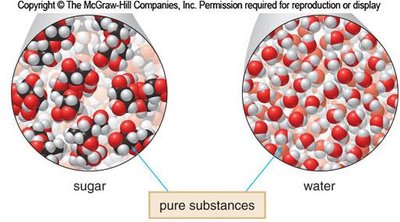
Pure substances: Composed of a single component with constant composition.
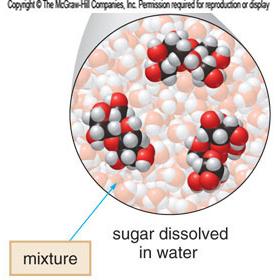
Mixtures: Composed of more than one component and can be separated by physical processes.
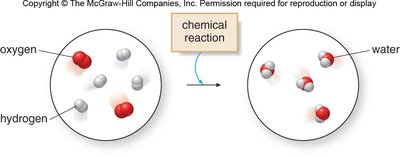
States of Matter
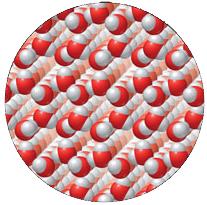
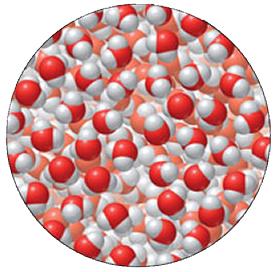
Matter exists in three primary states: solid, liquid, and gas. Each state has distinct physical properties based on the arrangement and movement of particles.
Solid: Definite shape and volume; particles are closely packed in a regular pattern.
Liquid: Definite volume but takes the shape of its container; particles are close but can move past each other.
Gas: No definite shape or volume; particles are far apart and move randomly.
Physical and Chemical Properties and Changes
Physical properties can be observed without changing the substance's composition, while chemical properties describe how a substance can change into another substance.
Physical properties: Boiling point, melting point, solubility, color, odor, state of matter.
Chemical properties: Describe reactivity and the ability to form new substances.
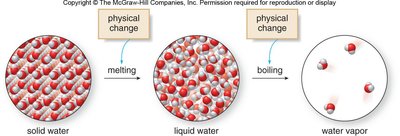
Physical change: Alters form or state but not composition (e.g., melting, boiling).
Chemical change: Converts one substance into another (e.g., burning, rusting).
Classification of Matter
All matter can be classified as either a pure substance or a mixture. Pure substances are further divided into elements and compounds.
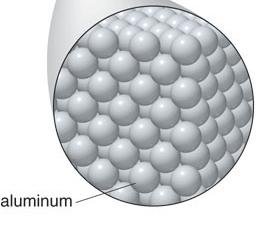
Element: Cannot be broken down by chemical change (e.g., aluminum).
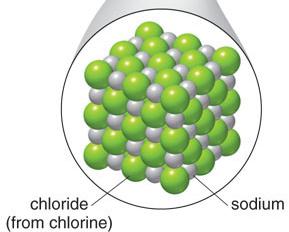
Compound: Composed of two or more elements chemically joined (e.g., sodium chloride).
Mixture: Physical combination of substances that can be separated by physical means.
Measurement and Units
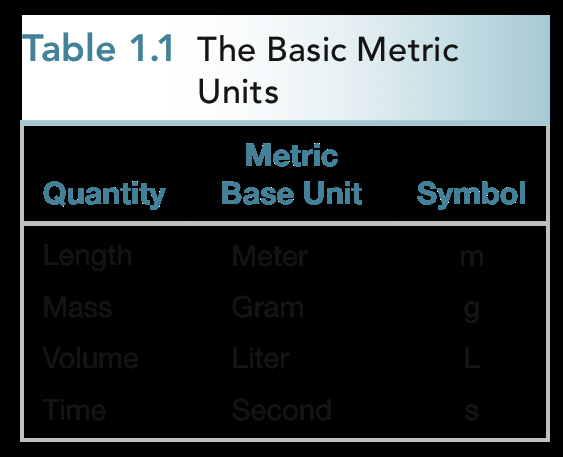
Every measurement consists of a number and a unit. The metric system is used in science, with base units for each type of measurement. Prefixes indicate multiples or fractions of base units.
Base units: Meter (m) for length, gram (g) for mass, liter (L) for volume, second (s) for time.
Prefixes: Indicate powers of ten (e.g., kilo-, centi-, milli-).
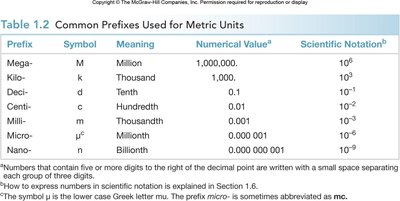
Common Metric Prefixes
Prefix | Symbol | Meaning | Numerical Value | Scientific Notation |
|---|---|---|---|---|
Mega- | M | Million | 1,000,000 | |
Kilo- | k | Thousand | 1,000 | |
Centi- | c | Hundredth | 0.01 | |
Milli- | m | Thousandth | 0.001 | |
Micro- | \mu | Millionth | 0.000001 | |
Nano- | n | Billionth | 0.000000001 |
English and Metric Units
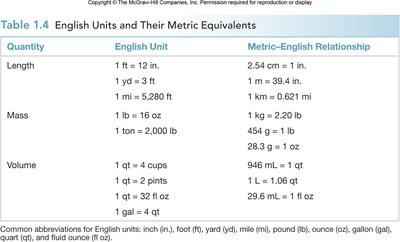
Quantity | English Unit | Metric–English Relationship |
|---|---|---|
Length | 1 ft = 12 in. | 2.54 cm = 1 in. |
Mass | 1 lb = 16 oz | 1 kg = 2.20 lb |
Volume | 1 qt = 4 cups | 946 mL = 1 qt |
Significant Figures
Significant figures (sig figs) are all the digits in a measured number, including one estimated digit. The rules for determining significant figures are essential for reporting scientific measurements accurately.
All nonzero digits are significant.
Zeros between nonzero digits are significant.
Zeros at the beginning of a number are not significant.
Zeros at the end of a number with a decimal are significant.
Zeros at the end of a number without a decimal are not significant.
Rounding Off Numbers
When rounding, if the first digit to be dropped is 4 or less, drop it and all digits to the right. If it is 5 or greater, round up the last digit to be retained by one.
Original Number | Rounded To | Rounded Number |
|---|---|---|
61.2537 | Two places | 61 |
61.2537 | Three places | 61.3 |
61.2537 | Four places | 61.25 |
61.2537 | Five places | 61.254 |

Rules for Calculations
Multiplication/Division: The answer has the same number of significant figures as the measurement with the fewest significant figures.
Addition/Subtraction: The answer has the same number of decimal places as the measurement with the fewest decimal places.
Scientific Notation
Scientific notation expresses numbers as a product of a coefficient (between 1 and 10) and a power of ten. It is useful for very large or very small numbers.
Standard form:
Positive exponent: Move decimal to the right.
Negative exponent: Move decimal to the left.
Conversion Factors and the Factor-Label Method
Conversion factors are used to convert one unit to another. The factor-label method (dimensional analysis) ensures that units cancel appropriately, leaving the desired unit.
Write the original quantity and the desired quantity.
Choose the correct conversion factor so that unwanted units cancel.
Multiply and round the answer to the correct number of significant figures.


Temperature Scales
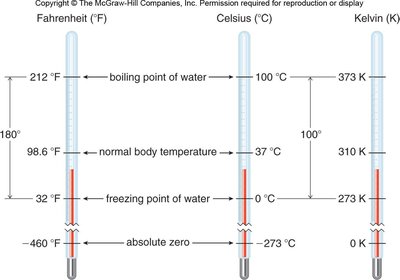
Temperature is measured using three scales: Fahrenheit (°F), Celsius (°C), and Kelvin (K). Each scale has specific reference points for freezing and boiling of water.
To convert from °C to °F:
To convert from °F to °C:
To convert from °C to K:
To convert from K to °C:
Density and Specific Gravity
Density is a physical property that relates the mass of a substance to its volume. Specific gravity compares the density of a substance to the density of water at the same temperature.
Density formula:
Specific gravity: (unitless)
Sample Problems and Applications
Practice problems include classifying matter, identifying physical and chemical changes, determining significant figures, performing calculations with correct significant figures, and converting units using the factor-label method.
*Additional info: This summary expands on the provided lecture outline and images, integrating textbook-style explanations, definitions, and examples for clarity and completeness.*
