 Back
BackChapter 1: Matter and Measurements – GOB Chemistry Study Notes
Study Guide - Smart Notes
 Tailored notes based on your materials, expanded with key definitions, examples, and context.
Chapter 1: Matter and Measurements
Thinking Like a Chemist
Chemistry is the study of the composition, structure, properties, and reactions of matter. Understanding chemistry involves observing, measuring, and analyzing the substances that make up our world.
1.1 Chemistry: The Central Science
What is Matter?
Matter is anything that has mass and occupies space.
All substances, living or non-living, are composed of matter.
Physical and Chemical Properties
Physical Properties: Characteristics that can be observed or measured without changing the substance’s identity. Examples: color, melting point, boiling point, density.
Chemical Properties: Characteristics that describe a substance's ability to undergo a chemical change and form new substances. Examples: flammability, reactivity with acid, ability to rust.
Physical and Chemical Changes
Physical Change: Changes that occur without a change in identity. Examples: melting ice, tearing paper, dissolving sugar in water.
Chemical Change: Changes that result in the production of one or more new substances. Examples: burning wood, rusting iron, baking a cake.
1.2 States of Matter
Matter exists in three primary states: solid, liquid, and gas. Each state has distinct properties based on the arrangement and movement of particles.
Solids
Definite shape and definite volume.
Particles are packed closely together and vibrate in place.
Liquids
No definite shape, but definite volume.
Particles are close together but can move past one another.
Gases
No definite shape or volume.
Particles are far apart and move freely in all directions.
Changes of State
Vaporization, condensation, freezing, melting, sublimation, and deposition are processes that convert matter from one state to another.
1.3 Classification of Matter
Matter can be classified based on its composition as pure substances or mixtures.
Pure Substances
Have a fixed or definite composition.
Can be elements (cannot be broken down into simpler substances) or compounds (composed of two or more elements in a fixed ratio).
Mixtures
Composed of two or more substances physically combined.
Heterogeneous Mixture: Non-uniform composition (e.g., oil & vinegar, pizza).
Homogeneous Mixture (Solution): Uniform composition throughout (e.g., salt water, air).
Chemical Reactions
In a chemical reaction, reactants are transformed into products. Example: Water → hydrogen + oxygen
1.4 Chemical Elements and Symbols
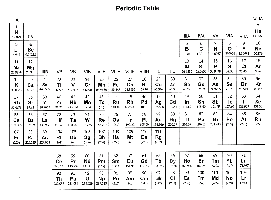
Elements are represented by symbols, usually one or two letters, with the first letter capitalized. Some symbols are derived from Latin names (e.g., Na for sodium, Fe for iron).
Compounds are represented by chemical formulas, indicating the types and numbers of atoms present. Example: H2O (water), N2O (nitrous oxide).
1.6 Physical Quantities: Units and Scientific Notation
Measurements in chemistry require both a number and a unit. The main systems of units are the International System of Units (SI), the Metric System, and the United States Customary System (USCS).
SI and Metric Units
Base units include kilogram (kg) for mass, meter (m) for length, and liter (L) for volume.
Prefixes (e.g., kilo-, centi-, milli-) are used to indicate multiples or fractions of base units.
Scientific Notation
Used to express very large or very small numbers in the form .
Example:
1.7 Measuring Mass, Length, and Volume
Mass: SI unit is kilogram (kg); metric unit is gram (g).
Length: SI and metric unit is meter (m).
Volume: SI unit is cubic meter (m3); metric unit is liter (L).
1.8 Measurement & Significant Figures
All measurements have some degree of uncertainty. Significant figures (SF) reflect the precision of a measurement.
Significant figures include all known digits plus one estimated digit.
Rules exist for identifying significant figures and for using them in calculations.
Significant Figures in Calculations
Addition/Subtraction: The result should have the same number of decimal places as the measurement with the fewest decimal places.
Multiplication/Division: The result should have the same number of significant figures as the measurement with the fewest significant figures.
1.10 Problem Solving: Unit Conversions and Estimating Answers
Unit conversions use conversion factors derived from equalities (e.g., 1 in = 2.54 cm). The factor-label method (dimensional analysis) is used to convert between units.
Arrange conversion factors so that units cancel, leaving the desired unit.
For squared or cubed units, conversion factors must also be squared or cubed.
1.11 Temperature, Heat, and Energy
Temperature is a measure of heat energy. The three main temperature scales are Fahrenheit (°F), Celsius (°C), and Kelvin (K).
Conversion formulas:
Energy is the capacity to do work; heat is a form of energy.
SI unit for energy is the joule (J); metric unit is the calorie (cal). 1 cal = 4.184 J
Food Calories (Cal) are kilocalories (kcal): 1 Cal = 1 kcal = 1000 cal
Specific Heat
Specific heat (SH) is the amount of heat needed to raise the temperature of 1 gram of a substance by 1°C.
Formula:
1.12 Density & Specific Gravity
Density is the relationship between the mass of an object and its volume.
Formula:
Common units: g/mL (liquids), g/cm3 (solids), g/L (gases)
Specific Gravity
Specific gravity is the ratio of the density of a substance to the density of water (at the same temperature).
It is a unitless value.
Formula:
