Back
Chapter 10: Acids and Bases – GOB Chemistry Study Notes
Study Guide - Smart Notes
 Tailored notes based on your materials, expanded with key definitions, examples, and context.
Acids and Bases: Definitions
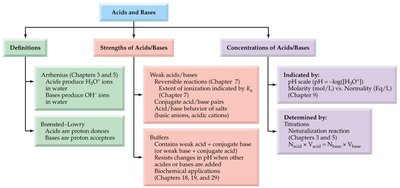
Arrhenius and Brønsted-Lowry Definitions
Acids and bases are fundamental chemical species with distinct behaviors in aqueous solutions. Their definitions have evolved to encompass a broader range of chemical reactions.
Arrhenius Acid: Produces hydronium ions (H3O+) when dissolved in water.
Arrhenius Base: Produces hydroxide ions (OH−) when dissolved in water.
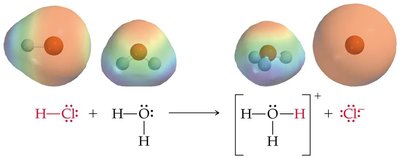
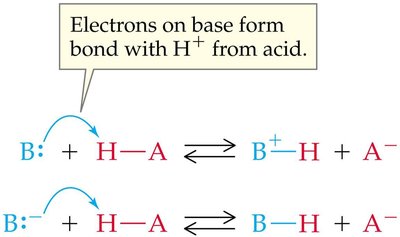
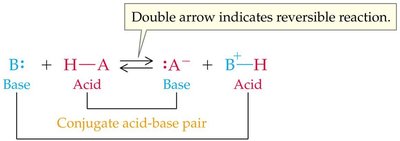
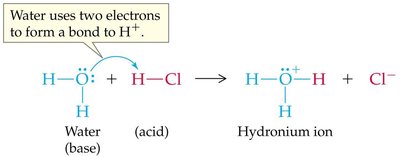
Brønsted-Lowry Acid: Proton donor (gives H+ to another molecule or ion).
Brønsted-Lowry Base: Proton acceptor (accepts H+ from an acid).
Monoprotic, Diprotic, and Triprotic Acids: Acids are classified by the number of protons they can donate:
Monoprotic: One proton (e.g., HCl)
Diprotic: Two protons (e.g., H2SO4)
Triprotic: Three protons (e.g., H3PO4)
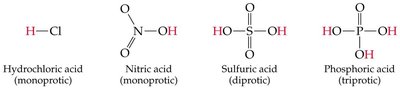
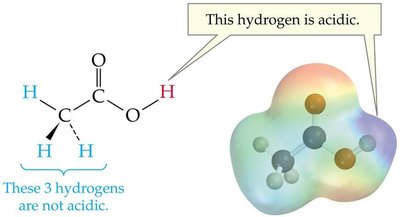
Acidic Hydrogens: Only hydrogens bonded to electronegative atoms (like O or N) are acidic.
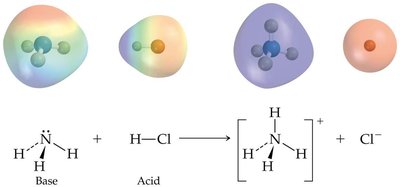
Bases: Must have a lone pair of electrons to accept a proton. Ammonia (NH3) is a classic example.

Acid-Base Reactions: Involve the transfer of a proton from acid to base.
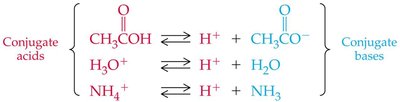
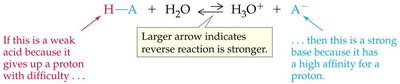
Conjugate Acid-Base Pairs: Species that differ by one proton. The acid donates a proton to become its conjugate base; the base accepts a proton to become its conjugate acid.
Acid and Base Strength
Strong vs. Weak Acids and Bases
The strength of an acid or base is determined by its degree of dissociation in water.
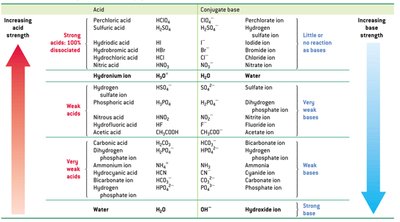
Strong Acids: Completely dissociate in water (e.g., HCl, HNO3, H2SO4).
Weak Acids: Partially dissociate in water (e.g., CH3COOH).
Strong Bases: Completely dissociate to give OH− (e.g., NaOH, KOH).
Weak Bases: Partially accept protons (e.g., NH3).
Polyprotic Acids: Undergo stepwise dissociation; each successive proton is harder to remove.
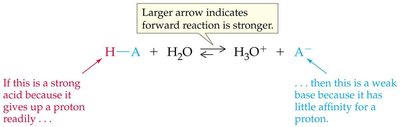
Relationship: The stronger the acid, the weaker its conjugate base, and vice versa.

Acid Dissociation Constants (Ka)
Quantifying Acid Strength
The acid dissociation constant (Ka) measures the extent of dissociation for a weak acid:
Strong acids: Ka >> 1
Weak acids: Ka << 1
Each successive proton donation from a polyprotic acid has a lower Ka value.
Water as Both an Acid and a Base
Amphoteric Nature and Ion Product
Water can act as both an acid and a base (amphoteric). It self-ionizes to form hydronium and hydroxide ions:
The ion-product constant for water at 25°C is:
Solution classification:
Acidic: [H3O+] > 1 × 10⁻⁷ M
Neutral: [H3O+] = 1 × 10⁻⁷ M
Basic: [H3O+] < 1 × 10⁻⁷ M
Measuring Acidity: The pH Scale
Definition and Calculations
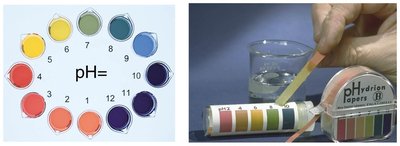
The pH scale quantifies the acidity or basicity of a solution:
Acidic: pH < 7
Neutral: pH = 7
Basic: pH > 7
Relationship between pH and pOH:
Working with pH
Conversions and Significant Figures
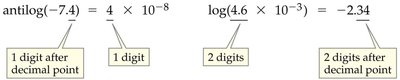
To convert between pH and [H3O+]:
[H3O+] = 10−pH
pH = −log10[H3O+]
Significant figures: The number of decimal places in pH equals the number of significant digits in [H3O+].
Acid and Base Equivalents
Normality and Equivalents
Normality (N) expresses the concentration of acid or base equivalents per liter:
For monoprotic acids, N = M
For diprotic acids, N = 2 × M
Some Common Acid-Base Reactions
Types of Reactions
Acid + Hydroxide: Neutralization to form water and a salt.
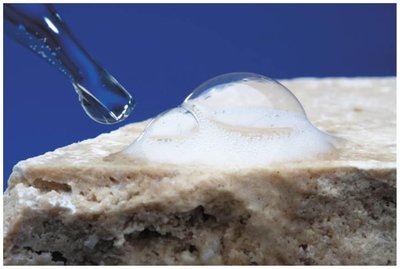
Acid + Carbonate/Bicarbonate: Produces CO2 gas, water, and a salt.
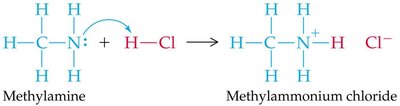
Acid + Ammonia/Amines: Forms ammonium or alkylammonium salts.

Acidity and Basicity of Salt Solutions
Predicting Solution pH
The pH of a salt solution depends on the strengths of the parent acid and base:
Acid | Base | Solution | Example |
|---|---|---|---|
Strong | Strong | Neutral | NaCl |
Strong | Weak | Acidic | NH4Cl |
Weak | Strong | Basic | NaHCO3 |
Weak | Weak | Depends | NH4CH3COO |
Buffer Solutions
Definition and Calculations
A buffer is a solution that resists changes in pH when small amounts of acid or base are added. It typically consists of a weak acid and its conjugate base.
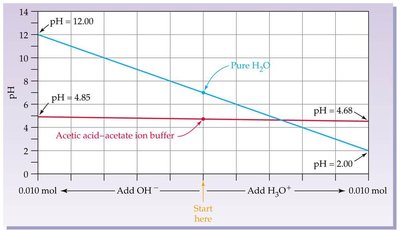
The Henderson-Hasselbalch equation relates pH, pKa, and the ratio of conjugate base to acid:
Effective buffers have pKa close to the desired pH and [A−]/[HA] ≈ 1.
Titration
Determining Acid or Base Concentration
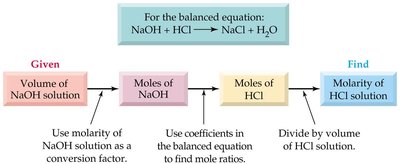
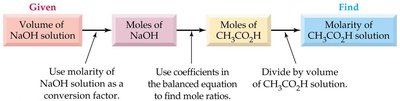
Titration is a laboratory technique to determine the concentration of an acid or base by reacting it with a standard solution of known concentration.
At the endpoint, moles of acid = moles of base (for monoprotic systems):
For polyprotic acids or bases, use equivalents and normality: