Back
Chapter 4: Molecular Compounds – Structure, Bonding, and Properties
Study Guide - Smart Notes
 Tailored notes based on your materials, expanded with key definitions, examples, and context.
Chapter 4: Molecular Compounds
4.1 Covalent Bonds
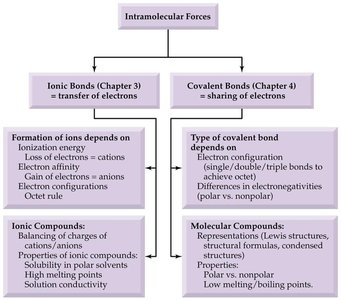
Covalent bonds are chemical bonds formed by the sharing of electrons between two nonmetal atoms. This sharing allows each atom to achieve a stable electron configuration, typically an octet (eight valence electrons), similar to noble gases. Covalent bonds are distinct from ionic bonds, which involve the transfer of electrons from one atom to another.
Molecule: A group of atoms held together by covalent bonds, forming a discrete unit.
Octet Rule: Main group elements tend to form bonds until they are surrounded by eight valence electrons (two for hydrogen).
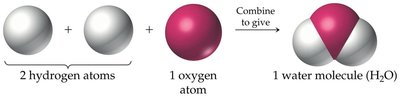
Bond Formation Example: Two hydrogen atoms (each with one electron) share their electrons to form a hydrogen molecule (H2), achieving the electron configuration of helium.
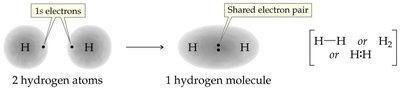
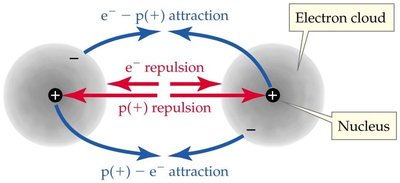
The covalent bond results from the balance of attractive and repulsive forces between the nuclei and electron clouds of the bonded atoms. The optimal distance between nuclei is called the bond length.
Chlorine forms a diatomic molecule (Cl2) by the overlap of 3p orbitals, and there are seven diatomic elements: H2, N2, O2, F2, Cl2, Br2, I2.

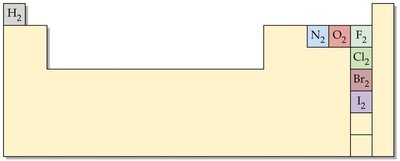
4.2 Covalent Bonds and the Periodic Table
Molecular compounds consist of molecules, not ions. The number of covalent bonds an atom forms is generally determined by its group in the periodic table, as atoms seek to achieve an octet configuration.
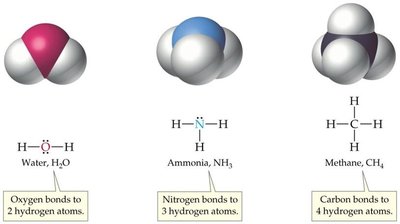
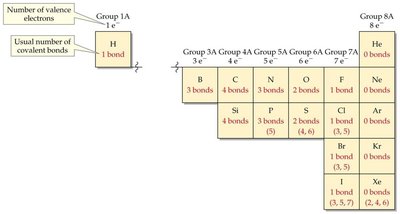
Exceptions to the Octet Rule: Boron forms only three bonds (six electrons), and elements in the third period and below can have expanded octets due to available d orbitals.
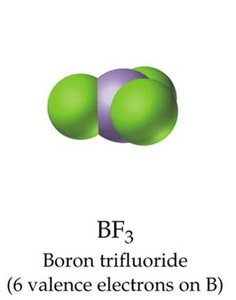
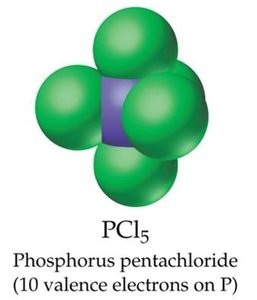
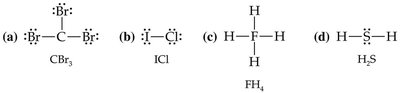
Worked Examples: Predicting Molecular Existence and Formulas
Atoms form the number of covalent bonds needed to achieve a complete octet (or duet for hydrogen).
Electron-dot symbols can be used to visualize the sharing of electrons in covalent bonds.

4.3 Multiple Covalent Bonds
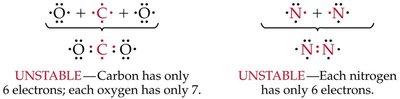
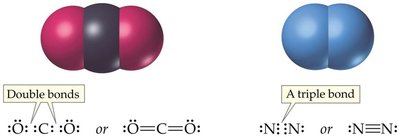
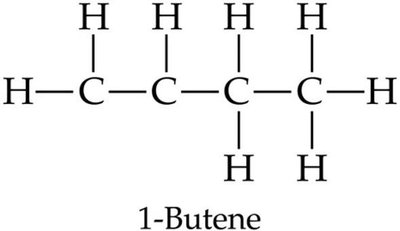
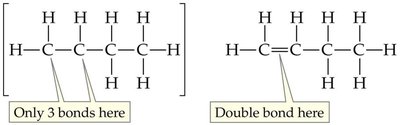
Some molecules require double or triple bonds to satisfy the octet rule. A single bond involves one shared pair of electrons, a double bond involves two pairs, and a triple bond involves three pairs.
Carbon, nitrogen, and oxygen commonly form multiple bonds.
Double bonds are found in molecules like O2 and CO2; triple bonds are found in N2 and HCN.
4.4 Coordinate Covalent Bonds
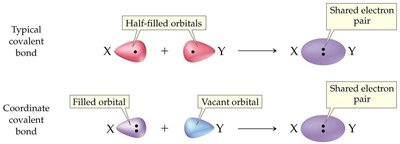
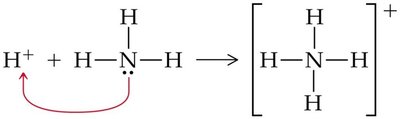
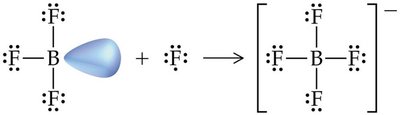
A coordinate covalent bond forms when both electrons in a shared pair come from the same atom. Once formed, these bonds are indistinguishable from regular covalent bonds.
4.5 Characteristics of Molecular Compounds
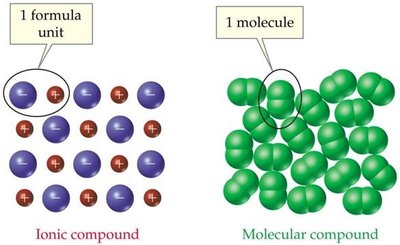
Molecular compounds differ from ionic compounds in structure, composition, and properties. The following table summarizes these differences:
Ionic Compounds | Molecular Compounds |
|---|---|
Smallest components are ions (e.g., Na+, Cl-) | Smallest components are molecules (e.g., CO2, H2O) |
Usually metal + nonmetal | Usually nonmetal + nonmetal |
Crystalline solids | Gases, liquids, or low-melting solids |
High melting/boiling points | Low melting/boiling points |
Conduct electricity when molten/dissolved | Do not conduct electricity |
Many are water soluble | Few are water soluble |
Not soluble in organic liquids | Many are soluble in organic liquids |
4.6 Molecular Formulas and Lewis Structures
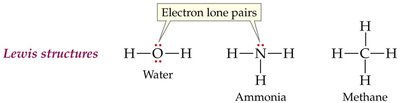
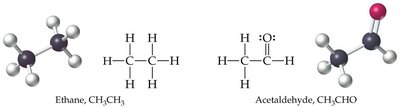
A molecular formula shows the number and types of atoms in a molecule. A structural formula shows how atoms are connected, and a Lewis structure also shows lone pairs of electrons.
4.7 Drawing Lewis Structures
Lewis structures are drawn using a systematic method:
Count total valence electrons (add for negative ions, subtract for positive ions).
Connect atoms with single bonds (lines).
Add lone pairs to complete octets (except H).
Place remaining electrons on the central atom.
If the central atom lacks an octet, form multiple bonds as needed.

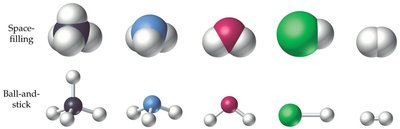

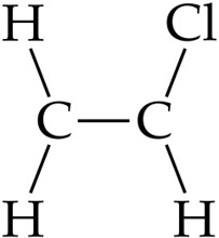
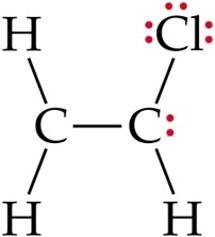
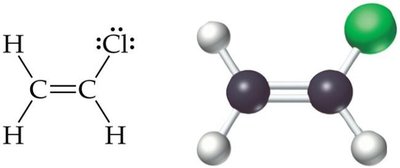
4.8 The Shapes of Molecules
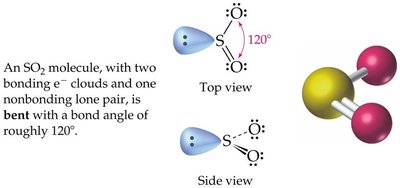
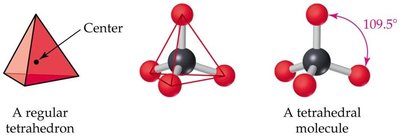
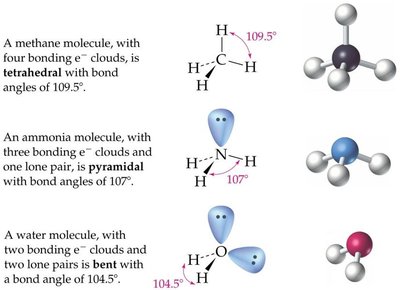
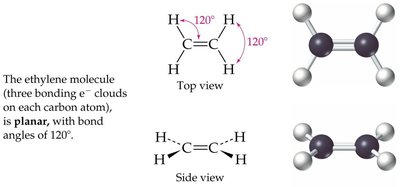
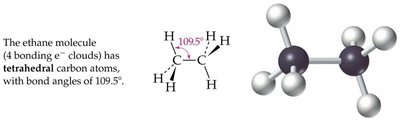
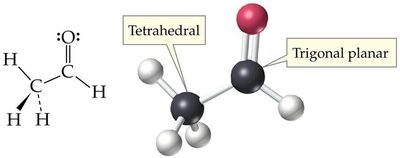
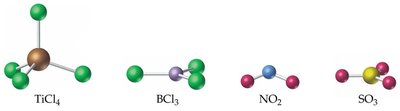
The Valence-Shell Electron-Pair Repulsion (VSEPR) model predicts molecular geometry by considering the repulsion between electron charge clouds (bonding and lone pairs) around a central atom. The arrangement of these clouds determines the shape and bond angles of the molecule.
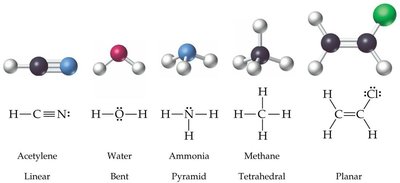
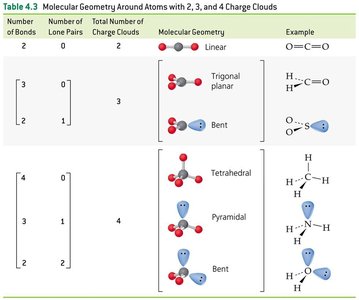
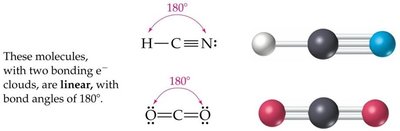
Linear: 2 charge clouds, 180° bond angle
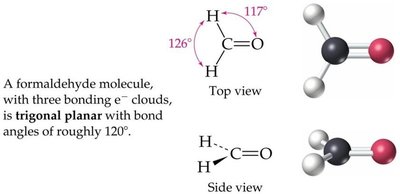
Trigonal planar: 3 charge clouds, 120° bond angle
Bent: 2 bonds + 1 or 2 lone pairs
Tetrahedral: 4 charge clouds, 109.5° bond angle
Pyramidal: 3 bonds + 1 lone pair, ~107° bond angle
4.9 Polar Covalent Bonds and Electronegativity
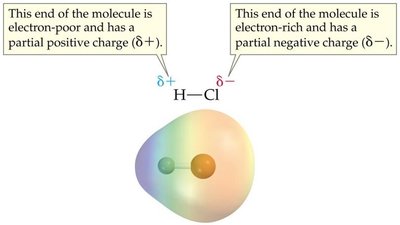
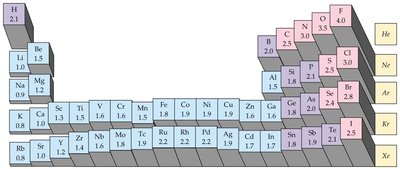
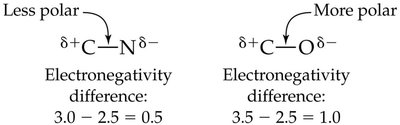
When atoms in a covalent bond have different electronegativities, the electrons are shared unequally, resulting in a polar covalent bond. Electronegativity is a measure of an atom's ability to attract electrons in a bond.
Electronegativity increases across a period and decreases down a group.
The difference in electronegativity determines bond type:
Electronegativity Difference | Bond Type |
|---|---|
0 – 0.4 | Nonpolar covalent |
0.5 – 1.9 | Polar covalent |
2.0 and above | Ionic |

4.10 Polar Molecules
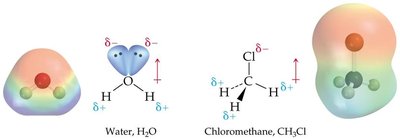
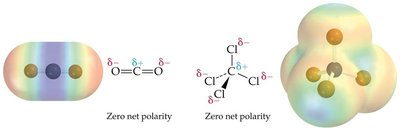
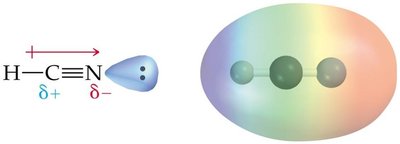
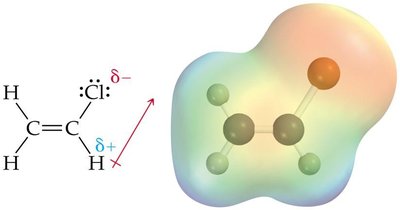
A molecule is polar if it has a net dipole moment, meaning electrons are drawn more to one part of the molecule. Molecular polarity depends on both the polarity of individual bonds and the overall shape of the molecule.
4.11 Naming Binary Molecular Compounds
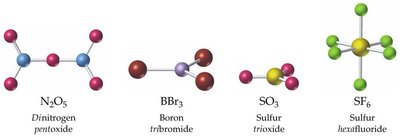
Binary molecular compounds are named using prefixes to indicate the number of each atom present. The less electronegative element is named first, followed by the more electronegative element with an -ide suffix.
Prefixes: mono-, di-, tri-, tetra-, penta-, hexa-, hepta-, octa-, nona-, deca-
The prefix mono- is omitted for the first element unless needed for clarity.
Concept Map: Covalent and Ionic Bonds