 Back
BackCHE 141: Introduction to Chemistry and Lab – Syllabus and Course Structure
Study Guide - Smart Notes
 Tailored notes based on your materials, expanded with key definitions, examples, and context.
Course Overview
This course, CHE 141: Introduction to Chemistry and Lab, is a preparatory chemistry course designed for students in Nursing and Health Sciences. It covers foundational topics in general, organic, and biological chemistry, with an emphasis on laboratory skills and applications relevant to health-related fields.
Course Topics and Relevance
Chemistry in Our Lives: Introduction to the role of chemistry in everyday life and health sciences.
Chemistry and Measurements: Use of metric units, scientific notation, and significant figures in scientific calculations.
Matter and Energy: Classification of matter, physical and chemical properties, and changes.
Atoms and Elements: Structure of atoms, subatomic particles, isotopes, and the periodic table.
Nuclear Chemistry: Types of radioactive emissions and their importance in medicine.
Ionic and Molecular Compounds: Chemical bonding, naming compounds, and molecular structure.
Chemical Quantities and Reactions: Stoichiometry, balancing equations, and calculations involving moles, atoms, and grams.
Gases: Gas laws and their applications.
Solutions: Solution preparation, concentration calculations, and properties of solutions.
Acids and Bases and Equilibrium: Properties, formulas, and pH calculations.
Introduction to Organic Chemistry: Hydrocarbons, functional groups, and their relevance to health and medicine.
Biochemistry: Introduction to carbohydrates, lipids, proteins, and nucleic acids.
Course Learning Objectives
Use metric units and perform scientific calculations accurately.
Classify matter and identify elements, compounds, and mixtures.
Describe atomic structure and identify subatomic particles.
Name and classify chemical compounds and acids.
Calculate chemical composition and perform stoichiometric calculations.
Balance chemical equations and predict reaction products.
Apply gas laws to solve problems involving gases.
Calculate solution concentrations and understand solution properties.
Differentiate acids and bases, and calculate pH values.
Explain the importance of nuclear chemistry in medicine.
Identify and describe organic compounds and functional groups.
Apply laboratory techniques to synthesize compounds, determine empirical formulas, and analyze chemical reactions.
Course Materials
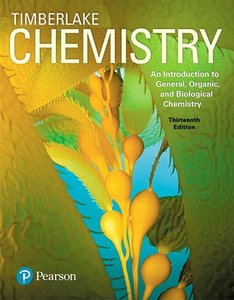
Textbook: Chemistry: An Introduction to General, Organic, and Biological Chemistry by Karen C. Timberlake, 13th Edition, Pearson (2017).
Access to Mastering Chemistry online platform is required for homework and assignments.
Labster virtual lab simulations are used for laboratory activities.
Course Structure and Assessment
Delivery: 100% online via Canvas LMS, with optional Zoom sessions for support and community building.
Assessment Components:
Study Guides: 5%
Discussions: 5%
Participation: 5%
Homework (MasteringChemistry): 25%
Quizzes and Tests: 25%
Lab Simulations (Labster): 25%
Final Examination: 10%
Grading Scale:
A: 93 and above (4.0 GPA)
A-: 90-92 (3.7 GPA)
B+: 87-89 (3.3 GPA)
B: 83-86 (3.0 GPA)
B-: 80-82 (2.7 GPA)
C+: 77-79 (2.3 GPA)
C: 73-76 (2.0 GPA)
C-: 70-72 (1.7 GPA)
D: 60-69 (1.0 GPA)
F: 59 and below (0.0 GPA)
Weekly Course Schedule (Sample for 15 Weeks)
Week | Topics/Modules | Assignments/Assessments |
|---|---|---|
1 | Welcome, Syllabus, Lab Safety, MasteringChemistry Intro | Discussion, Labster Lab Safety, Pearson Intro |
2 | Chapter 1: Chemistry in Our Lives | Homework #1, Quiz #1, Labster Lab #1, Discussion |
3 | Chapter 2: Chemistry and Measurements | Homework #2, Quiz #2, Labster Lab #2, Discussion |
4 | Chapter 3: Matter and Energy | Homework #3, Quiz #3, Labster Lab #3, Discussion |
5 | Chapter 4: Atoms and Elements | Homework #4, Quiz #4, Labster Lab #4, Discussion |
6 | Chapter 5: Nuclear Chemistry | Homework #5, Labster Lab #5, Discussion |
7 | Chapter 6: Ionic and Molecular Compounds | Homework #6, Quiz #6, Labster Lab #6, Discussion |
8 | Chapter 7: Chemical Quantities and Reactions | Homework #7, Quiz #7, Labster Lab #7, Discussion |
9 | Chapter 8: Gases | Homework #8, Quiz #8, Labster Lab #8, Discussion |
10 | Chapter 9: Solutions | Homework #9, Quiz #9, Labster Lab #9, Discussion |
11 | Chapter 10: Acids and Bases and Equilibrium | Homework #10, Quiz #10, Labster Lab #10, Discussion |
12 | Chapter 11: Introduction to Organic Chemistry | Homework #11, Labster Lab #11, Discussion |
13 | Chapters 12, 13, 14: Alcohols, Carbohydrates, Carboxylic Acids, etc. | Homework #12, Discussion |
14 | Review | Study Guides |
15 | Final Exam | Final Exam |
Laboratory Component
Labster virtual labs cover topics such as density, physical and chemical changes, empirical formula determination, stoichiometry, gas laws, and acid-base reactions.
Students collect and analyze data, synthesize compounds, and construct molecular models.
Academic Policies and Support
Academic Integrity: Use of AI tools is restricted; plagiarism is not tolerated.
Accessibility: Support is available for students with disabilities through Student Accessibility Services.
Wellness and Counseling: Free counseling and wellness services are available to all students.
Technical Support: Canvas, IT, and online learning support are available through the QC Learning Innovation Hub and IT Office.
Key Formulas and Concepts (Examples)
Density:
Mole Calculations:
Ideal Gas Law:
pH Calculation:
Conclusion
This syllabus provides a comprehensive overview of the CHE 141 course, including its structure, topics, assessments, and resources. The course is designed to build a strong foundation in chemistry for students pursuing careers in health sciences, with a balance of theoretical knowledge and practical laboratory skills.
