 Back
BackCHEM 110: Elements of General Chemistry – Course Overview and Success Guide
Study Guide - Smart Notes
 Tailored notes based on your materials, expanded with key definitions, examples, and context.
Course Overview
This study guide summarizes the key information and expectations for CHEM 110: Elements of General Chemistry, a foundational course designed for students pursuing careers in nursing and allied health sciences. The course covers essential topics in general, organic, and biological chemistry, providing both theoretical knowledge and practical laboratory experience.
Course Structure and Content
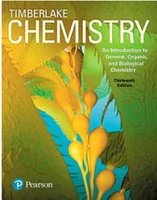
Lecture Topics: The course follows the structure of "Chemistry: An Introduction to General, Organic & Biochemistry" by Karen Timberlake (13th edition or earlier acceptable). Major topics include:
Chemistry in Our Lives
Chemistry and Measurements
Matter and Energy
Atoms and Elements
Nuclear Chemistry
Ionic and Molecular Compounds
Chemical Quantities and Reactions
Gases
Solutions
Acids and Bases and Equilibrium
Introduction to Organic Chemistry: Hydrocarbons
Alcohols, Thiols, Ethers, Aldehydes, and Ketones
Carbohydrates
Carboxylic Acids, Esters, Amines, and Amides
Lipids
Amino Acids, Proteins, and Enzymes
Nucleic Acids and Protein Synthesis
Metabolic Pathways and ATP Production
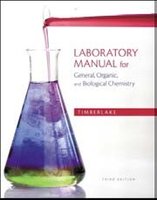
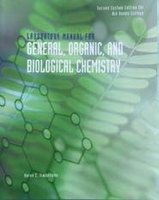
Laboratory Component: Students will use the "Laboratory Manual for General, Organic, and Biological Chemistry" by Karen Timberlake or an equivalent edition. Labs reinforce lecture topics and develop hands-on skills.
Mathematics Review: The course begins with a review of essential math skills, including significant figures, unit conversions, and exponential notation.
Required Materials
Textbook: Chemistry: An Introduction to General, Organic & Biochemistry (Timberlake, 13th edition or earlier)
Laboratory Manual: General, Organic, and Biological Chemistry (Timberlake)
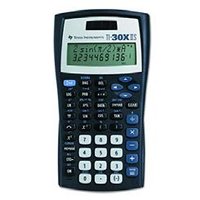
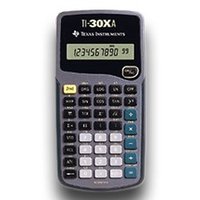
Scientific Calculator: Capable of exponential notation (e.g., TI-30X-IIS or TI-30XA)
Computer or Laptop: For online homework and lab report submission
Grading Policy
Grades are based on exams, homework, laboratory work, and a final exam. The approximate distribution is as follows:
Component | Percentage |
|---|---|
Exam 1 (Ch. 1-4, 6) | 20% |
Exam 2 (Ch. 7-10) | 20% |
Exam 3 (Ch. 11-16, IMF) | 20% |
Homework | 5% |
Laboratory | 20% |
Final Exam | 15% |
Total | 100% |
Letter grades are assigned as follows:
Percentage | Grade |
|---|---|
100 – 90% | A |
89.9 – 80% | B |
79.9 – 70% | C |
69.9 – 60% | D |
<60% | F |
Homework and Online Resources
Mastering Chemistry: Online homework is assigned for each chapter and must be submitted by the posted deadline. Late submissions incur a 5% penalty per day.
Registration: Students must register on the Pearson Mastering Chemistry website using the course ID and access code provided.
Temporary Access: A 14-day free trial is available for students awaiting payment or access code.
Laboratory Policies
Lab reports are submitted as a single PDF file via Canvas.
One late lab is allowed per semester; additional late labs incur a 25% penalty.
Lab safety and proper technique are emphasized throughout the course.
Examinations
Three in-class exams and a cumulative final exam (administered online).
No make-up exams except for documented emergencies.
A minimum of 65% in lecture exams is required to earn a C or higher, regardless of lab scores.
Student Learning Outcomes (SLOs)
Apply IUPAC nomenclature to name chemical compounds.
Calculate solution concentrations and quantities of solute.
Identify and classify biological compounds and relate structure to properties.
Model molecules using Lewis structures and predict geometry.
Use gas laws to solve for unknown parameters in gas systems.
Characterize acids and bases, calculate pH, and identify buffer solutions.
Identify organic functional groups and predict reactivity.
Demonstrate laboratory skills and safety.
Academic Integrity
All work must be original. Cheating, plagiarism, or dishonesty will be reported to the Dean of Students.
Support Resources
Free tutoring is available through the Math Sciences Center and NetTutor.
The Rio Hondo Library offers technology loans and research support.
Tentative Schedule
The course follows a week-by-week schedule, covering textbook chapters and corresponding laboratory experiments. Exams are spaced throughout the semester, and the final exam is cumulative.
Example Weekly Breakdown
Week 1: Chemistry in Our Lives, Chemistry and Measurements, Lab Safety
Week 2: Chemistry and Measurements, Matter and Energy, Safety Quiz, Measurements Lab
Week 3: Matter and Energy, Atoms and Elements, Conversion Factors Lab
Week 4: Atoms and Elements, Ionic and Molecular Compounds, First Exam
... (continues through all major topics listed above)
Conclusion
CHEM 110 provides a comprehensive introduction to general, organic, and biological chemistry, with a strong emphasis on practical skills and conceptual understanding. Success in this course requires consistent engagement with lectures, labs, homework, and available support resources.
