 Back
BackCHEM 1120 Review: Atoms, Periodic Table, Ionic and Covalent Compounds, Intermolecular Forces, Solutions, Equilibrium, Acids & Bases, and Buffers
Study Guide - Smart Notes
 Tailored notes based on your materials, expanded with key definitions, examples, and context.
Atoms and the Periodic Table
Atoms: The Fundamental Unit of Matter
Atoms are the smallest units of an element that retain the chemical properties of that element. They consist of a nucleus containing protons and neutrons, surrounded by electrons. - Atom: Smallest particle of an element, identifiable as that element. - Proton: Positively charged particle in the nucleus. - Neutron: Neutral particle in the nucleus. - Electron: Negatively charged particle orbiting the nucleus. 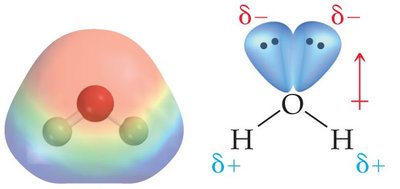
Atomic Number and Mass
Each element is defined by its atomic number (number of protons) and has a characteristic atomic mass (average mass of all isotopes). - Atomic Number (Z): Number of protons in the nucleus. - Atomic Mass: Weighted average mass of an element's isotopes.
The Periodic Table
The periodic table organizes elements by increasing atomic number and groups them by similar chemical properties. - Groups: Vertical columns, elements with similar properties. - Periods: Horizontal rows. - Main Groups: Representative elements (1A-8A). - Transition Metals: Middle section (B groups). 
Periodic Trends
Elements show predictable trends across periods and groups. - Ionization Energy: Energy required to remove an electron; increases across a period. - Electron Affinity: Tendency to gain electrons; becomes more negative across a period. - Atomic Radius: Size of the atom; decreases across a period, increases down a group. 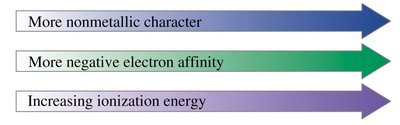
Ionic Compounds
Formation and Properties
Ionic compounds form from the electrostatic attraction between positive (cation) and negative (anion) ions, typically between metals and nonmetals. - Ions: Atoms or groups of atoms with a net charge. - Cation: Positively charged ion (e.g., Na+). - Anion: Negatively charged ion (e.g., Cl-). - Ionic Bond: Attraction between oppositely charged ions. - Formula Unit: Simplest ratio of ions in an ionic compound. 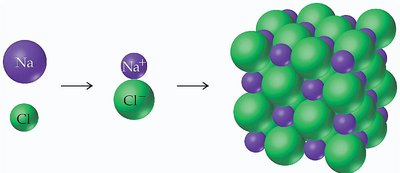
Polyatomic Ions
Polyatomic ions are charged groups of covalently bonded atoms. - Most are negatively charged (anions). - Naming conventions: -ide (e.g., OH-), -ate (e.g., SO42-), -ite (e.g., SO32-), -ium (e.g., NH4+).
Covalent Compounds
Covalent Bonding and Lewis Structures
Covalent bonds form when two nonmetals share electrons. - Covalent Bond: Shared pair of electrons between atoms. - Lewis Structure: Diagram showing bonding and lone pairs. - Covalent molecules do not separate into ions when dissolved.
Molecular Shape and Polarity
The shape and bond polarity determine whether a molecule is polar or nonpolar. - Bond Polarity: Difference in electronegativity between atoms. - Polar Molecule: Uneven distribution of charge. - Nonpolar Molecule: Even distribution of charge. 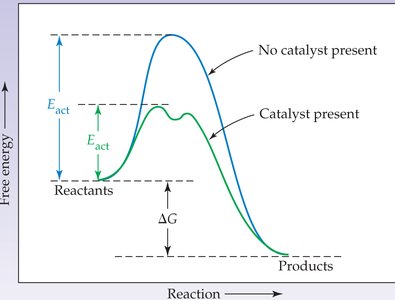
Determining Molecular Polarity
- If all outside atoms are identical and there are no lone pairs on the central atom, the molecule is likely nonpolar. - If outside atoms differ or there are lone pairs, the molecule is likely polar.
Intermolecular Forces
Types of Intermolecular Forces
Intermolecular forces are attractions between molecules, affecting physical properties. - London Dispersion Forces: Present in all molecules; increase with size. - Dipole-Dipole Forces: Between polar molecules. - Hydrogen Bonding: Strongest; occurs when H is bonded to O, N, or F and interacts with lone pairs on O, N, or F.
Impact on Physical Properties
- Stronger intermolecular forces lead to higher melting and boiling points.
Solutions and Solubility
Solubility Principles
Solubility depends on the nature of solute and solvent and their intermolecular forces. - "Like dissolves like": Polar solutes dissolve in polar solvents; nonpolar in nonpolar. - Hydrophilic: Water-loving, polar or ionic. - Hydrophobic: Water-hating, nonpolar.
Factors Affecting Solubility
- Strength of intermolecular attractions between solute and solvent. - Example: Ethanol (CH3CH2OH) dissolves in water due to hydrogen bonding.
Chemical Equilibrium
Concept of Equilibrium
Chemical equilibrium occurs when the rate of the forward reaction equals the rate of the reverse reaction. - Concentrations of reactants and products remain constant. - Does not mean concentrations are equal.
Equilibrium Constant (K)
The equilibrium constant expresses the ratio of product to reactant concentrations at equilibrium. - If K >> 1: Product-favored. - If K << 1: Reactant-favored.
Le Châtelier’s Principle
If a system at equilibrium is disturbed, it will shift to counteract the change and restore equilibrium.
Activation Energy and Catalysts
Activation energy is the minimum energy required for a reaction. Catalysts lower activation energy, increasing reaction rate. 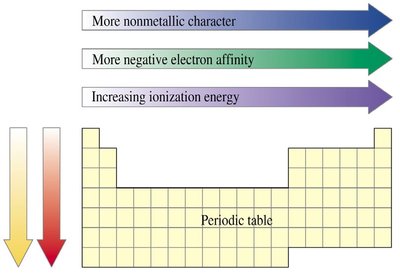
Acids, Bases, and Buffers
Acids and Bases
- Acid: Donates H+ ions. - Base: Accepts H+ ions. - Conjugate Acid/Base Pair: Two species differing by one H+.
pH Scale
pH measures the concentration of H+ ions. - Acidic: pH < 7 - Neutral: pH = 7 - Basic: pH > 7
Strong vs. Weak Acids
- Strong Acid: Ionizes completely in water. - Weak Acid: Establishes equilibrium; only partially ionizes. - Ka: Acid dissociation constant; larger Ka means stronger acid. - pKa: ; smaller pKa means stronger acid.
Buffers
Buffers are solutions that resist changes in pH, consisting of a weak acid and its conjugate base. - Example: Acetic acid (HC2H3O2) and sodium acetate (NaC2H3O2). - Buffers protect against large pH changes by shifting equilibrium. 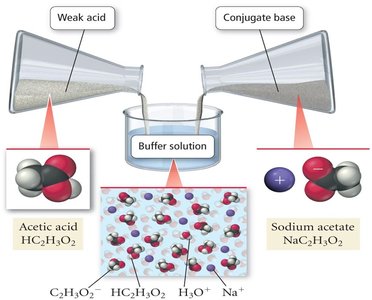
Henderson–Hasselbalch Equation
Used to calculate pH of a buffer: Example: A buffer made from acetic acid and sodium acetate maintains pH by neutralizing added acid or base. Additional info: The notes cover foundational concepts in general, organic, and biological chemistry, including atomic structure, periodic trends, ionic and covalent bonding, intermolecular forces, solubility, equilibrium, acids, bases, and buffer systems. The included images directly reinforce key concepts such as atomic structure, periodic trends, reaction energetics, molecular polarity, ionic bonding, and buffer composition.
