 Back
BackCHEM 140A Exam 1 Study Guide: Matter, Measurement, Atoms, and Ionic Compounds
Study Guide - Smart Notes
 Tailored notes based on your materials, expanded with key definitions, examples, and context.
Matter and Measurement
Units, Prefixes, and Significant Figures
Understanding the metric system and significant figures is essential for accurate scientific measurement and calculation in chemistry.
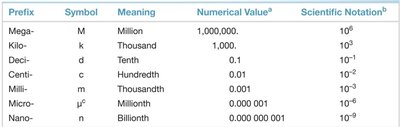
Metric Prefixes: Prefixes such as kilo-, centi-, milli-, and micro- are used to express multiples or fractions of base units.
Significant Figures: The number of meaningful digits in a measured or calculated quantity. Rules for rounding and counting significant figures are crucial for reporting results correctly.
Exact Numbers: Values that are counted or defined, not measured, and have infinite significant figures (e.g., 1 dozen = 12).
Volume Calculations: Subtracting or adding measured volumes requires attention to significant figures.
Temperature Conversions: Converting between Celsius and Fahrenheit uses specific formulas.

Physical vs. Chemical Changes: Physical changes do not alter the chemical identity (e.g., melting ice), while chemical changes produce new substances (e.g., rusting iron).
Atoms and the Periodic Table
Atomic Structure and Isotopes
Atoms are composed of protons, neutrons, and electrons. The atomic number identifies the element, while isotopes differ in neutron number.
Atomic Number (Z): Number of protons in the nucleus; unique to each element.
Mass Number (A): Sum of protons and neutrons.
Isotopes: Atoms of the same element with different numbers of neutrons (e.g., K-39, K-40, K-41).
Electron Configuration: Arrangement of electrons in shells and subshells (e.g., Fluorine: 1s2 2s2 2p5).
The Periodic Table
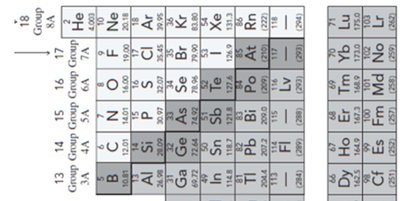
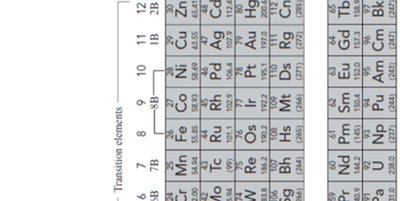
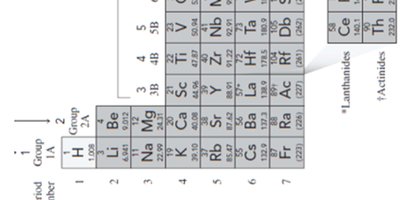
The periodic table organizes elements by increasing atomic number and similar chemical properties. Metals, nonmetals, and metalloids are grouped accordingly.
Groups: Vertical columns; elements in the same group have similar properties.
Periods: Horizontal rows.
Metals: Good conductors, malleable, ductile (e.g., Li, Na, K).
Noble Gases: Group 18 elements, chemically inert (e.g., Ne, Ar).
Ionic Compounds
Formation and Properties
Ionic compounds are formed by the transfer of electrons from metals to nonmetals, resulting in oppositely charged ions that attract each other.
Ionic Bond: Electrostatic attraction between cations (positive ions, usually metals) and anions (negative ions, usually nonmetals).
Formulas: The ratio of ions in a compound is determined by the charges of the ions (e.g., K+ and Br- form KBr).
Polyatomic Ions: Charged groups of covalently bonded atoms (e.g., NO3-, SO42-).
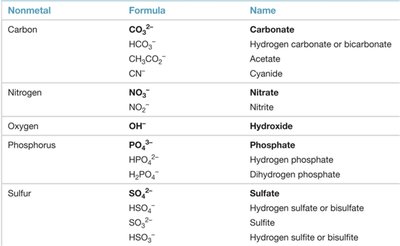
Naming Ionic Compounds
The name of an ionic compound includes the name of the cation followed by the name of the anion. Transition metals may have more than one possible charge, indicated by Roman numerals.
Binary Ionic Compounds: Metal + Nonmetal (e.g., NaCl: sodium chloride).
Transition Metals: Use Roman numerals to indicate charge (e.g., CuCl: copper(I) chloride).
Polyatomic Ions: Name the cation, then the polyatomic anion (e.g., PbCO3: lead(II) carbonate).
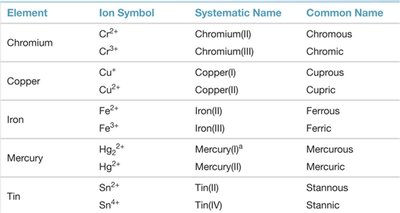
Additional Info
Electron Dot Symbols: Used to represent valence electrons and predict ionic compound formulas.
Isoelectronic Species: Ions or atoms with the same electron configuration (e.g., Selenide ion Se2- has the same configuration as Kr).
