 Back
Chemical Quantities and Reactions: GOB Chemistry Chapter 7 Study Notes
Study Guide - Smart Notes
 Tailored notes based on your materials, expanded with key definitions, examples, and context.
Chapter 7: Chemical Quantities and Reactions
Introduction
This chapter explores the quantitative aspects of chemical reactions, including how to write and balance chemical equations, classify reaction types, understand oxidation-reduction processes, and perform calculations involving moles, mass, and energy changes. Mastery of these concepts is essential for understanding the stoichiometry of chemical reactions and their practical applications in health, industry, and everyday life.
Equations for Chemical Reactions
Writing and Balancing Chemical Equations
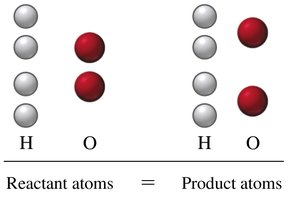
Chemical equations represent the transformation of reactants into products during a chemical change. A balanced equation ensures the conservation of mass, with equal numbers of each type of atom on both sides.
Reactants are written on the left; products on the right, separated by an arrow (→).
Physical states are indicated: (s) solid, (l) liquid, (g) gas, (aq) aqueous.
The delta symbol (Δ) above the arrow indicates heat is required.
Coefficients are used to balance the number of atoms for each element.
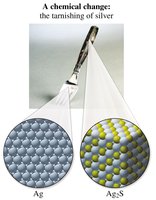
Example: Balancing Water Formation
Unbalanced: H2(g) + O2(g) → H2O(g)
Balanced: 2H2(g) + O2(g) → 2H2O(g)
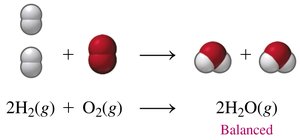
Key Steps in Balancing:
Write correct formulas for all reactants and products.
Count atoms of each element on both sides.
Add coefficients to balance atoms, starting with the most complex substance.
Check that all coefficients are in the lowest ratio.
Balancing with Polyatomic Ions
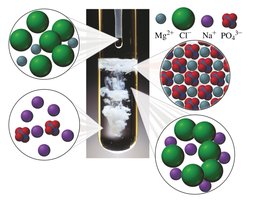
Polyatomic ions that appear unchanged on both sides can be balanced as units.
Types of Chemical Reactions
Classification of Reactions
Chemical reactions are classified into five main types:
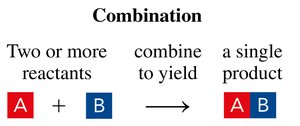
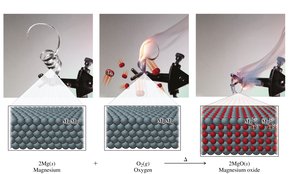
Combination (Synthesis): Two or more reactants form one product.
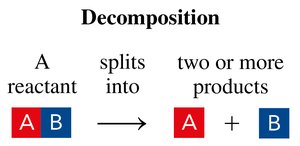
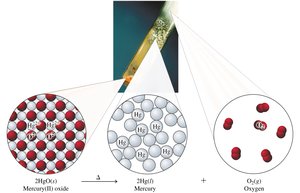
Decomposition: One reactant splits into two or more products.
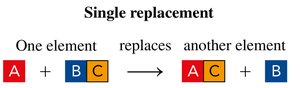
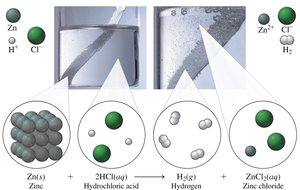
Single Replacement: One element replaces another in a compound.
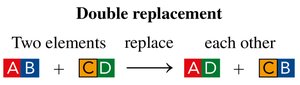
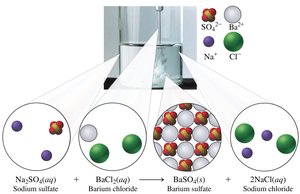
Double Replacement: Positive ions in two compounds exchange places.
Combustion: A carbon-containing compound reacts with O2 to form CO2 and H2O, releasing energy.
Visual Examples

Oxidation–Reduction (Redox) Reactions
Definition and Identification
Redox reactions involve the transfer of electrons between substances. Oxidation is the loss of electrons, while reduction is the gain of electrons.
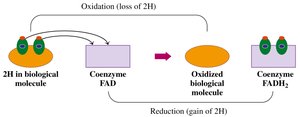
Oxidation: Loss of electrons, addition of oxygen, or loss of hydrogen.
Reduction: Gain of electrons, loss of oxygen, or gain of hydrogen.

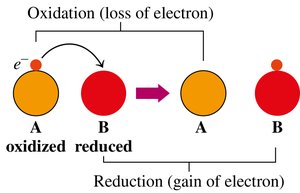

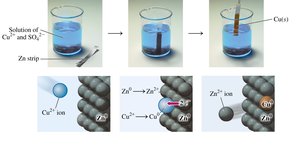
Mnemonic: OIL RIG (Oxidation Is Loss, Reduction Is Gain of electrons)
Biological Redox Example
The Mole and Avogadro’s Number
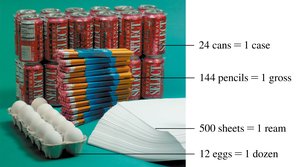
Counting Particles: The Mole
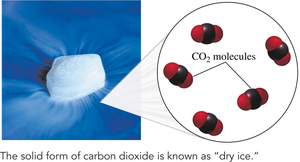
The mole is a counting unit for atoms, molecules, and ions. One mole contains Avogadro’s number () of particles.
Conversions Using Avogadro’s Number
To convert moles to particles: multiply by Avogadro’s number.
To convert particles to moles: divide by Avogadro’s number.


Moles in Chemical Formulas
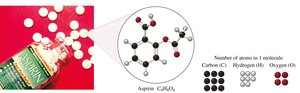
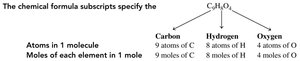
The subscripts in a chemical formula indicate the number of moles of each element in one mole of compound.

Molar Mass
Definition and Calculation
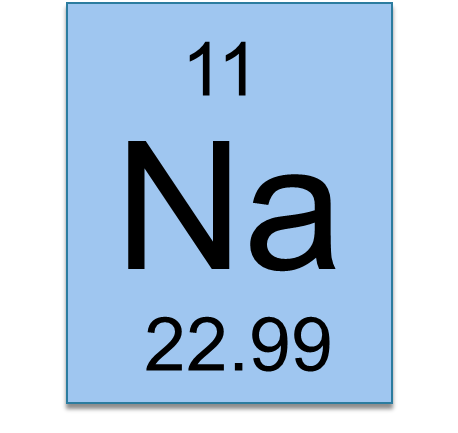
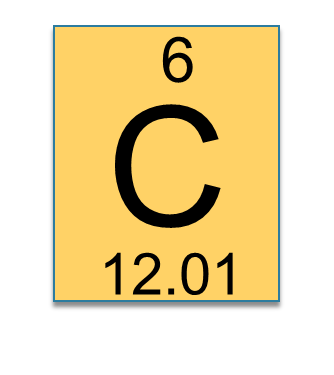
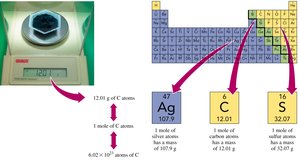
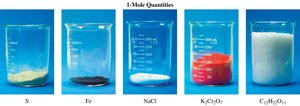
The molar mass of a substance is the mass in grams of one mole of that substance. For elements, it is numerically equal to the atomic mass (from the periodic table) in grams per mole (g/mol).
Example: 1 mole of Na = 22.99 g
Example: 1 mole of C = 12.01 g
Calculations Using Molar Mass
Converting Between Grams and Moles
Molar mass is used as a conversion factor between grams and moles:
To convert grams to moles:
To convert moles to grams:
Mole Relationships in Chemical Equations
Stoichiometry and the Law of Conservation of Mass
Balanced chemical equations provide the mole ratios needed to relate quantities of reactants and products. The law of conservation of mass states that the total mass of reactants equals the total mass of products.
Mass Calculations for Chemical Reactions
Stoichiometric Calculations
To determine the mass of a product or reactant in a chemical reaction:
Convert the given mass to moles using molar mass.
Use the mole ratio from the balanced equation to find moles of the desired substance.
Convert moles back to grams using molar mass.
Limiting Reactants and Percent Yield
Limiting and Excess Reactants
The limiting reactant is the substance that is completely consumed first, limiting the amount of product formed. The excess reactant is the one that remains after the reaction.
Theoretical, Actual, and Percent Yield
Theoretical yield: Maximum possible amount of product, calculated from stoichiometry.
Actual yield: Amount of product actually obtained from the reaction.
Percent yield:
Energy in Chemical Reactions
Exothermic and Endothermic Reactions
Almost all chemical reactions involve energy changes:
Exothermic: Release heat; products have lower energy than reactants; heat is a product.
Endothermic: Absorb heat; products have higher energy than reactants; heat is a reactant.
The SI unit for energy is the joule (J); 1 kilojoule (kJ) = 1000 J.
Heat of Reaction (ΔH)
The heat of reaction is the energy absorbed or released at constant pressure. It can be used as a conversion factor in stoichiometric calculations involving energy.
Summary Table: Types of Chemical Reactions
Type | General Form | Description |
|---|---|---|
Combination | A + B → AB | Two or more reactants form one product |
Decomposition | AB → A + B | One reactant splits into two or more products |
Single Replacement | A + BC → AC + B | One element replaces another in a compound |
Double Replacement | AB + CD → AD + CB | Positive ions in two compounds exchange places |
Combustion | Hydrocarbon + O2 → CO2 + H2O | Carbon compound burns in oxygen, releasing energy |
