 Back
BackChemistry and Measurements: Core Concepts and Applications
Study Guide - Smart Notes
 Tailored notes based on your materials, expanded with key definitions, examples, and context.
Chapter 2: Chemistry and Measurements
2.1 Units of Measurement
Chemists use standardized units to ensure consistency and accuracy in scientific communication. The metric system and the International System of Units (SI) are the primary systems used worldwide for scientific measurements.
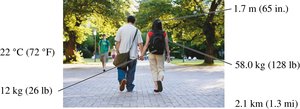
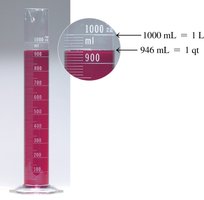
Volume: The space occupied by a substance. Common units: liter (L), milliliter (mL). Useful relationships: 1 L = 1000 mL, 1 L = 1.06 qt, 946 mL = 1 qt.
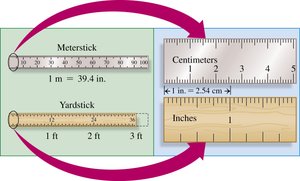
Length: The distance between two points. SI unit: meter (m). Common conversions: 1 m = 100 cm, 1 m = 39.4 in., 1 m = 1.09 yd, 2.54 cm = 1 in.
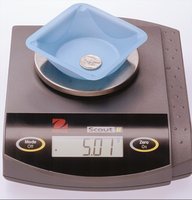
Mass: The quantity of matter in an object. SI unit: kilogram (kg). Common conversions: 1 kg = 1000 g, 1 kg = 2.20 lb, 454 g = 1 lb.
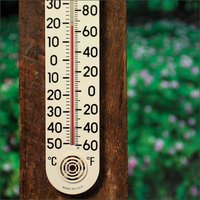
Temperature: A measure of how hot or cold an object is. Common scales: Celsius (°C), Kelvin (K). Water freezes at 0°C and boils at 100°C; 0 K is absolute zero.
Time: Measured in seconds (s) in both metric and SI systems. Atomic clocks provide the standard for time measurement.

2.2 Measured Numbers and Significant Figures
Measurements in chemistry involve both exact and measured numbers. Understanding significant figures is essential for reporting scientific data accurately.
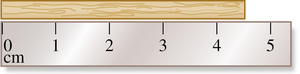
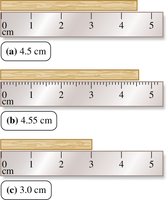
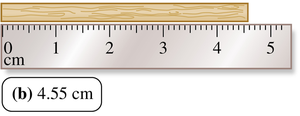
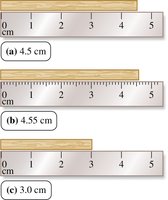
Measured Numbers: Obtained using measuring tools; include all certain digits plus one estimated digit.
Exact Numbers: Obtained by counting or by definition (e.g., 1 kg = 1000 g); have unlimited significant figures and do not affect calculations.
Significant Figures (SFs): All nonzero digits are significant. Zeros are significant if they are between nonzero digits or at the end of a decimal number. Leading zeros are not significant; trailing zeros in non-decimal numbers are not significant unless indicated by a decimal point.


2.3 Significant Figures in Calculations
When performing calculations, the number of significant figures in the result must reflect the precision of the measurements used.
Rounding Off: If the first digit to be dropped is 4 or less, drop it. If it is 5 or greater, increase the last retained digit by 1.
Multiplication and Division: The result should have the same number of significant figures as the measurement with the fewest significant figures.
Addition and Subtraction: The result should have the same number of decimal places as the measurement with the fewest decimal places.


2.4 Prefixes and Equalities
Prefixes are used in the metric and SI systems to indicate multiples or fractions of units. Equalities express the relationship between different units of measurement.
Common Prefixes: kilo- (k, 1000), centi- (c, 0.01), milli- (m, 0.001), micro- (μ or mc, 0.000001).
Equalities: Show the relationship between two units (e.g., 1 km = 1000 m, 1 cm = 0.01 m).
Volume Equalities: 1 L = 10 dL = 100 cL = 1000 mL; 1 mL = 1 cm3 (cc).
Mass Equalities: 1 kg = 1000 g; 1 g = 1000 mg; 1 mg = 1000 mcg.
2.5 Writing Conversion Factors
Conversion factors are fractions derived from equalities and are used to convert one unit to another in calculations.
Writing Conversion Factors: Any equality can be written as two conversion factors (e.g., 1 h = 60 min gives 1 h/60 min and 60 min/1 h).
Significant Figures in Equalities: Numbers in metric-to-metric or US-to-US equalities are exact; metric-to-US conversions may have limited significant figures unless defined as exact (e.g., 1 in. = 2.54 cm is exact).
Application: Used in dosage calculations, percent composition, and everyday measurements.
2.6 Problem Solving Using Unit Conversion
Unit conversion is a systematic process for solving problems involving different units. It involves identifying the given and needed units, selecting appropriate conversion factors, and setting up the calculation so that units cancel appropriately.
Steps:
Identify the given and needed units.
Write a plan to convert the given unit to the needed unit.
State the equalities and conversion factors.
Set up the calculation to cancel units and solve for the answer.
Multiple Conversion Factors: Some problems require two or more conversion factors to reach the final unit.
2.7 Density
Density is a physical property that compares the mass of a substance to its volume. It is useful for identifying substances and solving problems involving mass and volume.
Definition:
Units: Solids and liquids: g/cm3 or g/mL; gases: g/L.
Applications: Determining whether an object will float or sink in water, calculating mass or volume from density, and assessing bone density in health sciences.
Specific Gravity: The ratio of the density of a substance to the density of water (1.00 g/mL at 4°C). Used in clinical settings to assess urine concentration and diagnose health conditions.
Summary Table: Common Metric and SI Units
Quantity | SI Unit | Metric Unit | Common Abbreviation |
|---|---|---|---|
Length | meter | centimeter | m, cm |
Mass | kilogram | gram | kg, g |
Volume | cubic meter | liter, milliliter | m3, L, mL |
Temperature | kelvin | Celsius | K, °C |
Time | second | second | s |
Additional info: This summary includes expanded academic context and examples to ensure the notes are self-contained and suitable for exam preparation in a general, organic, and biological chemistry course.
