 Back
BackChemistry and Measurements: Study Notes
Study Guide - Smart Notes
 Tailored notes based on your materials, expanded with key definitions, examples, and context.
Chemistry and Measurements
Introduction
This chapter introduces the foundational concepts of measurement in chemistry, including the use of metric and SI units, significant figures, conversion factors, and the calculation of density and specific gravity. Mastery of these topics is essential for accurate scientific communication and laboratory work.
Units of Measurement
Metric and SI Units
Chemists use the metric system and the International System of Units (SI) for scientific measurements. Each physical quantity has a standard unit:
Volume: liter (L)
Length: meter (m)
Mass: gram (g) or kilogram (kg)
Temperature: Celsius (°C) or Kelvin (K)
Time: second (s)
Prefixes are used to indicate multiples or fractions of units (e.g., milli-, centi-, kilo-).
Measured Numbers and Significant Figures
Measured vs. Exact Numbers
Measured numbers are obtained using measuring tools and have a degree of uncertainty. Exact numbers are obtained by counting or by definition and have no uncertainty.
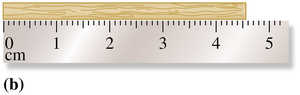
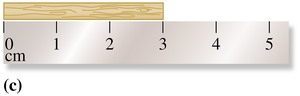
Reporting Length and Estimating Digits
When measuring, the final digit is estimated, reflecting the precision of the instrument.
Significant Figures (Sig Figs)
Significant figures include all certain digits plus one estimated digit. The rules for determining significant figures are:
All nonzero digits are significant.
Interior zeros (between nonzero digits) are significant.
Trailing zeros after a decimal point are significant.
Leading zeros (before the first nonzero digit) are not significant.
Trailing zeros before an implied decimal point are ambiguous and typically not significant.
In scientific notation, only significant digits are included in the coefficient.
Exact Numbers
Exact numbers do not affect the number of significant figures in calculations. Examples include counted objects and defined relationships (e.g., 1 dozen = 12).
Significant Figures in Calculations
Multiplication and Division
The result should have the same number of significant figures as the measured number with the fewest significant figures.
Addition and Subtraction
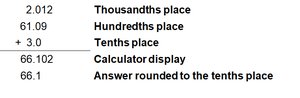
The result should have the same number of decimal places as the measured number with the fewest decimal places.
Rounding Off
If the first digit to be dropped is 4 or less, drop it and all following digits.
If the first digit to be dropped is 5 or greater, increase the last retained digit by 1.

Metric and SI Prefixes
Prefixes and Equalities
Prefixes indicate multiples or fractions of units. For example, kilo- means 1000 times the unit, and milli- means one-thousandth of the unit. Equalities show relationships between units (e.g., 1 m = 100 cm).
Writing Conversion Factors
Any equality can be written as two conversion factors (fractions) that relate the two units. For example, from 1 h = 60 min, the conversion factors are 1 h/60 min and 60 min/1 h.
Problem Solving Using Conversion Factors
Dimensional Analysis
To solve unit conversion problems:
Identify the given and needed units.
Write a plan to convert the units.
Set up the calculation using conversion factors so that units cancel appropriately.
Multiple conversion factors may be needed for complex conversions.
Density
Definition and Units
Density compares the mass of an object to its volume. The formula is:
Units:
Solids: grams per cubic centimeter (g/cm3)
Liquids: grams per milliliter (g/mL)
Gases: grams per liter (g/L)
Volume Displacement
The volume of an irregular solid can be determined by the amount of water it displaces in a graduated cylinder.
Specific Gravity
Definition and Application
Specific gravity is the ratio of the density of a substance to the density of water (1.00 g/mL at 4°C):
Specific gravity is unitless and is commonly used in clinical settings to assess urine concentration.

Chemistry Link to Health: Bone Density and Specific Gravity
Bone Density
Bone density is measured using techniques such as DEXA scans to assess bone health and diagnose conditions like osteoporosis. High-density bones block more X-rays than low-density bones.
Specific Gravity in Health
The specific gravity of urine can indicate hydration status and kidney function. Normal urine specific gravity ranges from 1.003 to 1.030. Deviations may indicate medical conditions such as diabetes, dehydration, or kidney disease.
Summary Table: Key Concepts
Concept | Definition | Key Points |
|---|---|---|
Significant Figures | All certain digits plus one estimated digit in a measurement | Rules for zeros, affects calculation results |
Density | Mass per unit volume | |
Specific Gravity | Ratio of sample density to water density | Unitless, used in clinical analysis |
Conversion Factor | Fraction relating two units | Used to convert between units |
