 Back
BackChemistry and Measurements: Study Notes for GOB College Students
Study Guide - Smart Notes
 Tailored notes based on your materials, expanded with key definitions, examples, and context.
Chapter 2: Chemistry and Measurements
Overview of Chemistry and Measurements
Chemistry relies on precise measurements to describe matter and its changes. Understanding units, significant figures, and conversion factors is essential for accurate scientific communication and calculations.
Units of Measurement
Importance of Units
Units provide context to numerical values, indicating what property is being measured (e.g., mass, length, volume).
Always include units with measurements to avoid ambiguity.
The Metric System and SI Units
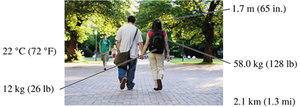
The metric system is used globally by scientists and health professionals for its logical structure based on powers of ten.
The International System of Units (SI) is a modern form of the metric system and is the official system in most countries.
Volume
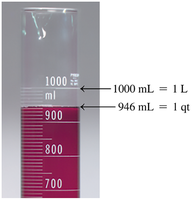
Volume is the space occupied by a substance.
Metric unit: liter (L); SI unit: cubic meter (m3).
Common conversions: 1 L = 1.06 qt, 1 L = 1000 mL, 946 mL = 1 qt.
Length
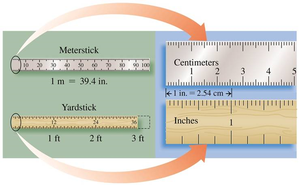
Length is measured in meters (m) in the metric system.
1 m = 1.09 yd, 1 m = 39.4 in., 2.54 cm = 1 in., 1 m = 100 cm.
Mass
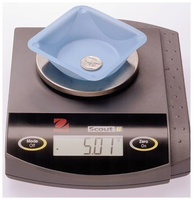
Mass is the measure of the quantity of matter in an object.
Metric unit: gram (g); SI unit: kilogram (kg).
Weight is mass under the influence of gravity: .
Common conversions: 1 kg = 1000 g, 1 kg = 2.20 lb, 454 g = 1 lb.
Temperature
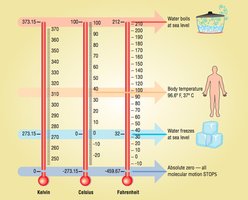
Metric unit: Celsius (°C); SI unit: Kelvin (K).
Water freezes at 0°C (273 K), boils at 100°C (373 K).
Kelvin does not use the degree symbol; absolute zero is 0 K.
Time
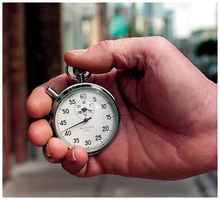
Metric and SI unit: second (s).
Conversions: 1 day = 24 hr, 1 hr = 60 min, 1 min = 60 s.
Measured Numbers and Significant Figures
Measured Numbers
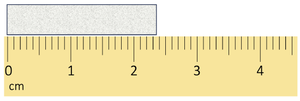
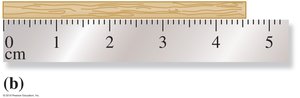
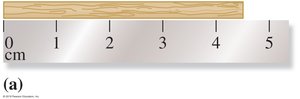
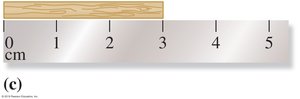
Obtained using measuring devices; include all certain digits plus one estimated digit.
The last digit is always an estimate, reflecting the precision of the instrument.
Significant Figures (Sig Figs)
Indicate the precision of a measured value.
Rules:
All nonzero digits are significant.
Zeros between nonzero digits are significant.
Trailing zeros in a decimal number are significant.
Leading zeros are not significant.
Zeros used as placeholders without a decimal are not significant.
Exact Numbers
Obtained by counting or defined equalities (e.g., 1 L = 1000 mL).
Have an unlimited number of significant figures and do not affect the precision of calculations.
Significant Figures in Calculations
Rounding Rules
When rounding, look at the first digit to be dropped:
If it is 4 or less, drop it and all digits after.
If it is 5 or greater, increase the last retained digit by 1 and drop all following digits.
Maintain the magnitude of the number (replace dropped digits with zeros if necessary).
Multiplication and Division
The final answer should have the same number of significant figures as the measurement with the fewest significant figures.
Addition and Subtraction
The final answer should have the same number of decimal places as the measurement with the fewest decimal places.
Prefixes and Equalities
Metric System Prefixes
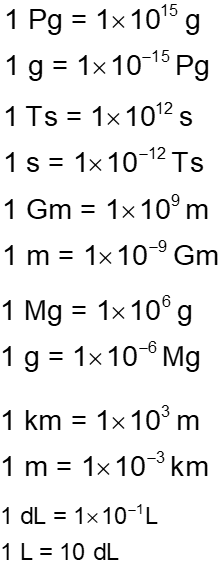
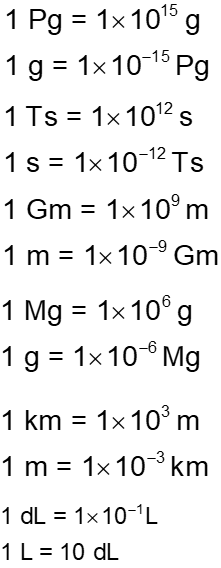
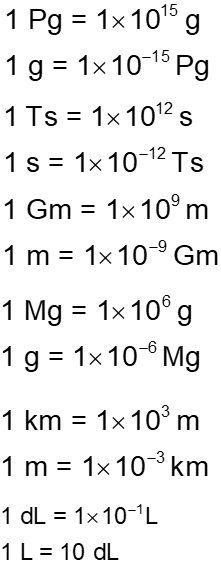
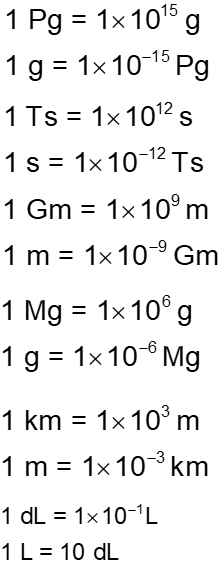
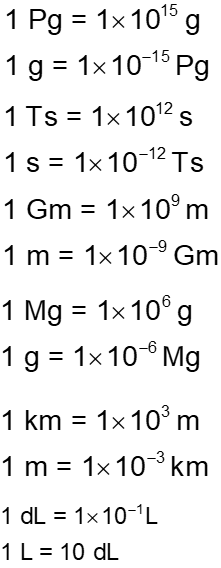
Prefixes are used to indicate multiples or fractions of units (e.g., kilo-, centi-, milli-).
Common prefixes: kilo- (103), centi- (10-2), milli- (10-3), micro- (10-6), nano- (10-9).
Equalities and Conversion Factors
Equalities show the relationship between two units that measure the same quantity (e.g., 1 m = 100 cm).
Can be written as fractions called conversion factors to convert between units.
Defined equalities (within metric or US system) are exact; metric-US conversions may have limited significant figures unless defined (e.g., 1 in = 2.54 cm is exact).
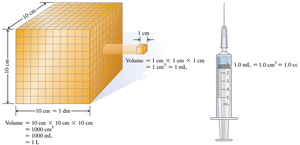
The Cubic Centimeter (cm3 or cc)
1 cm3 = 1 mL; used interchangeably in medicine and science.
Problem Solving Using Unit Conversion
General Steps for Unit Conversion
Identify the given unit and the unit needed.
Write a plan for the conversion.
Identify the appropriate conversion factor(s).
Set up the equation and solve, ensuring correct significant figures.
Density and Specific Gravity
Density
Density is a physical property that relates the mass of a substance to its volume. It is unique for each substance and can be used to identify materials or predict whether an object will sink or float in water.
Formula:
Common units: solids and liquids (g/mL), gases (g/L).
Calculating Density
Measure mass and volume, then apply the formula above.
Example: If a 0.258 g sample has a volume of 0.215 mL, (rounded to 3 sig figs).
Using Density in Calculations
To find mass:
To find volume:
Volume Displacement Method
Used to determine the volume of irregular solids by measuring the change in liquid volume when the object is submerged.
Formula:
Specific Gravity
Specific gravity is the ratio of the density of a substance to the density of water at 4°C (1.00 g/mL).
Formula:
It is a unitless quantity and is commonly used in medical settings (e.g., urine analysis).
Applications in Medicine
Specific gravity of urine is used to assess hydration and kidney function.
Normal range for urine: 1.003 to 1.030.
Abnormal values may indicate medical conditions such as diabetes, dehydration, or kidney disease.
Tables
Some Normal Laboratory Test Values
Substance in Blood | Normal Range |
|---|---|
Albumin | 3.5–5.4 g/dL |
Ammonia | 20–70 μg/dL (mcg/dL) |
Calcium | 8.5–10.5 mg/dL |
Cholesterol | 105–250 mg/dL |
Iron (male) | 80–160 μg/dL (mcg/dL) |
Protein (total) | 6.0–8.5 g/dL |
Daily Values (DV) for Selected Nutrients
Nutrient | Amount Recommended |
|---|---|
Calcium | 1.0 g |
Copper | 2 mg |
Iodine | 150 μg (150 mcg) |
Iron | 18 mg |
Magnesium | 400 mg |
Niacin | 20 mg |
Phosphorus | 800 mg |
Potassium | 3.5 g |
Selenium | 70 μg (70 mcg) |
Sodium | 2.4 g |
Zinc | 15 mg |
Additional info: This guide covers all foundational aspects of measurements in chemistry, including units, conversions, significant figures, and their application in laboratory and medical contexts. Mastery of these concepts is essential for success in general, organic, and biological chemistry courses.
