 Back
BackChemistry in Our Lives, Measurements, and Matter: Foundations for General, Organic, and Biological Chemistry
Study Guide - Smart Notes
 Tailored notes based on your materials, expanded with key definitions, examples, and context.
Chemistry in Our Lives
What Is Chemistry?
Chemistry is the study of the composition, structure, properties, and reactions of matter. It is a central science that explains the substances and changes we observe in the world around us.
Matter is anything that has mass and occupies space.
Chemicals are substances with a definite composition and properties, whether naturally occurring or synthesized.
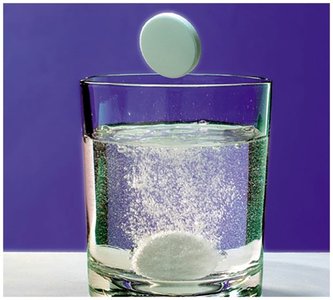
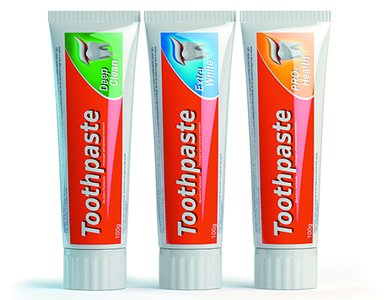
Examples: Water, air, glass, and antacid tablets are all matter. Toothpaste is a mixture of chemicals with specific functions.
Chemicals in Everyday Life
Many products we use daily are combinations of chemicals, each with a specific role.
Chemical | Function in Toothpaste |
|---|---|
Calcium carbonate | Abrasive to remove plaque |
Sorbitol | Prevents hardening |
Sodium lauryl sulfate | Loosens plaque |
Titanium dioxide | Makes toothpaste white |
Sodium fluorophosphate | Strengthens enamel |
Methyl salicylate | Flavor |
The Scientific Method
The scientific method is a systematic approach to discovery in science. It involves:
Making observations and asking questions
Proposing a hypothesis (possible explanation)
Performing experiments to test the hypothesis
Drawing conclusions or modifying the hypothesis based on results
Studying and Learning Chemistry
Effective Study Strategies
Connect new information to what you already know
Self-test and quiz yourself regularly
Study consistently, not just before exams
Work through problems and practice applications
Form study groups for collaborative learning
Key Math Skills for Chemistry
Place Values and Numbers
Each digit in a number has a specific place value (ones, tens, hundreds, etc.)
Understanding positive and negative numbers is essential for calculations
Operations with Numbers
Multiplication/Division: Same signs yield positive results; different signs yield negative results.
Addition/Subtraction: Combine like signs; subtract and keep the sign of the larger number for unlike signs.
Percentages and Equations
Percent = (part/whole) × 100%
Equations can be rearranged to solve for unknowns.
Interpreting Graphs
Graphs show relationships between variables (e.g., volume vs. temperature).
The x-axis is horizontal; the y-axis is vertical.
Scientific Notation
Used to express very large or small numbers as a coefficient × 10n.
Example: 2400 = 2.4 × 10³
Example: 0.00086 = 8.6 × 10⁻⁴
Chemistry and Measurements
Units of Measurement
SI Units: Standardized units for scientific measurement.
Quantity | Metric Unit | SI Unit |
|---|---|---|
Volume | liter (L) | cubic meter (m3) |
Length | meter (m) | meter (m) |
Mass | gram (g) | kilogram (kg) |
Temperature | degree Celsius (°C) | kelvin (K) |
Time | second (s) | second (s) |
Measured Numbers and Significant Figures
Measured numbers include all certain digits plus one estimated digit.
Significant figures (SFs): All nonzero digits, zeros between digits, and zeros at the end of decimals are significant.
Exact numbers (from counting or definitions) have unlimited SFs.
Rounding and Calculations
Round calculated answers to the correct number of SFs based on the operation (multiplication/division: fewest SFs; addition/subtraction: fewest decimal places).
Prefixes and Equalities
Metric prefixes indicate multiples or fractions of units (e.g., kilo-, centi-, milli-).
Equalities express relationships between units (e.g., 1 kg = 1000 g).
Prefix | Symbol | Value |
|---|---|---|
kilo | k | 103 |
centi | c | 10-2 |
milli | m | 10-3 |
micro | mc | 10-6 |
Conversion Factors and Problem Solving
Conversion factors are ratios derived from equalities (e.g., 1 m/100 cm).
Used to convert between units in calculations.
Density
Density = mass/volume
Units: g/mL (liquids/solids), g/L (gases)
Used to identify substances and solve for mass or volume.
Matter and Energy
Classification of Matter
Pure substances: Elements (one type of atom) or compounds (fixed ratio of elements)
Mixtures: Physical combinations of substances; can be homogeneous (uniform) or heterogeneous (non-uniform)
States and Properties of Matter
Solid: Definite shape and volume; particles fixed and close
Liquid: Definite volume, indefinite shape; particles close but mobile
Gas: Indefinite shape and volume; particles far apart and fast-moving
Physical and Chemical Properties and Changes
Physical properties: Observed without changing identity (e.g., color, melting point)
Chemical properties: Describe ability to form new substances (e.g., flammability)
Physical change: Change in state or appearance, not composition
Chemical change: Formation of new substances with new properties
Temperature and Scales
Temperature measures average kinetic energy of particles.
Common scales: Celsius (°C), Fahrenheit (°F), Kelvin (K)
Conversion formulas:
Energy: Kinetic and Potential
Kinetic energy: Energy of motion
Potential energy: Stored energy due to position or composition
Heat: Energy transfer due to temperature difference
Units: Joule (J), calorie (cal);
Energy and Nutrition
Food energy is measured in kilocalories (kcal) or kilojoules (kJ)
Typical values:
Carbohydrate: 4 kcal/g (17 kJ/g)
Fat: 9 kcal/g (38 kJ/g)
Protein: 4 kcal/g (17 kJ/g)
Specific Heat
Specific heat (SH) is the amount of heat needed to raise the temperature of 1 g of a substance by 1°C.
Formula:
Changes of State
Melting/freezing: Solid ↔ Liquid (heat of fusion)
Vaporization/condensation: Liquid ↔ Gas (heat of vaporization)
Sublimation/deposition: Solid ↔ Gas
Heat of fusion for water: 334 J/g; heat of vaporization: 2260 J/g
Heating and Cooling Curves
Show temperature changes and phase transitions as heat is added or removed.
Plateaus represent phase changes at constant temperature.
Summary Concept Map
Chemistry studies matter and energy, their properties, changes, and measurements.
Understanding units, significant figures, and conversions is foundational for problem solving in chemistry.
