 Back
BackClassification of Matter, States, and Atomic Structure: Study Notes for General, Organic, and Biological Chemistry
Study Guide - Smart Notes
 Tailored notes based on your materials, expanded with key definitions, examples, and context.
Classification of Matter
Types of Matter
Matter is anything that has mass and occupies space. It can be classified based on its composition and properties into pure substances and mixtures.
Pure Substances: Have a constant composition and distinct properties. They can be further divided into:
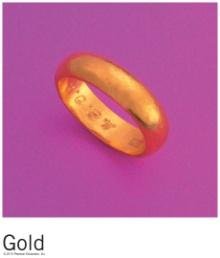
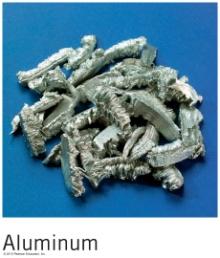
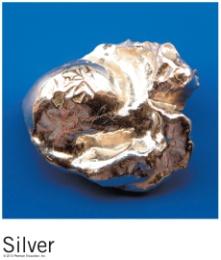
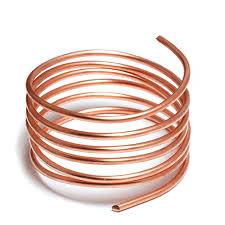
Elements: Substances that cannot be broken down into simpler substances by chemical means. Each element is made up of one kind of atom.
Compounds: Substances composed of two or more elements chemically combined in fixed ratios.
Mixtures: Combinations of two or more substances in which each retains its own identity and properties. Mixtures can be separated by physical means and are not combined in fixed proportions.
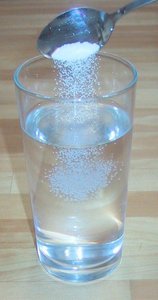
Homogeneous Mixtures (Solutions): Have uniform composition throughout (e.g., salt water, air).
Heterogeneous Mixtures: Do not have uniform composition and may contain visibly different parts (e.g., sand in water, salad).
States of Matter
Physical States and Their Properties
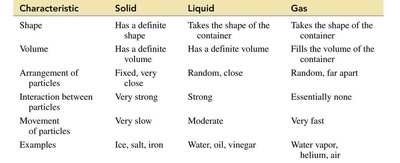
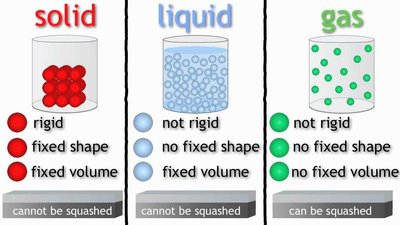
Matter exists in three primary physical states: solid, liquid, and gas. Each state has distinct characteristics based on the arrangement and movement of particles.
Characteristic | Solid | Liquid | Gas |
|---|---|---|---|
Shape | Definite | Takes shape of container | Takes shape of container |
Volume | Definite | Definite | Fills container |
Arrangement of particles | Fixed, very close | Random, close | Random, far apart |
Interaction between particles | Very strong | Strong | Essentially none |
Movement of particles | Very slow | Moderate | Very fast |
Examples | Ice, salt, iron | Water, oil, vinegar | Water vapor, helium, air |
Physical and Chemical Properties and Changes
Physical Properties and Changes
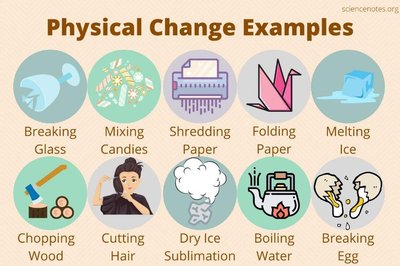
Physical properties are characteristics that can be observed or measured without changing the substance's chemical identity. Physical changes alter the form or appearance of matter but do not change its composition.
Examples of physical changes: melting, boiling, chopping, shredding, dissolving.
Physical changes are often reversible.
Chemical Properties and Changes
Chemical properties describe a substance's ability to undergo changes that transform it into different substances. Chemical changes result in the formation of one or more new substances with new properties.
Examples of chemical changes: combustion, rusting, digestion, rotting, baking a cake.
Chemical changes are usually not reversible by simple physical means.
Atomic Structure
Subatomic Particles
Atoms are the basic building blocks of matter. Each atom consists of a nucleus (containing protons and neutrons) and an electron cloud.
Protons (p+): Positively charged particles found in the nucleus.
Neutrons (n): Neutral particles found in the nucleus.
Electrons (e–): Negatively charged particles found in the electron cloud surrounding the nucleus.
Electrostatics
Electrostatic forces govern the interactions between charged particles:
Like charges repel each other.
Opposite charges attract each other.
Elements and the Periodic Table
Elements and Symbols
Elements are pure substances that cannot be broken down into simpler substances. Each element is represented by a unique chemical symbol, usually derived from its English or Latin name (e.g., H for hydrogen, Au for gold).
Some elements are monoatomic (e.g., He), diatomic (e.g., O2), or polyatomic (e.g., S8).
The Periodic Table
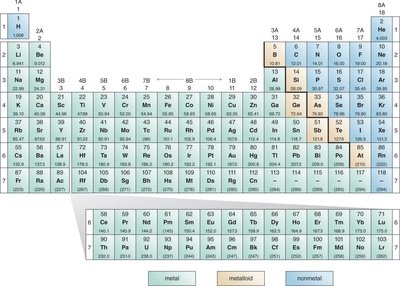
The periodic table organizes elements by increasing atomic number and groups elements with similar chemical properties into columns called groups or families. Rows are called periods.
Metals are found on the left and center, nonmetals on the right, and metalloids along the zigzag line.
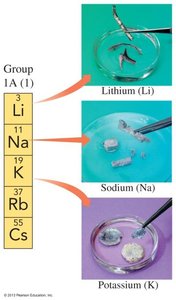
Group 1A: Alkali metals (e.g., Na, K)
Group 2A: Alkaline earth metals (e.g., Mg, Ca)
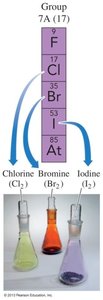
Group 7A: Halogens (e.g., F, Cl, Br)
Group 8A: Noble gases (e.g., He, Ne, Ar)
Atomic Number, Mass Number, and Isotopes
Atomic Number (Z)
The atomic number is the number of protons in the nucleus of an atom and determines the identity of the element.
Each element has a unique atomic number.
In a neutral atom, the number of electrons equals the number of protons.
Mass Number (A) and Isotopes
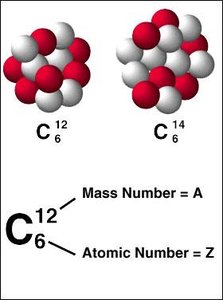
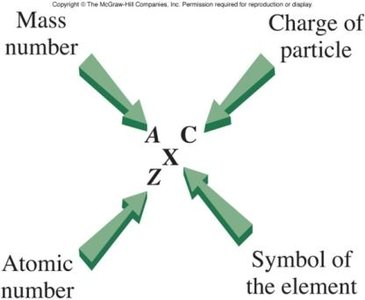
The mass number is the total number of protons and neutrons in the nucleus. Isotopes are atoms of the same element with different numbers of neutrons (and thus different mass numbers).
Isotope notation: where X is the element symbol, A is the mass number, and Z is the atomic number.
Number of neutrons = Mass number (A) – Atomic number (Z)
Formulas of Compounds
Chemical Formulas
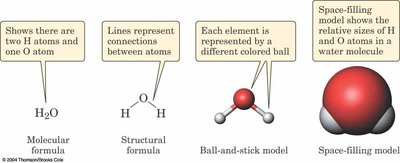
A chemical formula shows the types and numbers of atoms in a compound. Compounds always have elements combined in fixed ratios.
Example: NaCl (sodium chloride) has a 1:1 ratio of sodium to chlorine atoms.
Example: H2O (water) has a 2:1 ratio of hydrogen to oxygen atoms.
Temperature and Measurement
Temperature Scales
Temperature is a measure of how hot or cold an object is. The three main temperature scales are Celsius (°C), Kelvin (K), and Fahrenheit (°F).
Celsius: Water freezes at 0°C and boils at 100°C.
Kelvin: Absolute zero is 0 K; water freezes at 273.15 K and boils at 373.15 K.
Fahrenheit: Water freezes at 32°F and boils at 212°F.
Temperature Conversions
Kelvin to Celsius:
Celsius to Kelvin:
Celsius to Fahrenheit:
Fahrenheit to Celsius:
Additional info: Some images and tables were inferred to be relevant based on their direct support of the adjacent academic content. All equations are provided in LaTeX format as required.
