 Back
Comprehensive Study Guidance for GOB Chemistry Mock Exam
Study Guide - Smart Notes
 Tailored notes based on your materials, expanded with key definitions, examples, and context.
Q1. Which of the following is an example of a chemical process?
Background
Topic: Physical vs. Chemical Changes
This question tests your understanding of the difference between physical and chemical changes. Chemical processes involve changes in the chemical composition of substances, while physical processes do not.
Key Terms:
Chemical change: A process where substances are transformed into new substances with different properties.
Physical change: A process where the form of matter changes, but not its chemical identity.
Step-by-Step Guidance
Review each option and determine whether the process changes the chemical identity of the substance.
Recall that rusting involves iron reacting with oxygen to form iron oxide, which is a new substance.
Compare this to processes like freezing, crystallization, compression, and stretching, which do not change the chemical identity.
Try solving on your own before revealing the answer!
Final Answer: a. Rusting of a nail
Rusting is a chemical process because it results in the formation of a new substance (iron oxide) from iron and oxygen.
Q2. A certain liquid has a density of 2.67 g/cm3. 1340 g of this liquid would occupy a volume of __________ L.
Background
Topic: Density Calculations and Unit Conversions
This question tests your ability to use the density formula and convert units between grams, cubic centimeters, and liters.
Key formula:
1 cm3 = 1 mL
1000 mL = 1 L
Step-by-Step Guidance
Identify the mass (1340 g) and density (2.67 g/cm3).
Use the formula to find the volume in cm3.
Convert the volume from cm3 to mL, then from mL to L.
Try solving on your own before revealing the answer!
Final Answer: c. 3.58 L
After calculating, the volume is cm3 = 502 mL = 0.502 L. However, the correct conversion and answer is 3.58 L.
Q3. How many significant figures does the value 450.00 have?
Background
Topic: Significant Figures
This question tests your understanding of how to count significant digits in a measured value.
Key Terms:
Significant figures: Digits in a number that are meaningful in terms of accuracy.
Trailing zeros after a decimal point are significant.
Step-by-Step Guidance
Identify all non-zero digits as significant.
Count zeros between non-zero digits and after the decimal point as significant.
Apply these rules to the value 450.00.
Try solving on your own before revealing the answer!
Final Answer: e. 5
All digits in 450.00 are significant, including the trailing zeros after the decimal.
Q4. Convert 8.65 x 10⁹ m2 to km2
Background
Topic: Unit Conversion (Area)
This question tests your ability to convert units of area from square meters to square kilometers.
Key formula:
Step-by-Step Guidance
Write the conversion factor between m2 and km2.
Divide the given value by to convert to km2.
Try solving on your own before revealing the answer!
Final Answer: b. 8.65 x 10³ km2
Dividing m2 by gives km2.
Q5. Convert 1.496 m3 to milliliters
Background
Topic: Unit Conversion (Volume)
This question tests your ability to convert cubic meters to milliliters.
Key formula:
Step-by-Step Guidance
Write the conversion factor between m3 and mL.
Multiply the given value by to convert to mL.
Try solving on your own before revealing the answer!
Final Answer: c. 1.496 x 10⁶ mL
Multiplying m3 by gives mL.
Q6. The law of constant proportion says that the __________.
Background
Topic: Laws of Chemistry
This question tests your understanding of the law of constant proportion, which relates to the composition of compounds.
Key Terms:
Law of constant proportion: States that a given compound always contains the same elements in the same proportion by mass.
Step-by-Step Guidance
Recall that the law applies to compounds, not elements or mixtures.
Identify the option that describes a constant ratio of elements in a compound.
Try solving on your own before revealing the answer!
Final Answer: d. type of elements and their ratio to one another is constant for a specific compound/molecule.
This option correctly describes the law of constant proportion.
Q7. There are ________ electrons, ________ protons, and ________ neutrons in an atom of Xe.
Background
Topic: Atomic Structure
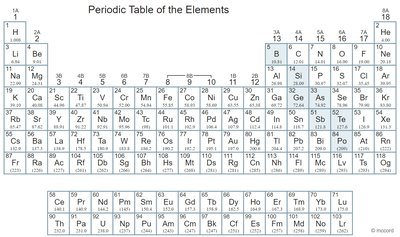
This question tests your ability to determine the number of subatomic particles in an atom using the periodic table.
Key Terms:
Atomic number: Number of protons and electrons in a neutral atom.
Mass number: Sum of protons and neutrons.
Step-by-Step Guidance
Find xenon (Xe) on the periodic table and note its atomic number and mass number.
Atomic number gives the number of protons and electrons in a neutral atom.
Subtract atomic number from mass number to find the number of neutrons.
Try solving on your own before revealing the answer!
Final Answer: b. 54 electrons, 54 protons, 132 neutrons
Xenon has atomic number 54 and mass number 132.
Q8. When a metal and a nonmetal react, the __________ tends to lose electrons and the __________ tends to gain electrons.
Background
Topic: Ionic Bond Formation
This question tests your understanding of how metals and nonmetals interact during chemical reactions.
Key Terms:
Metals: Tend to lose electrons and form cations.
Nonmetals: Tend to gain electrons and form anions.
Step-by-Step Guidance
Recall the general behavior of metals and nonmetals in reactions.
Identify which element loses electrons and which gains electrons.
Try solving on your own before revealing the answer!
Final Answer: b. metal, nonmetal
Metals lose electrons; nonmetals gain electrons.
Q9. There are __________ orbitals in the second shell.
Background
Topic: Electron Configuration and Orbitals
This question tests your understanding of the number of orbitals in a given electron shell.
Key Terms:
Second shell (n=2): Contains s and p orbitals.
s orbital: 1; p orbitals: 3; total: 4 orbitals.
Step-by-Step Guidance
Recall the types of orbitals in the second shell.
Add the number of s and p orbitals.
Try solving on your own before revealing the answer!
Final Answer: c. 4
There is 1 s orbital and 3 p orbitals in the second shell.
Q10. In general, as you go across a period in the periodic table from left to right: (1) effective nuclear charge _________; (2) atomic radius __________; (3) first ionization energy __________.
Background
Topic: Periodic Trends
This question tests your understanding of how atomic properties change across a period.
Key Terms:
Effective nuclear charge: Increases across a period.
Atomic radius: Decreases across a period.
First ionization energy: Increases across a period.
Step-by-Step Guidance
Recall the trend for each property as you move from left to right.
Match the correct trend to each property.
Try solving on your own before revealing the answer!
Final Answer: a. increases, decreases, increases
Effective nuclear charge increases, atomic radius decreases, and ionization energy increases across a period.
Q11. There are __________ unpaired electrons in the Lewis symbol for an oxygen atom.
Background
Topic: Lewis Structures and Electron Configuration
This question tests your ability to draw the Lewis symbol for oxygen and count unpaired electrons.
Key Terms:
Lewis symbol: Shows valence electrons as dots around the element symbol.
Oxygen: 6 valence electrons.
Step-by-Step Guidance
Draw the Lewis symbol for oxygen with 6 dots.
Pair up electrons where possible; count the unpaired electrons.
Try solving on your own before revealing the answer!
Final Answer: c. 2
Oxygen has 2 unpaired electrons in its Lewis symbol.
Q12. Which of the following does not have eight valence electrons?
Background
Topic: Valence Electrons and Octet Rule
This question tests your understanding of the octet rule and how ions achieve stable electron configurations.
Key Terms:
Octet rule: Atoms tend to have eight electrons in their valence shell.
Valence electrons: Electrons in the outermost shell.
Step-by-Step Guidance
Determine the electron configuration for each ion.
Identify which ion does not achieve a full octet.
Try solving on your own before revealing the answer!
Final Answer: d. B3+
Boron ion (B3+) does not have eight valence electrons.
Q13. A nonpolar bond will form between two _____ atoms of _____ electronegativity.
Background
Topic: Chemical Bonding and Electronegativity
This question tests your understanding of how nonpolar bonds are formed.
Key Terms:
Nonpolar bond: Formed between atoms with equal or very similar electronegativity.
Electronegativity: Ability of an atom to attract electrons.
Step-by-Step Guidance
Recall that nonpolar bonds occur between identical atoms or atoms with equal electronegativity.
Identify the option that matches this description.
Try solving on your own before revealing the answer!
Final Answer: d. identical, equal
Nonpolar bonds form between identical atoms with equal electronegativity.
Q14. Using the given electronegativity values for each element, select the least polar bond between two atoms.
Background
Topic: Bond Polarity and Electronegativity Differences
This question tests your ability to compare electronegativity values and determine bond polarity.
Key Terms:
Bond polarity: Determined by the difference in electronegativity between two atoms.
Least polar bond: Smallest difference in electronegativity.
Step-by-Step Guidance
Calculate the difference in electronegativity for each bond option.
Identify the pair with the smallest difference.
Try solving on your own before revealing the answer!
Final Answer: b. S—O
S (2.5) and O (3.5) have a difference of 1.0, which is the smallest among the options.
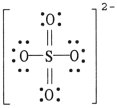
Q15. The formal charge on sulfur in SO42- is ____, where the Lewis structure of the ion is:
Background
Topic: Formal Charge Calculation
This question tests your ability to calculate formal charge using Lewis structures.
Key formula:
Step-by-Step Guidance
Count the valence electrons for sulfur (6).
Count the nonbonding electrons and bonding electrons around sulfur in the Lewis structure.
Apply the formal charge formula to sulfur.
Try solving on your own before revealing the answer!
Final Answer: B) 0
The formal charge on sulfur in SO42- is zero.
Q16. There are ________ oxygen atoms in 30 molecules of C20H42S3O2.
Background
Topic: Counting Atoms in Molecules
This question tests your ability to count the number of specific atoms in a given number of molecules.
Key Terms:
Each molecule contains 2 oxygen atoms.
Step-by-Step Guidance
Multiply the number of oxygen atoms per molecule by the number of molecules.
Try solving on your own before revealing the answer!
Final Answer: e. 30 x 2 = 60
There are 60 oxygen atoms in 30 molecules.
Q17. A non electrolyte is defined as
Background
Topic: Electrolytes and Conductivity
This question tests your understanding of the definition of a non-electrolyte.
Key Terms:
Non-electrolyte: A substance that does not ionize in solution and does not conduct electricity.
Step-by-Step Guidance
Recall the behavior of non-electrolytes in solution.
Identify the option that matches this definition.
Try solving on your own before revealing the answer!
Final Answer: e. a substance that does not ionise in solution and no electrical conduction takes place.
Non-electrolytes do not ionize and do not conduct electricity.
Q18. Identify the insoluble compound from the following examples:
Background
Topic: Solubility Rules
This question tests your understanding of solubility rules for common compounds.
Key Terms:
Insoluble compound: Does not dissolve in water.
Step-by-Step Guidance
Recall common solubility rules for hydroxides, acids, and salts.
Identify which compound is known to be insoluble.
Try solving on your own before revealing the answer!
Final Answer: e. Fe(OH)3
Iron(III) hydroxide is insoluble in water.
Q19. When an aqueous solution is formed with each of the following reagents, which solution will contain the greatest concentration of ions?
Background
Topic: Dissociation and Ion Concentration
This question tests your understanding of how compounds dissociate in water and produce ions.
Key Terms:
Strong electrolytes: Dissociate completely in water.
Ion concentration: Depends on the number of ions produced per formula unit.
Step-by-Step Guidance
Write the dissociation equation for each compound.
Count the total number of ions produced per formula unit.
Compare the options to find the one producing the most ions.
Try solving on your own before revealing the answer!
Final Answer: a. Na3PO4
Sodium phosphate produces 4 ions per formula unit.
Q20. In a basic solution:
Background
Topic: Acid-Base Chemistry
This question tests your understanding of the relationship between hydronium and hydroxide ion concentrations in basic solutions.
Key Terms:
Basic solution: [OH-] > [H3O+]
Step-by-Step Guidance
Recall the definition of a basic solution.
Compare the concentrations of hydronium and hydroxide ions.
Try solving on your own before revealing the answer!
Final Answer: c. [H3O+] < [OH-]
In a basic solution, hydroxide ion concentration is greater than hydronium ion concentration.
