 Back
Comprehensive Study Guide: Chemical Reactions, Types, and Solution Chemistry for GOB Chemistry
Study Guide - Smart Notes
 Tailored notes based on your materials, expanded with key definitions, examples, and context.
Chemical Reactions
Definition and Fundamental Concepts
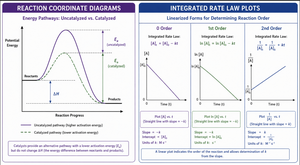
Chemical reactions involve the breaking and forming of chemical bonds, resulting in the transformation of reactants into products. These processes must obey the law of conservation of mass, meaning the total mass of reactants equals the total mass of products. - Reactants: The starting materials in a chemical reaction. - Products: The substances formed as a result of the reaction. - Catalyst: A substance that speeds up a reaction by lowering the activation energy, but is not consumed in the process. 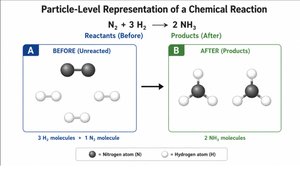
Physical vs. Chemical Changes
Physical changes do not alter the atomic structure of substances and are often reversible (e.g., melting, freezing). Chemical changes involve the rearrangement of atoms and are usually irreversible, requiring more energy. - Physical Change: No change in atomic structure; easily reversed. - Chemical Change: Atoms are rearranged; new substances are formed; often irreversible. - Energy: Chemical changes typically require more energy than physical changes.
Clues to Chemical Change
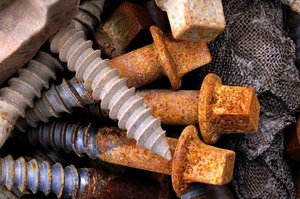
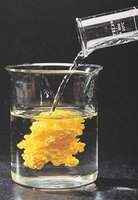
Indicators of a chemical reaction include: - Change in heat/temperature - Color or texture change - Light or sound emission - Formation of a precipitate - Appearance of a new phase (gas or solid) 


Types of Chemical Reactions
Classic Reaction Types
- Synthesis: - Decomposition: - Combustion: - Single Replacement: - Double Replacement: 
Modern Reaction Types
- Precipitation: Formation of an insoluble product (precipitate) from soluble reactants. - Acid-Base: Reaction between an acid and a base, producing water and a salt. - Combustion: Hydrocarbon reacts with oxygen to produce carbon dioxide and water. - Redox: Involves transfer of electrons; includes synthesis, decomposition, and single replacement. 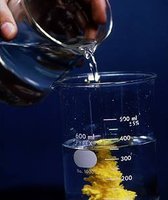
Combustion Reactions
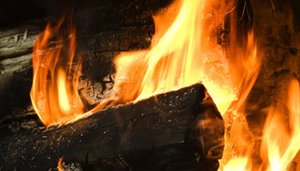
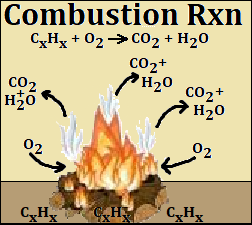
Combustion reactions are always exothermic and involve a hydrocarbon and oxygen as reactants, producing carbon dioxide and water. These reactions are a type of organic redox reaction. - General Equation: 

Redox Reactions
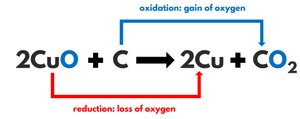
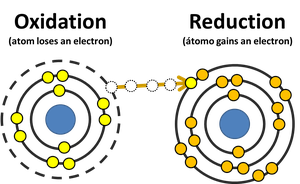
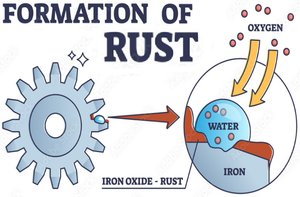
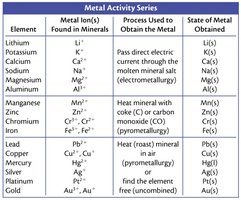
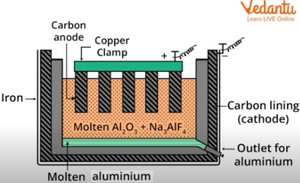
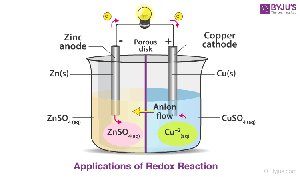
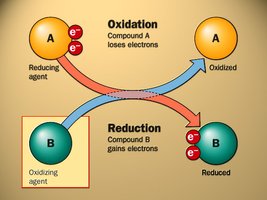
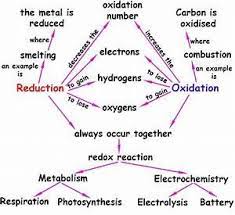
Redox reactions involve the transfer of electrons between substances. - Oxidation: Loss of electrons (increase in oxidation state). - Reduction: Gain of electrons (decrease in oxidation state). - Mnemonic: OIL RIG (Oxidation Is Loss, Reduction Is Gain) 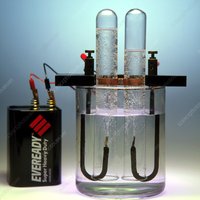
Net Ionic Equations
Net ionic equations show only the species that participate in the reaction, omitting spectator ions. Steps: 1. Write the balanced molecular equation. 2. Split strong ionic compounds into separate ions. 3. Remove spectator ions. 4. Write the net ionic equation.
Solution Chemistry
Definitions
- Solution: A homogeneous mixture of two or more substances in a single phase. - Solute: The substance dissolved in the solvent. - Solvent: The medium in which the solute is dissolved.
Special Solutions
- Aqueous Solution: Water is the solvent. Most common in chemistry.
Solubility
Solubility is the amount of solute that can dissolve in a solvent at a given temperature and pressure. Factors affecting solubility: - Pressure - Amount - Nature of substances - Temperature
Solubility Rules
Rule | Examples |
|---|---|
Always Soluble | Nitrates (NO3−), Acetates (C2H3O2−), Alkali metals (Na+, K+, Li+), Ammonium (NH4+), Chlorates (ClO4−, ClO3−) |
Almost Always Soluble | Halogens (I−, F−, Cl−, Br−) except with Ag, Hg, Pb, Cd; Sulfates (SO42−) except with Ca²⁺, Sr²⁺, Ba²⁺, Ra²⁺, Pb²⁺, Ag⁺ |
Almost Never Soluble | Carbonates (CO32−), Phosphates (PO43−), Oxides/Sulfides (O2−, S2−), Hydroxides (OH−) except with alkali metals |
Coulomb’s Law and Solubility
Coulomb’s Law describes the force between charged particles: - Smaller atomic radius: Less distance, more force, less solubility. - Bigger atomic radius: More distance, less force, more solubility.
Acids, Bases, and Electrolytes
Electrolytes
Electrolytes are substances that conduct electricity when dissolved in water. - Strong Electrolytes: Completely dissociate and conduct well. - Weak Electrolytes: Partially dissociate and conduct poorly.
Strong Acids and Bases
Strong Acids | Strong Bases |
|---|---|
HCl, HBr, HI, HClO3, HClO4, HNO3, H2SO4 | NaOH, KOH, RbOH, LiOH, CsOH, Sr(OH)2, Ba(OH)2, Ca(OH)2 |
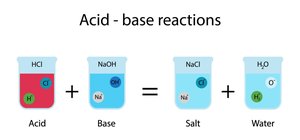
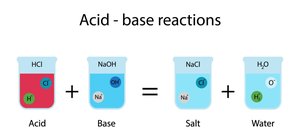
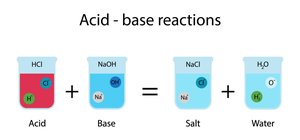
Acid-Base Reactions
Acid-base reactions produce water and a salt. - General Equation: 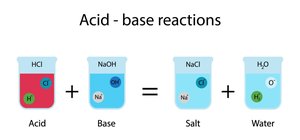
Titrations
Definition and Methodology
Titration is a technique to determine the concentration of a solution by reacting it with a solution of known concentration. - Acid-Base Titration: Used to find unknown concentration of acid or base. - Redox Titration: Used for redox reactions. Steps: 1. Add titrant to analyte until reaction is complete (color change). 2. Use stoichiometry to calculate unknown concentration.
Titration Math
- Stoichiometry: Use balanced equations to relate moles of reactants and products. - Example Equation: - Do not use: for all cases; rely on stoichiometry.
Additional info:
- The notes include advanced redox balancing (half-reaction method), solubility rules, and practical lab techniques, all directly relevant to GOB Chemistry. - Images were included only when they visually reinforce the explanation of the adjacent paragraph. - All equations are provided in LaTeX format as required.
