 Back
BackComprehensive Study Notes for Introductory Biology and Biochemistry (BIO 114)
Study Guide - Smart Notes
 Tailored notes based on your materials, expanded with key definitions, examples, and context.
Scientific Method and Biological Hierarchy
Scientific Method
The scientific method is a dynamic process used to investigate natural phenomena. It involves systematic observation, hypothesis formulation, experimental design, data analysis, and conclusion.
Observation: Gathering information using senses and literature review.
Hypothesis: A tentative explanation for observations.
Experimental Design: Involves control and experimental variables to test the hypothesis.
Results: Data collection, statistical analysis, and graphical representation.
Discussion: Interpretation of results in the context of the hypothesis.
Conclusion: Determines if the hypothesis is supported or refuted.
Refinement: Procedures are refined based on findings.
Controls are essential for comparison, and scientific bias or fraud can compromise results.
Biological Hierarchy
Life is organized in a hierarchical structure from atoms to the biosphere:
Biosphere > Ecosystems > Communities > Populations > Organisms > Organ Systems > Organs > Tissues > Cells > Macromolecules > Molecules > Atoms
Living organisms can independently reproduce; viruses and prions are not considered living.
Chemical Foundations of Life
Atoms, Molecules, and Bonds
Atoms consist of protons, neutrons, and electrons. Molecules are formed by chemical bonds:
Covalent Bonds: Sharing of valence electrons (e.g., CH4).
Ionic Bonds: Attraction between cations and anions (e.g., Na+Cl-).
Non-bonding Associations: Hydrogen bonds, dipole-dipole interactions, and Van der Waals forces.
Organic vs. Inorganic Molecules
Organic: Contain C-H bonds (e.g., carbohydrates, proteins).
Inorganic: Do not contain C-H bonds (e.g., H2O, CO2).
Functional Groups
Functional groups such as -CH3, -OH, -COOH, -NH2, -PO4H impart specific chemical properties and reactivity to molecules.
Dehydration and Hydrolysis
Dehydration: Synthesis of larger molecules by removing water (anabolic).
Hydrolysis: Breakdown of polymers into monomers by adding water (catabolic).
Macromolecules
Carbohydrates
Carbohydrates are energy sources and structural components:
Monosaccharides: Simple sugars (e.g., glucose).
Polysaccharides: Glycogen (animals), starch (plants), cellulose (plant cell walls), chitin (arthropod exoskeletons).
Lipids
Lipids are hydrophobic molecules used for energy storage and membrane structure:
Fatty acids and glycerol form triglycerides.
Phospholipids are major components of cell membranes.
Steroids include hormones and cholesterol.
Saturated fats have single bonds (solid at room temperature); unsaturated fats have double bonds (liquid at room temperature).
Proteins
Proteins are polymers of 20 amino acids with four levels of structure:
Primary: Amino acid sequence.
Secondary: Alpha helix, beta sheet.
Tertiary: 3D folding.
Quaternary: Multiple polypeptides.
Functions include enzymes, structural support, and transport.
Nucleic Acids
Nucleic acids store and transmit genetic information:
DNA: Double-stranded, deoxyribose sugar, bases A, T, C, G.
RNA: Single-stranded, ribose sugar, bases A, U, C, G.
Cell Structure and Function
Eukaryotic Cell Organelles
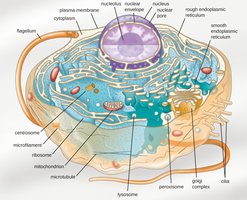
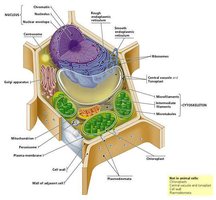
Eukaryotic cells have compartmentalized organelles:
Nucleus: Contains genetic material.
Golgi Apparatus: Packaging and vesicle formation.
Endoplasmic Reticulum: Rough (protein synthesis), Smooth (lipid synthesis).
Ribosomes: Protein synthesis.
Mitochondria: Energy production.
Lysosomes/Peroxisomes: Digestion and peroxide breakdown.
Chloroplasts: Photosynthesis (plants).
Cytoskeleton: Structural support.
Prokaryotic Cell Structure
Bacteria and Archaea are unicellular with simpler structures:
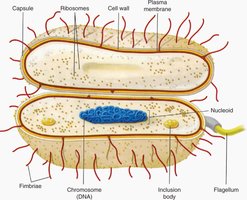
Cell envelope (capsule, cell wall, plasma membrane), cytoplasm, nucleoid, ribosomes, plasmids.
Fluid Mosaic Model of Plasma Membrane
The plasma membrane is a phospholipid bilayer with embedded proteins, cholesterol, and carbohydrates. It is semi-permeable and supports selective transport.
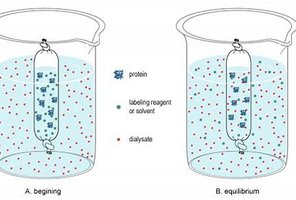
Transport Across Membranes
Types of Transport
Passive: Diffusion, facilitated diffusion, osmosis (no energy required).
Active: Requires ATP (e.g., sodium-potassium pump).
Bulk Transport: Endocytosis (phagocytosis, pinocytosis), exocytosis.
Solutions and Tonicity
Isotonic: No net movement of water.
Hypotonic: Cell swells as water enters.
Hypertonic: Cell shrivels as water leaves.
Metabolism and Enzymes
Metabolic Pathways
Metabolism includes catabolic (breakdown) and anabolic (synthesis) pathways. Key pathways include glycolysis, Krebs cycle, and Calvin cycle.
Enzyme Structure and Function
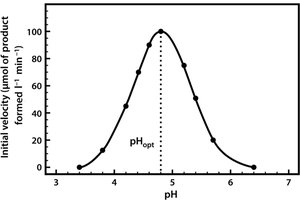
Enzymes: Biological catalysts, lower activation energy.
Active Site: Substrate binding and conversion to product.
Inhibition: Competitive (active site), non-competitive (allosteric site).
Cofactors/Coenzymes: Assist enzyme function (e.g., Mg2+, Coenzyme A).
Thermodynamics in Biology
First Law: Energy cannot be created or destroyed.
Second Law: Energy transformations are not 100% efficient.
Gibbs Free Energy:
Exergonic: Releases energy (), Endergonic: Requires energy ().
ATP Structure and Function
ATP (adenosine triphosphate) stores and provides energy for cellular processes by breaking high-energy phosphate bonds.
Photosynthesis and Cellular Respiration
Photosynthesis
Photosynthesis converts light energy into chemical energy in plants:
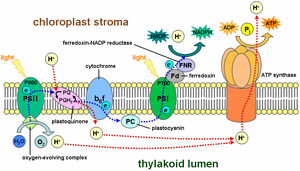
Light Reactions: Occur in thylakoid membranes, produce ATP and NADPH.
Calvin Cycle: Occurs in stroma, fixes CO2 into sugars.
Cellular Respiration
Cellular respiration releases energy from glucose:
Glycolysis: In cytoplasm, produces 2 ATP, 2 NADH, pyruvate.
Krebs Cycle: In mitochondria, produces 2 ATP, 6 NADH, 2 FADH2.
Electron Transport Chain: In inner mitochondrial membrane, produces ~34 ATP.
Overall equation:
Cell Division
Mitosis
Mitosis produces two genetically identical diploid cells for growth and repair. The cell cycle includes interphase (G1, S, G2), mitosis, and cytokinesis.
Meiosis
Meiosis produces haploid gametes, increasing genetic diversity through recombination and independent assortment.
Genetics and Inheritance
Mendelian Inheritance
Inheritance patterns follow Mendel's laws:
Law of Segregation: Alleles separate during gamete formation.
Law of Independent Assortment: Genes are inherited independently.
Punnett squares predict genotype and phenotype ratios for monohybrid and dihybrid crosses.
Genotype | Phenotype |
|---|---|
DD | Dominant |
Dd | Dominant (carrier) |
dd | Recessive |
Non-Mendelian Inheritance
Incomplete Dominance: Blending of traits (e.g., pink flowers).
Codominance: Both alleles expressed (e.g., AB blood type).
Polygenic Inheritance: Multiple genes affect one trait (e.g., skin color).
Pleiotropy: One gene affects multiple traits.
Chromosomal Abnormalities
Mutations can alter chromosome structure or number, leading to genetic disorders.
Molecular Basis of Inheritance
DNA Structure and Replication
DNA is a double helix with complementary base pairing (A-T, C-G). Replication is semi-conservative, involving enzymes like helicase, DNA polymerase, and ligase.
Transcription and Translation
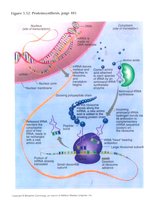
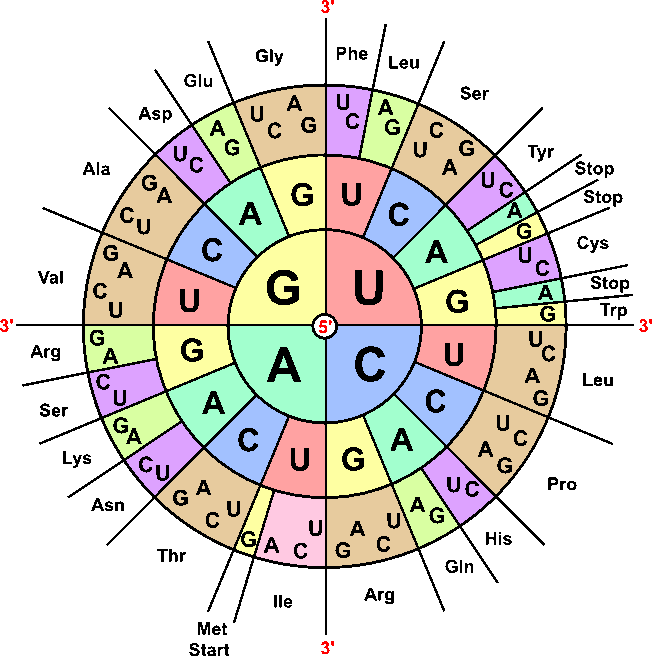
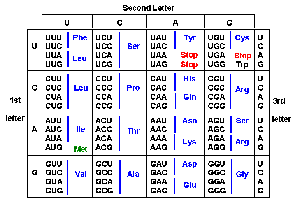
Transcription (in nucleus) produces mRNA from DNA. Translation (in cytoplasm) uses mRNA, tRNA, and rRNA to synthesize proteins.
Biotechnology
Gene Therapy
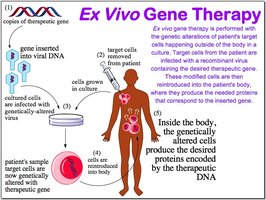
Ex Vivo: Cells are modified outside the body and reintroduced.
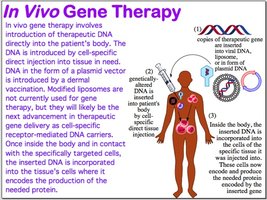
In Vivo: DNA is introduced directly into the patient's body.
Evolution and Ecology
Natural Selection and Speciation
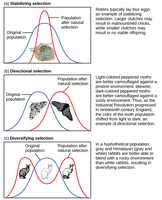
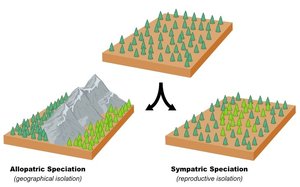
Natural selection drives evolution through differential reproductive success. Speciation can be allopatric (geographical isolation) or sympatric (reproductive isolation).
Biomes and Succession
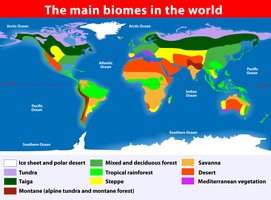
Biomes are large ecological areas with distinct climates and organisms. Succession describes changes in community structure over time (primary: no soil; secondary: soil present).
Population Models
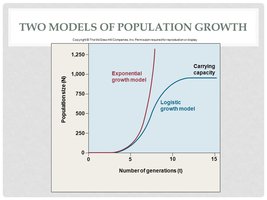
Population growth can be exponential or logistic, with carrying capacity limiting growth.
Additional info: Some explanations and diagrams have been expanded for clarity and completeness based on standard academic context for introductory biology and biochemistry courses.
