 Back
Functional Groups, Naming, and Structure Guidance for GOB Chemistry
Study Guide - Smart Notes
 Tailored notes based on your materials, expanded with key definitions, examples, and context.
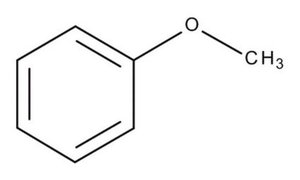
Q1. What is the name of the compound shown below?
Background
Topic: Ethers and Aromatic Groups
This question tests your ability to identify and name ethers, especially those containing aromatic rings (phenyl groups).
Key Terms and Formulas
Ether: A compound with an oxygen atom connected to two alkyl or aryl groups.
Phenyl group: A benzene ring as a substituent, often written as C6H5-.
Naming ethers: Name each group attached to the oxygen, then add 'ether' at the end.
Step-by-Step Guidance
Identify the two groups attached to the oxygen atom. One is a benzene ring (phenyl group), the other is a methyl group (CH3).
Recall that the benzene ring as a substituent is called 'phenyl', and CH3 is 'methyl'.
Combine the names of the two groups in alphabetical order, followed by 'ether'.
Check for any special naming conventions for aromatic ethers.
Try solving on your own before revealing the answer!
Final Answer: Methyl phenyl ether (also known as anisole)
The compound is named by listing the groups attached to the oxygen: methyl and phenyl. The correct name is methyl phenyl ether, but it is commonly known as anisole.
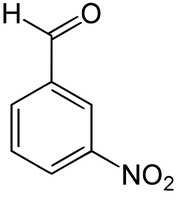
Q2. Name the compound shown below.
Background
Topic: Aldehydes and Aromatic Substituents
This question tests your ability to name aromatic aldehydes with additional substituents.
Key Terms and Formulas
Aldehyde: Contains a carbonyl group (C=O) bonded to a hydrogen.
Nitro group: NO2 attached to the ring.
Naming: The parent name is based on the benzene ring with an aldehyde (benzaldehyde), and substituents are numbered for their position.
Step-by-Step Guidance
Identify the functional groups: an aldehyde (CHO) and a nitro group (NO2).
The parent structure is benzaldehyde (benzene ring with an aldehyde).
Determine the position of the nitro group relative to the aldehyde group (numbering starts at the aldehyde carbon).
Combine the substituent name and position with the parent name.
Try solving on your own before revealing the answer!
Final Answer: 4-nitrobenzaldehyde
The nitro group is at the para (4) position relative to the aldehyde. The correct name is 4-nitrobenzaldehyde.
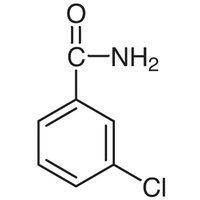
Q3. Name the compound shown below.
Background
Topic: Amides and Aromatic Substituents
This question tests your ability to name aromatic amides with additional substituents.
Key Terms and Formulas
Amide: Contains a carbonyl group (C=O) bonded to a nitrogen (NH2).
Chloro group: Cl attached to the ring.
Naming: The parent name is benzamide, and substituents are numbered for their position.
Step-by-Step Guidance
Identify the functional groups: amide (CONH2) and chloro (Cl).
The parent structure is benzamide (benzene ring with an amide group).
Determine the position of the chlorine atom relative to the amide group (numbering starts at the amide carbon).
Combine the substituent name and position with the parent name.
Try solving on your own before revealing the answer!
Final Answer: 4-chlorobenzamide
The chlorine is at the para (4) position relative to the amide. The correct name is 4-chlorobenzamide.
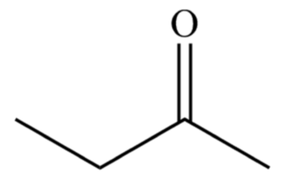
Q4. Name the compound shown below.
Background
Topic: Ketones
This question tests your ability to name simple ketones based on their structure.
Key Terms and Formulas
Ketone: Contains a carbonyl group (C=O) bonded to two carbon atoms.
Naming: The parent name is based on the longest chain containing the carbonyl, with the suffix '-one'.
Step-by-Step Guidance
Identify the longest carbon chain containing the carbonyl group.
Number the chain so the carbonyl group gets the lowest possible number.
Apply the ketone naming convention: [prefix]-[number]-one.
Check for any additional substituents (none in this case).
Try solving on your own before revealing the answer!
Final Answer: 2-butanone
The carbonyl group is on the second carbon of a four-carbon chain. The correct name is 2-butanone.
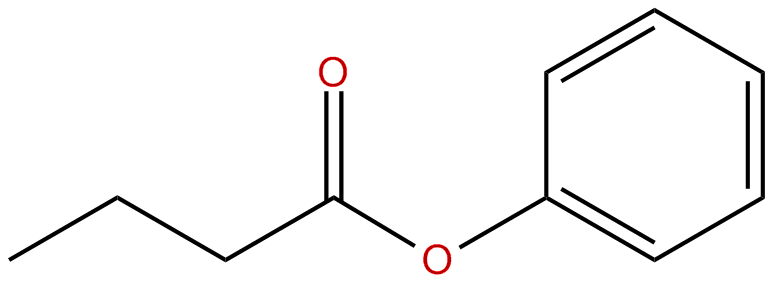
Q5. Name the compound shown below.
Background
Topic: Esters and Aromatic Substituents
This question tests your ability to name esters, especially those with aromatic rings.
Key Terms and Formulas
Ester: Contains a carbonyl group (C=O) bonded to an oxygen, which is bonded to another carbon group.
Naming: The group attached to the oxygen is named as an alkyl or aryl group (-yl), and the group attached to the carbonyl is named as an alkanoate (-oate).
Step-by-Step Guidance
Identify the group attached to the oxygen (phenyl group).
Identify the group attached to the carbonyl carbon (butyl group).
Name the oxygen-attached group as 'phenyl', and the carbonyl-attached group as 'butanoate'.
Combine the names: [oxygen group]-[carbonyl group] (phenyl butanoate).
Try solving on your own before revealing the answer!
Final Answer: Phenyl butanoate
The ester is named by the group attached to the oxygen (phenyl) and the group attached to the carbonyl (butanoate). The correct name is phenyl butanoate.
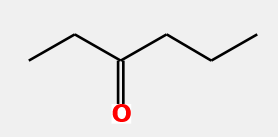
Q6. Name the compound shown below.
Background
Topic: Ketones
This question tests your ability to name ketones based on their structure.
Key Terms and Formulas
Ketone: Contains a carbonyl group (C=O) bonded to two carbon atoms.
Naming: The parent name is based on the longest chain containing the carbonyl, with the suffix '-one'.
Step-by-Step Guidance
Identify the longest carbon chain containing the carbonyl group.
Number the chain so the carbonyl group gets the lowest possible number.
Apply the ketone naming convention: [prefix]-[number]-one.
Check for any additional substituents (none in this case).
Try solving on your own before revealing the answer!
Final Answer: 2-pentanone
The carbonyl group is on the second carbon of a five-carbon chain. The correct name is 2-pentanone.
