 Back
BackGlucose and Fructose: Structure, Properties, and Applications
Study Guide - Smart Notes
 Tailored notes based on your materials, expanded with key definitions, examples, and context.
Carbohydrates
Definition and Classification
Carbohydrates are organic compounds composed of carbon, hydrogen, and oxygen, typically with the general formula Cn(H2O)m. They are essential biomolecules found in all living organisms and serve as a primary source of energy.
Monosaccharides: Simple sugars with the formula C6H12O6 (e.g., glucose, fructose).
Disaccharides: Composed of two monosaccharide units (e.g., sucrose, C12H22O11).
Polysaccharides: Long chains of monosaccharide units (e.g., starch, (C6H10O5)n).
Not all compounds with the formula Cn(H2O)m are carbohydrates; classification depends on structural features such as the presence of polyhydroxy and carbonyl groups.
Key Structural Features
Carbohydrates are classified based on the number of sugar units and the nature of their functional groups (aldehyde or ketone).
Monosaccharides are further classified as aldoses (containing an aldehyde group) or ketoses (containing a ketone group).
Glucose and Fructose
Occurrence and Physical Properties
Glucose and fructose are two important monosaccharides found widely in nature.
Glucose: A sweet, highly water-soluble solid found in fruits, honey, and plant tissues. In human blood, its concentration is about 4.4–7.2 mmol/L (80–130 mg/dL).
Fructose: A sweet, highly water-soluble solid present in many fruits (pineapple, mango, apple, pomegranate, pear) and especially abundant in honey (about 40% fructose and 30% glucose by mass).
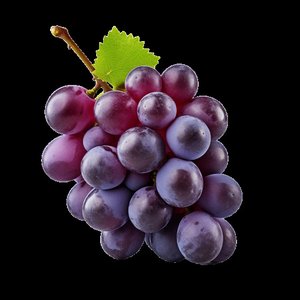
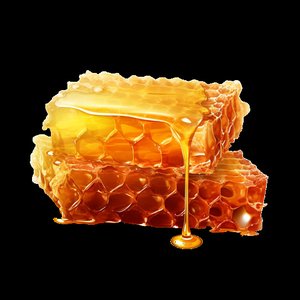
Example: Honey is sweeter than ripe fruits because it contains a higher proportion of fructose, which is sweeter than glucose.
Molecular Structure
Both glucose and fructose are polyhydroxy carbonyl compounds, meaning they contain multiple hydroxyl (−OH) groups and a carbonyl group (either aldehyde or ketone).
Glucose: An aldohexose (contains an aldehyde group at C1).
Fructose: A ketohexose (contains a ketone group at C2).
Both can exist in open-chain (acyclic) and cyclic (ring) forms. In solution, these forms interconvert.
Open-Chain Structures
Both have unbranched carbon chains, multiple hydroxyl groups, and one carbonyl group.
Glucose: Five consecutive hydroxyl groups and one terminal aldehyde group.
Fructose: Four consecutive hydroxyl groups and one ketone group at C2.
Chemical Properties
The chemical reactivity of glucose and fructose is determined by their functional groups. Key reactions include:
1. Reaction with Copper(II) Hydroxide [Cu(OH)2]
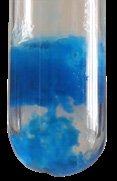
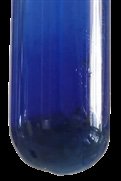
Both glucose and fructose react with Cu(OH)2 due to their polyhydroxy structure, forming a deep blue solution.
Glucose (and fructose) dissolve Cu(OH)2 due to the formation of a complex with the hydroxyl groups.
Equation:
2. Reaction with Cu(OH)2 in Alkaline Solution (Heated)
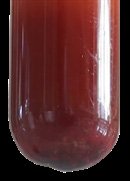
When heated with Cu(OH)2 in NaOH, glucose (an aldehyde) reduces Cu(II) to Cu(I), forming a brick-red precipitate of Cu2O. Fructose, though a ketose, can isomerize under alkaline conditions and also gives a positive result.
Equation:
3. Reaction with Tollens' Reagent (Silver Mirror Test)
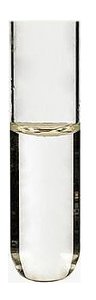
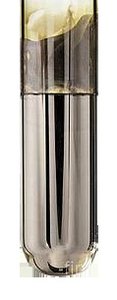
Glucose reacts with Tollens' reagent (ammoniacal AgNO3) to produce a silver mirror, indicating the presence of an aldehyde group. Fructose can also give a positive result after isomerization in basic medium.
Equation:
4. Reaction with Bromine Water
Glucose reacts with bromine water, which oxidizes the aldehyde group to a carboxylic acid, forming gluconic acid. Fructose does not react directly with bromine water.
Equation:
5. Fermentation Reactions
Glucose can undergo fermentation to produce ethanol (alcoholic fermentation) or lactic acid (lactic fermentation), depending on the enzymes present.
Alcoholic fermentation:
Lactic fermentation:
Fermentation requires moderate temperatures; high temperatures can denature the enzymes involved.
6. Hemiacetal Hydroxyl Group
The hemiacetal −OH group in cyclic glucose is more reactive than other hydroxyl groups and can react with alcohols to form acetals (glycosides). In open-chain glucose, this group is absent.
Summary Table: Characteristic Reactions of Glucose and Fructose
Test | Glucose | Fructose |
|---|---|---|
Cu(OH)2 (cold) | Blue solution (polyhydroxy) | Blue solution (polyhydroxy) |
Cu(OH)2 + NaOH (hot) | Brick-red Cu2O (aldehyde) | Brick-red Cu2O (after isomerization) |
Tollens' reagent | Silver mirror (aldehyde) | Silver mirror (after isomerization) |
Bromine water | Oxidation to gluconic acid | No reaction |
Fermentation | Alcoholic/lactic | Alcoholic/lactic |
Applications of Glucose and Fructose
Widely used in the food industry (sweets, syrups, jams, canned fruits).
Glucose is used in silvering mirrors, making candy, vitamin C production, and as a medical intravenous solution for treating hypoglycemia.
Fructose is used in syrups, candies, jams, and canned fruits due to its high sweetness.
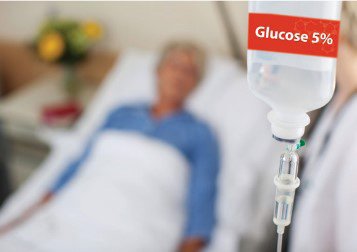
Example: In medicine, 5% glucose solution is administered intravenously to quickly raise blood sugar levels in cases of hypoglycemia.
