 Back
GOB Chemistry Recitation Activity & Mock Test Guidance – Thermodynamics, Reaction Types, Sugar Chemistry
Study Guide - Smart Notes
 Tailored notes based on your materials, expanded with key definitions, examples, and context.
Q2. Which of the following factors influence the rate of a reaction?
Background
Topic: Reaction Kinetics
This question tests your understanding of the factors that affect how quickly a chemical reaction occurs. These include temperature, concentration of reactants, and the presence of a catalyst.
Key Terms:
Temperature: Higher temperatures generally increase reaction rates.
Reactant Concentration: Higher concentrations usually lead to faster reactions.
Catalyst: A substance that speeds up a reaction without being consumed.
Step-by-Step Guidance
Recall that increasing temperature provides more energy to reactant molecules, making collisions more frequent and effective.
Consider how increasing the concentration of reactants increases the likelihood of collisions between molecules.
Think about the role of a catalyst in lowering the activation energy required for a reaction to proceed.
Review the answer choices and identify which ones include all relevant factors.
Try solving on your own before revealing the answer!
Final Answer: d. Temperature, reactant concentration, and a catalyst
All three factors—temperature, concentration, and catalyst—are known to influence the rate of a chemical reaction.
Q3. What type of reaction is illustrated in this diagram?
Background
Topic: Types of Chemical Reactions
This question asks you to identify the type of reaction based on a visual representation of reactants and products.
Key Terms:
Synthesis: Two or more substances combine to form one product.
Decomposition: One substance breaks down into two or more products.
Single Displacement: One element replaces another in a compound.
Double Displacement: Two compounds exchange ions to form new compounds.
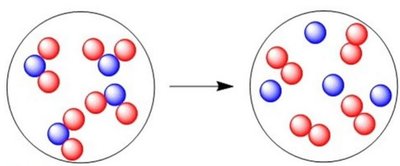
Step-by-Step Guidance
Observe the reactants and products in the diagram. Are two substances combining, or is one breaking apart?
Look for evidence of exchange or replacement of atoms between molecules.
Compare the visual changes to the definitions of reaction types above.
Match the diagram to the most appropriate reaction type.
Try solving on your own before revealing the answer!
Final Answer: d. Double displacement
The diagram shows two compounds exchanging parts, which is characteristic of a double displacement reaction.
Q4. This equation represents a ________ reaction.
Background
Topic: Reaction Classification
This question tests your ability to classify a reaction based on the chemical equation provided.
Key Terms:
Carboxylation: Addition of a carboxyl group.
Oxidation: Loss of electrons or increase in oxidation state.
Reduction: Gain of electrons or decrease in oxidation state.
Hydrolysis: Breaking a bond using water.

Step-by-Step Guidance
Examine the reactants and products. Is water produced or consumed?
Check for changes in oxidation states of carbon atoms.
Identify if a carboxyl group is added or removed.
Compare the equation to the definitions above to determine the reaction type.
Try solving on your own before revealing the answer!
Final Answer: a. Carboxylation
The reaction shows the addition of a carboxyl group, which is characteristic of carboxylation.
Q5. True or False: Hydrogenation of an alkene is a reduction reaction.
Background
Topic: Organic Reaction Types
This question tests your understanding of hydrogenation and its classification as a reduction or oxidation reaction.
Key Terms:
Hydrogenation: Addition of hydrogen to a molecule.
Reduction: Gain of electrons or hydrogen.
Step-by-Step Guidance
Recall that reduction involves the gain of hydrogen or loss of oxygen.
Consider what happens to an alkene during hydrogenation (hydrogen atoms are added).
Determine if this fits the definition of reduction.
Try solving on your own before revealing the answer!
Final Answer: True
Hydrogenation adds hydrogen to an alkene, which is a reduction process.
Q6. Which one of these molecules is an epimer of D-allose?
Background
Topic: Carbohydrate Stereochemistry
This question tests your ability to identify epimers—sugars that differ at only one chiral center—from a set of Fischer projections.
Key Terms:
Epimer: Two sugars that differ at only one chiral center.
D-allose: A specific aldohexose sugar.
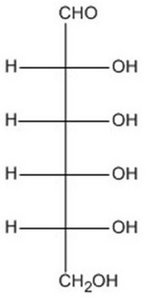
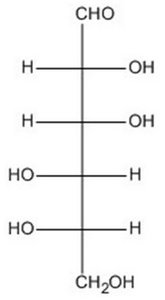
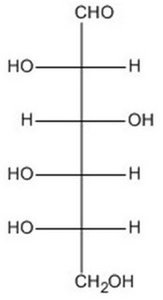
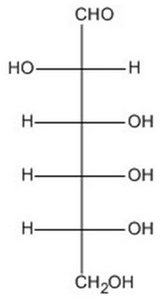
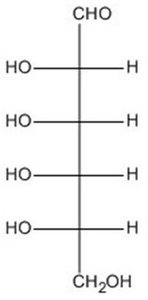
Step-by-Step Guidance
Compare each option to the structure of D-allose.
Identify which option differs from D-allose at only one chiral center.
Check the configuration (H/OH) at each carbon to confirm the epimer relationship.
Eliminate options that differ at more than one chiral center.
Try solving on your own before revealing the answer!
Final Answer: b. (image_5)
Option b differs from D-allose at only one chiral center, making it an epimer.
Q1. Consider the following two energy diagrams for reactions I and II:
Background
Topic: Thermodynamics & Reaction Rates
This question tests your ability to interpret energy diagrams and relate them to reaction spontaneity, activation energy, and speed.
Key Terms:
Exergonic: Reaction releases energy (ΔG < 0).
Endergonic: Reaction absorbs energy (ΔG > 0).
Activation Energy: Minimum energy required for a reaction.
ΔG: Gibbs free energy change.
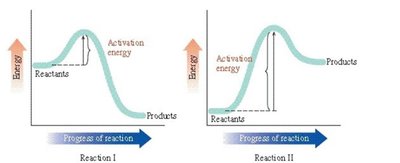
Step-by-Step Guidance
Compare the energy levels of reactants and products in each diagram.
Identify which reaction has products lower in energy than reactants (exergonic).
Determine which reaction has a positive ΔG (products higher in energy).
Examine the activation energy for each reaction and compare their heights.
Predict which reaction would occur faster based on activation energy.
Try solving on your own before revealing the answer!
Final Answers:
a. Reaction I is exergonic.
b. Reaction II possesses a positive ΔG.
c. Reaction II has a smaller activation energy.
d. Reaction II is predicted to occur at faster speed.
These answers are based on the energy diagrams and the definitions of exergonic, endergonic, and activation energy.
Q8. In the following disaccharide, locate and fully name the glycosidic bonds.
Background
Topic: Carbohydrate Chemistry
This question tests your ability to identify and name glycosidic linkages in disaccharides.
Key Terms:
Glycosidic bond: Covalent bond joining two monosaccharides.
Alpha and beta: Refers to the configuration of the anomeric carbon.
Numbering: Bonds are named based on the carbons involved (e.g., 1→4).
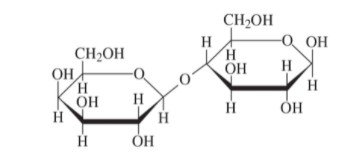
Step-by-Step Guidance
Identify the two monosaccharide units in the disaccharide.
Locate the glycosidic bond connecting the two rings.
Determine the carbon numbers involved in the bond (e.g., C1 of one sugar to C4 of the other).
Check the configuration (alpha or beta) at the anomeric carbon.
Try solving on your own before revealing the answer!
Final Answer:
The glycosidic bond is an alpha-1,4 linkage. The bond connects the anomeric carbon (C1) of the first glucose (alpha configuration) to the C4 of the second glucose.
