 Back
GOB Chemistry Study Guide: Ionic Compounds, Covalent Compounds, Moles, and Molarity
Study Guide - Smart Notes
 Tailored notes based on your materials, expanded with key definitions, examples, and context.
Ionic and Covalent Bonding
Types of Chemical Bonds
Chemical bonds are formed by the interaction of valence electrons between atoms. The two main types are ionic bonds and covalent bonds.
Ionic Bond: Formed between a metal and a nonmetal. Electrons are transferred from the metal to the nonmetal, resulting in ions of opposite charge that attract each other. Example: NaCl, MgO.
Covalent Bond: Formed between two nonmetals or a nonmetal and a metalloid. Electrons are shared as pairs between atoms, forming molecules. Example: CO2, NH3.
Valence electrons drive all bonding, aiming for a stable electron configuration (octet).
Comparison Table: Ionic vs Covalent Bonds
Bond Type | Elements Involved | Electron Behavior | What Forms | Examples |
|---|---|---|---|---|
Ionic | Metal + Nonmetal | Transferred | Ions | NaCl, CaF2 |
Covalent | Nonmetal + Nonmetal | Shared | Molecules | CO2, NH3 |
Ions and Their Charges
Formation of Ions
Atoms gain or lose valence electrons to reach the electron count of the nearest noble gas. Metals lose electrons to become cations (+), while nonmetals gain electrons to become anions (−).
Group 1A: Lose 1 electron → +1 charge (e.g., Na+)
Group 2A: Lose 2 electrons → +2 charge (e.g., Ca2+)
Group 3A: Lose 3 electrons → +3 charge (e.g., Al3+)
Group 5A: Gain 3 electrons → −3 charge (e.g., N3−)
Group 6A: Gain 2 electrons → −2 charge (e.g., O2−)
Group 7A: Gain 1 electron → −1 charge (e.g., Cl−)
Isoelectronic ions have the same electron count as a noble gas.
Electron Configurations of Ions
Cations lose their entire valence shell (e.g., Na: 1s22s22p63s1 → Na+: 1s22s22p6).
Anions fill their valence shell (e.g., Cl: 1s22s22p63s23p5 → Cl−: 1s22s22p63s23p6).
Ionic Formulas, Names, and Properties
Writing Ionic Formulas
The total positive charge must equal the total negative charge. Use subscripts to balance charges.
Write each ion with its charge (e.g., Ca2+, N3−).
Find the lowest common multiple of the charges.
Use subscripts to reach it: Ca3N2.
Polyatomic Ions
A polyatomic ion is a group of covalently bonded atoms with an overall charge. When more than one is needed, use parentheses.
Examples: NH4+ (ammonium), SO42− (sulfate), NO3− (nitrate).
Ca2+ + PO43− → Ca3(PO4)2
Naming Ionic Compounds
Name the cation first, then the anion with an –ide ending (e.g., KCl is potassium chloride).
Metals with variable charge require a Roman numeral (e.g., FeCl3 is iron(III) chloride).
Never use prefixes for ionic compounds.
Properties of Ionic Compounds
High melting point due to strong electrostatic attractions.
Solid does not conduct electricity; molten or dissolved forms do.
Covalent Bonding Basics
Lewis Structures and Bond Types
A covalent bond is a shared pair of valence electrons. Atoms share electrons to achieve an octet, with exceptions for H, He, and some elements like B, P, S, Cl.
Single bond: 2 shared electrons (H–H)
Double bond: 4 shared electrons (O=O)
Triple bond: 6 shared electrons (N≡N)
Lone pair: Pair of unshared electrons
Bonding and Lone Pairs by Group
Group | Valence e− | Bonds | Lone Pairs | Examples |
|---|---|---|---|---|
1A (H) | 1 | 1 | 0 | H in H2O |
4A (C, Si) | 4 | 4 | 0 | CH4 |
5A (N, P) | 5 | 3 | 1 | NH3 |
6A (O, S) | 6 | 2 | 2 | H2O |
7A (F, Cl) | 7 | 1 | 3 | HF |
Lewis Structures
Steps to Draw Lewis Structures
Count total valence electrons.
Pick the central atom (never H).
Connect atoms with single bonds, then add lone pairs to complete octets.
Add double or triple bonds if needed, ensuring the total electron count matches.
Examples of Lewis Structures
CO2: O=C=O, each O has 2 lone pairs.
HCN: H–C≡N, N has 1 lone pair.
CH2O: C double-bonded to O, single-bonded to H, O has 2 lone pairs.
Molecular Shapes (VSEPR Theory)
VSEPR and Molecular Geometry
Electron groups around a central atom repel each other, determining the molecule's shape. Each bond (single, double, triple) and lone pair counts as one group.
Electron Groups | Bonded Atoms | Lone Pairs | Geometry | Examples |
|---|---|---|---|---|
2 | 2 | 0 | Linear | CO2, HCN |
3 | 3 | 0 | Trigonal planar | BF3 |
3 | 2 | 1 | Bent | SO2 |
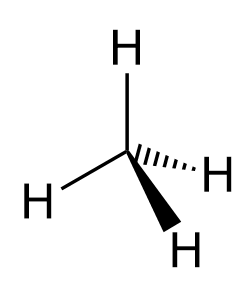
4 | 4 | 0 | Tetrahedral | CH4 |
4 | 3 | 1 | Trigonal pyramidal | NH3 |
4 | 2 | 2 | Bent | H2O |
Wedge-dash notation is used to represent 3D shapes on paper.
Naming Covalent Compounds and Skeletal Structures
Binary Covalent Compound Naming
Use Greek prefixes for the number of atoms (mono-, di-, tri-, etc.).
Name the first element in full, then the second with an –ide ending.
Drop "mono-" on the first element and vowels before "oxide" (e.g., carbon monoxide).
Examples: CO2 is carbon dioxide, SiCl4 is silicon tetrachloride.
Skeletal (Line) Structures
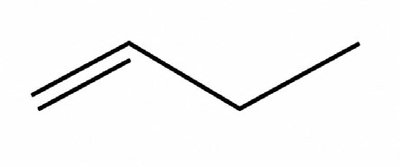
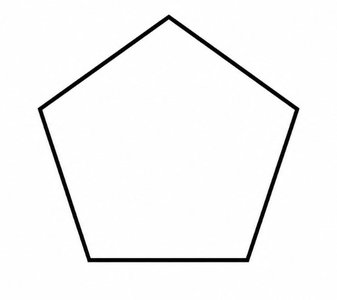
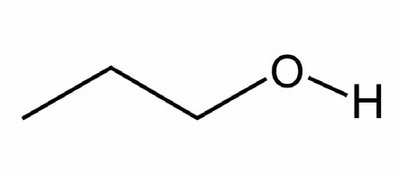
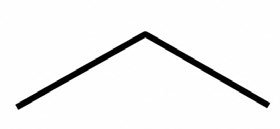
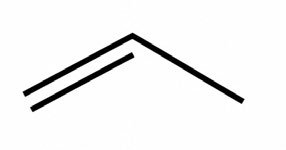
Skeletal structures simplify organic molecules by omitting carbon and hydrogen atoms bonded to carbon. Each line end or bend represents a carbon atom.
Each carbon needs 4 bonds; missing bonds are C–H.
Atoms other than C and H (O, N, OH) are shown explicitly.
Electronegativity and Polarity
Electronegativity Trends
Electronegativity is the ability of an atom to attract shared electrons. It increases across a period and decreases down a group. Fluorine is the most electronegative element.
Bond Polarity
Nonpolar covalent: Same element or nearly equal electronegativity (e.g., H–H, Cl–Cl).
Polar covalent: Different elements with a clear electronegativity difference (e.g., H–F, C=O).
In a polar bond, the more electronegative atom becomes δ−, the other δ+.
Molecular Polarity
A molecule is nonpolar if its shape makes the bond dipoles cancel. Ask: Are there polar bonds? Is the arrangement symmetric?
Molecule | Shape | Polar Bonds? | Dipoles Cancel? | Polarity |
|---|---|---|---|---|
CO2 | Linear | Yes | Yes | Nonpolar |
H2O | Bent | Yes | No | Polar |
CH4 | Tetrahedral | No | Yes | Nonpolar |
NH3 | Trigonal pyramidal | Yes | No | Polar |
Moles, Molar Mass, and Conversions
The Mole Concept
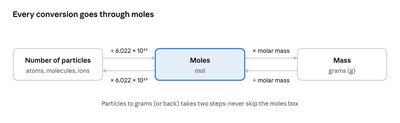
A mole is a counting unit: 1 mol = 6.022 × 10²³ particles (Avogadro's number). Moles connect the number of particles to mass.
Molar Mass
Molar mass (g/mol) is the sum of atomic masses for all atoms in a compound. Use subscripts to multiply atomic masses.
Glucose (C6H12O6): 6(12.011) + 12(1.008) + 6(15.999) = 180.16 g/mol
CO2: 12.011 + 2(15.999) = 44.01 g/mol
Conversions
Particles to moles:
Moles to particles:
Mass to moles:
Moles to mass:
Molarity and Dilution
Molarity (M)
Molarity is the concentration of a solution, defined as moles of solute per liter of solution.
Convert mL to L before using M.
Dilution Calculations
Dilution adds solvent, keeping the moles of solute constant. Use the formula:
Where 1 = stock/concentrated, 2 = diluted.
Small Concentrations
1 M = 1000 mM = 106 μM
To convert: multiply by 1000 for mM, by 106 for μM.
Example: 2.5 × 10⁻⁴ M = 0.25 mM = 250 μM
Additional info: These notes cover the essential GOB Chemistry topics for exam preparation, including ionic and covalent compounds, molecular shapes, naming conventions, moles, molar mass, and solution concentration calculations.
