 Back
BackIdentifying the Steroid Skeleton in Lipid Chemistry
Study Guide - Smart Notes
 Tailored notes based on your materials, expanded with key definitions, examples, and context.
Q15. Which structure is the steroid skeleton?
Background
Topic: Lipid Structure – Steroids
This question tests your ability to recognize the basic structural framework of steroids, which are a class of lipids characterized by a specific arrangement of fused rings.
Key Terms and Formulas
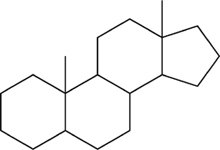
Steroid skeleton: The core structure of steroids consists of four fused rings: three cyclohexane rings and one cyclopentane ring, often referred to as the "cyclopentanoperhydrophenanthrene" ring system.
Fused rings: Rings that share two or more atoms, forming a rigid structure.
Functional groups: Steroids may have various functional groups attached, but the basic skeleton remains the same.
Step-by-Step Guidance
Examine each structure for the presence of four fused rings: three six-membered rings and one five-membered ring.
Identify the arrangement: The rings should be fused in a specific pattern, forming a compact, rigid structure.
Ignore any additional functional groups or side chains for this question; focus only on the ring system.
Compare the provided images to the textbook representation of the steroid skeleton.
Look for the structure that matches the classic steroid ring system.
Try solving on your own before revealing the answer!
Final Answer: Structure A (image_1) is the steroid skeleton.
The steroid skeleton is defined by its four fused rings: three cyclohexane rings and one cyclopentane ring. Structure A matches this arrangement, making it the correct answer.
