 Back
Introduction to Hydrocarbons and Electronic Structure of the Atom
Study Guide - Smart Notes
 Tailored notes based on your materials, expanded with key definitions, examples, and context.
Introduction to Hydrocarbons
Definition and Classification of Hydrocarbons
Hydrocarbons are organic compounds composed exclusively of carbon and hydrogen atoms. They are the simplest type of organic molecules and serve as the foundation for more complex organic compounds. Hydrocarbons are classified based on the types of bonds between carbon atoms and their structural arrangement.
Alkanes: Saturated hydrocarbons containing only single covalent bonds between carbon atoms.
Alkenes: Unsaturated hydrocarbons containing at least one carbon-carbon double bond.
Alkynes: Unsaturated hydrocarbons containing at least one carbon-carbon triple bond.
Open-chain (aliphatic) and cyclic hydrocarbons: Hydrocarbons can be arranged in straight or branched chains (aliphatic) or in rings (cyclic).
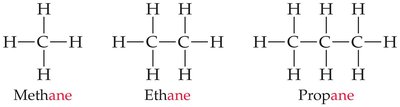
Example: Methane (CH4), ethane (C2H6), and propane (C3H8) are simple alkanes.
Saturated vs. Unsaturated Hydrocarbons
The distinction between saturated and unsaturated hydrocarbons is based on the presence of multiple bonds between carbon atoms.
Saturated hydrocarbons (alkanes): Only single bonds; maximum number of hydrogen atoms attached to each carbon.
Unsaturated hydrocarbons (alkenes and alkynes): Contain double or triple bonds, resulting in fewer hydrogen atoms.
Example: Ethene (C2H4) is an alkene, and ethyne (C2H2) is an alkyne.
Isomerism in Hydrocarbons
Isomers are compounds with the same molecular formula but different structural arrangements. Isomerism becomes possible as the number of carbon atoms increases.
Example: Butane (C4H10) has two isomers: n-butane and isobutane.
Formulas of Hydrocarbons
Molecular formula: Shows the actual number of each type of atom (e.g., C4H10 for butane).
Empirical formula: Shows the simplest whole-number ratio of atoms (e.g., C2H5 for butane).
Structural formula: Shows the arrangement of atoms and bonds.
Nomenclature of Alkanes, Alkenes, and Alkynes
Organic compounds are named using the IUPAC system, which is based on the number of carbon atoms and the types of bonds present.
The root name indicates the number of carbons (meth-, eth-, prop-, but-, etc.).
Alkanes end with -ane, alkenes with -ene, and alkynes with -yne.
For alkenes and alkynes, the position of the double or triple bond is indicated by the lowest possible number.
Substituents (alkyl groups) are named and numbered to indicate their position on the main chain.
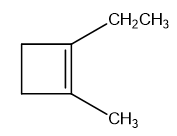
Example: 3-ethyl-3-methyl-1-heptene is an alkene with a seven-carbon chain, a double bond starting at carbon 1, and ethyl and methyl groups at carbon 3.
Drawing and Naming Hydrocarbons
To draw and name hydrocarbons, follow these steps:
Identify the longest continuous carbon chain (parent chain).
Number the chain from the end nearest a multiple bond or substituent.
Name and number substituents.
Indicate the position and type of multiple bonds.
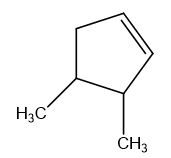
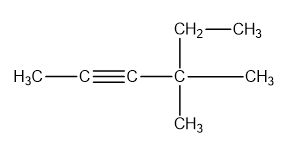
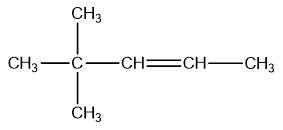
Examples of Hydrocarbon Structures
Electronic Structure of the Atom
Quantum Mechanics and Atomic Orbitals
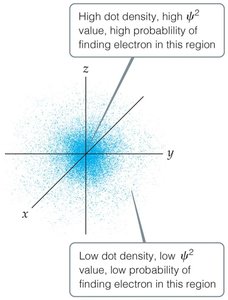
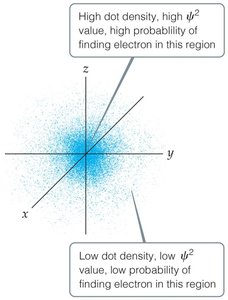
Quantum mechanics describes the behavior of electrons in atoms. The Schrödinger equation provides wave functions (orbitals) that describe the probability distribution of electrons.
The square of the wave function, , gives the probability density of finding an electron in a particular region.
Quantum Numbers
Each electron in an atom is described by a set of four quantum numbers:
Principal quantum number (n): Indicates the energy level (n = 1, 2, 3, ...).
Angular momentum quantum number (l): Defines the shape of the orbital (l = 0 to n-1).
Magnetic quantum number (ml): Specifies the orientation of the orbital (ml = -l to +l).
Spin quantum number (ms): Describes the spin of the electron (ms = +1/2 or -1/2).
Relationship Among Quantum Numbers
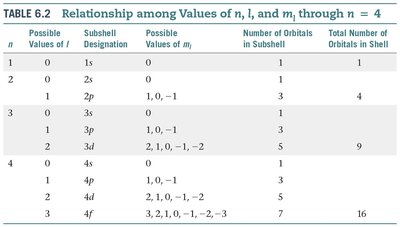
The possible combinations of quantum numbers determine the types and numbers of orbitals in each energy level.
n | l | Subshell | ml | Number of Orbitals | Total Orbitals in Shell |
|---|---|---|---|---|---|
1 | 0 | 1s | 0 | 1 | 1 |
2 | 0 | 2s | 0 | 1 | 4 |
2 | 1 | 2p | -1, 0, 1 | 3 | 4 |
3 | 0 | 3s | 0 | 1 | 9 |
3 | 1 | 3p | -1, 0, 1 | 3 | 9 |
3 | 2 | 3d | -2, -1, 0, 1, 2 | 5 | 9 |
4 | 0 | 4s | 0 | 1 | 16 |
4 | 1 | 4p | -1, 0, 1 | 3 | 16 |
4 | 2 | 4d | -2, -1, 0, 1, 2 | 5 | 16 |
4 | 3 | 4f | -3, -2, -1, 0, 1, 2, 3 | 7 | 16 |
Shapes of Atomic Orbitals
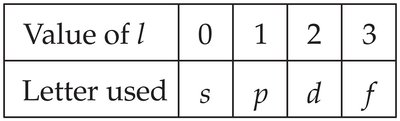
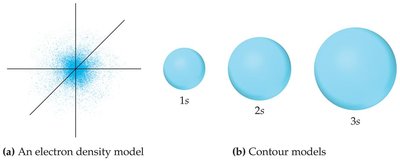
s orbitals (l = 0): Spherical shape; size increases with n.
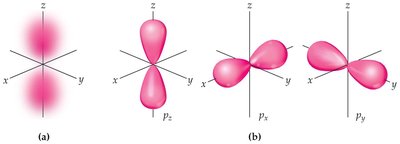
p orbitals (l = 1): Dumbbell-shaped; oriented along x, y, or z axes.
d orbitals (l = 2): Four have cloverleaf shapes; one has a doughnut shape.
f orbitals (l = 3): More complex shapes.
Electron Shells, Subshells, and Orbitals
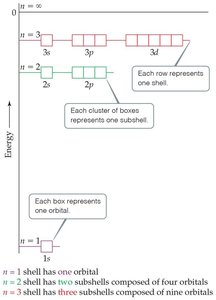
Each principal energy level (shell) contains one or more subshells, and each subshell contains one or more orbitals.
Orbital Energies and Filling Order
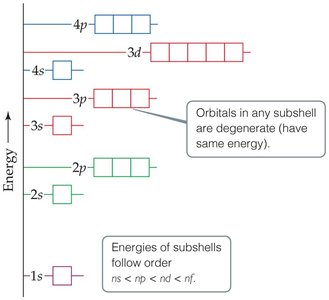
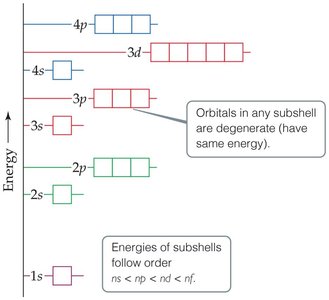
In hydrogen, all orbitals in the same shell have the same energy (degenerate). In multi-electron atoms, repulsions cause energy splitting, and orbitals fill in a specific order:
Order of filling:
Spin Quantum Number and Pauli Exclusion Principle
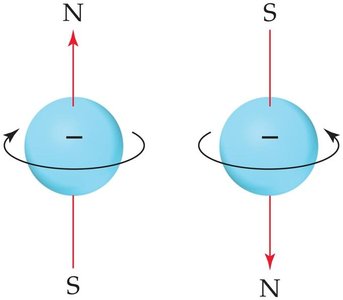
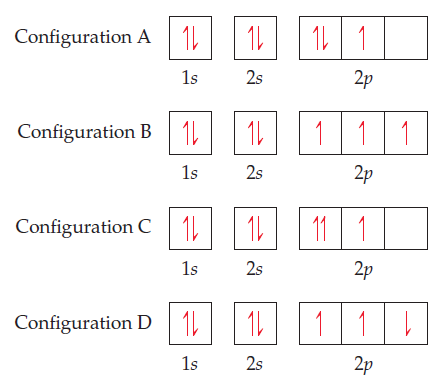
Each orbital can hold a maximum of two electrons with opposite spins. The Pauli Exclusion Principle states that no two electrons in an atom can have the same set of four quantum numbers.
Electron Configurations and Orbital Diagrams
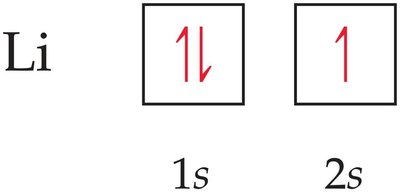
Electron configuration describes the arrangement of electrons in an atom. Orbital diagrams use boxes and arrows to represent orbitals and electron spins.
Example: Lithium (Li): 1s2 2s1
Hund's Rule
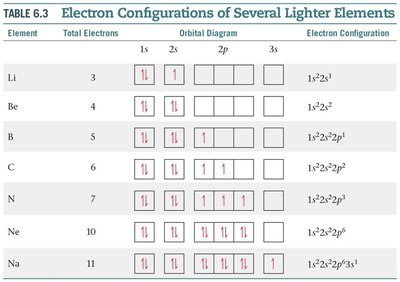
When filling degenerate orbitals (orbitals of equal energy), electrons fill empty orbitals singly before pairing up, and all unpaired electrons have the same spin.
Condensed Electron Configurations and the Periodic Table
Condensed (noble gas) notation uses the symbol of the previous noble gas to represent core electrons, followed by the configuration of valence electrons. The periodic table structure reflects the order of orbital filling.

Electron Configuration Anomalies
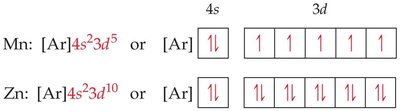
Some elements, especially transition metals, have electron configurations that differ from the expected order due to the stability of half-filled or fully filled subshells.
Example: Chromium (Cr): [Ar] 4s1 3d5 instead of [Ar] 4s2 3d4
Practice: Identifying Correct Electron Configurations
Given several possible orbital diagrams, only one will satisfy the Pauli Exclusion Principle and Hund's Rule for a given element.
Summary Table: Quantum Numbers and Orbitals
Value of l | 0 | 1 | 2 | 3 |
|---|---|---|---|---|
Letter used | s | p | d | f |
*Additional info: This guide covers the foundational concepts of hydrocarbons and atomic structure, including quantum numbers, orbital shapes, electron configurations, and their relationship to the periodic table. These topics are essential for understanding chemical bonding and reactivity in GOB Chemistry.*
