 Back
BackIntroduction to Organic Chemistry: Alkanes – Structured Study Notes
Study Guide - Smart Notes
 Tailored notes based on your materials, expanded with key definitions, examples, and context.
Chapter 12: Introduction to Organic Chemistry – Alkanes
12.1 The Nature of Organic Molecules
Organic chemistry is the study of carbon compounds, which are characterized by the tetravalent nature of carbon and the diversity of covalent bonding patterns. Organic molecules often contain hydrogen, oxygen, and nitrogen in addition to carbon.
Carbon is tetravalent: It forms four covalent bonds, allowing for a variety of molecular shapes and structures.
Covalent bonds are the primary type of bonding in organic molecules.
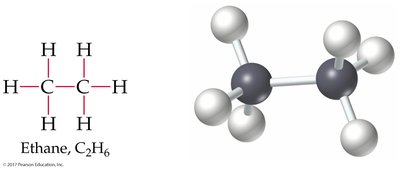
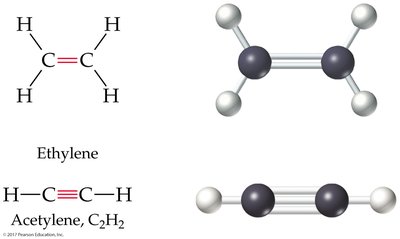
Carbon can form single, double, or triple bonds with other atoms, leading to different molecular geometries:
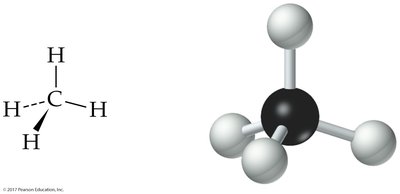
4 groups attached: Tetrahedral
3 groups attached: Trigonal planar
2 groups attached: Linear
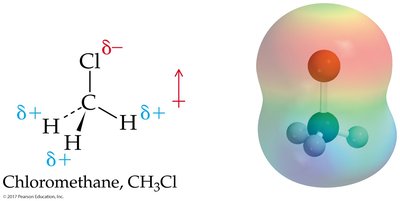
When carbon bonds to more electronegative elements (e.g., O, N, halogens), polar covalent bonds result.
Organic molecules have specific three-dimensional shapes, which influence their chemical behavior.
Most organic compounds are insoluble in water and do not conduct electricity; only small polar molecules or those with many polar groups are water-soluble.
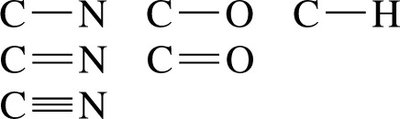
12.2 Families of Organic Molecules: Functional Groups
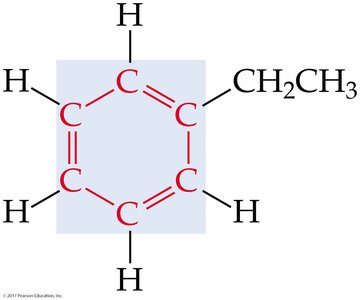
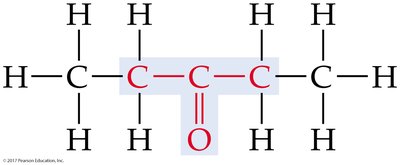
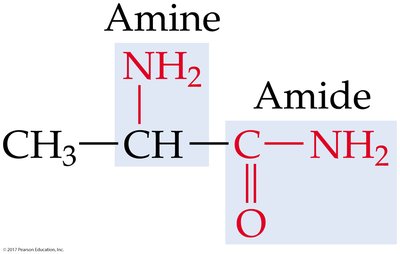
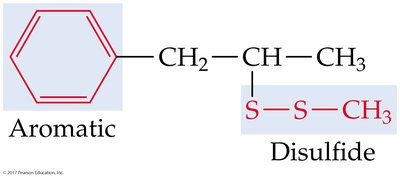
Functional groups are specific atoms or groups of atoms within molecules that determine the characteristic chemical reactions of those molecules. Organic compounds are classified into families based on their functional groups.
Functional group: An atom or group of atoms with characteristic chemical behavior.
Functional groups dictate the chemistry of organic molecules more than molecular size or complexity.
Hydrocarbons (contain only C and H):
Alkanes: Only single bonds, no functional group.
Alkenes: Contain C=C double bonds.
Alkynes: Contain C≡C triple bonds.
Aromatic compounds: Six-membered rings with alternating double bonds.
Other families (contain heteroatoms):
Alkyl halides: C–halogen bond
Alcohols: C–OH bond
Ethers: C–O–C linkage
Amines: C–N bond
Carbonyl compounds (C=O): Aldehydes, ketones, carboxylic acids, anhydrides, esters, amides
Sulfur-containing: Thiols, sulfides, disulfides
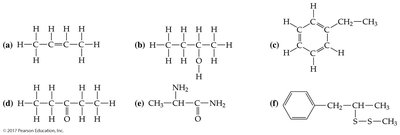
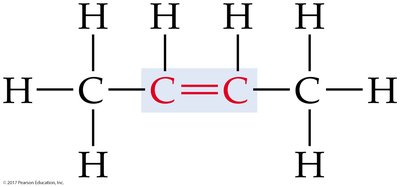
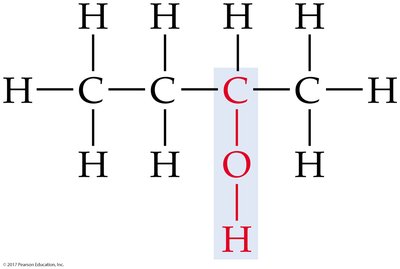
Worked Example: Proposing Structures from Formulas
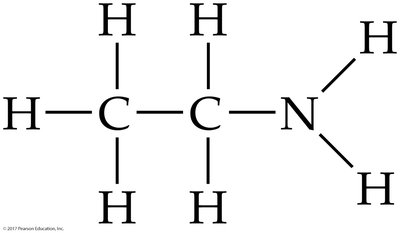
(a) Amines (C2H7N): Contains a C–NH2 group.
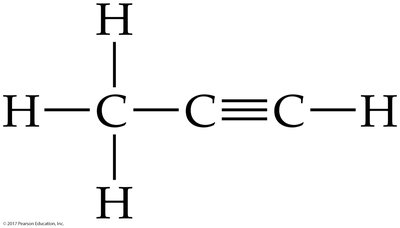
(b) Alkynes (C3H4): Contains a C≡C triple bond.
(c) Ethers (C4H10O): Contains a C–O–C linkage.

12.3 The Structure of Organic Molecules: Alkanes and Their Isomers
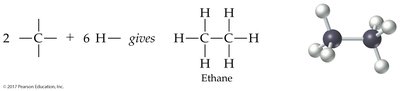
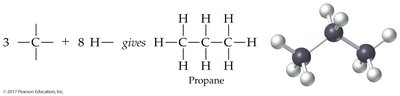
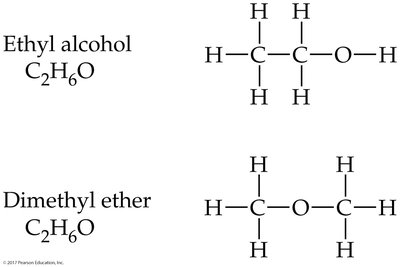
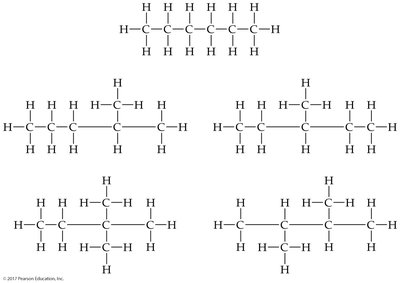
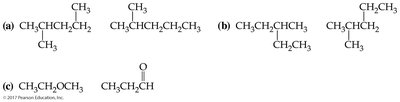
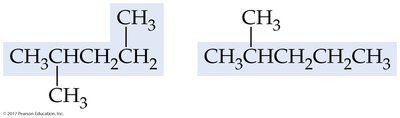
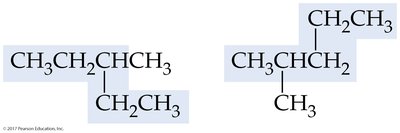
Alkanes are hydrocarbons with only single bonds. Isomers are compounds with the same molecular formula but different structures.
Alkane general formula: CnH2n+2
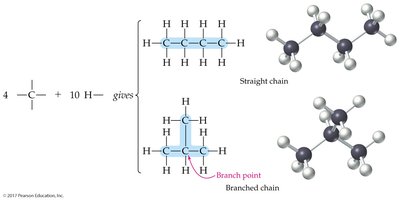
Isomers arise as the number of carbons increases.
Straight-chain alkanes: All carbons in a row.
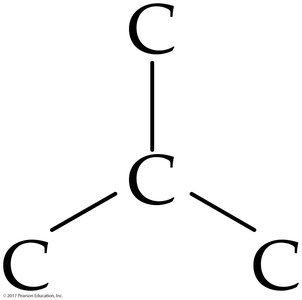
Branched-chain alkanes: At least one carbon is attached to more than two other carbons.
Constitutional (structural) isomers: Same formula, different connectivity.
Functional group isomers: Isomers that differ in both connectivity and functional group family.
12.4 Drawing Organic Structures
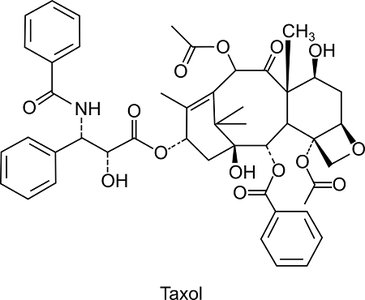
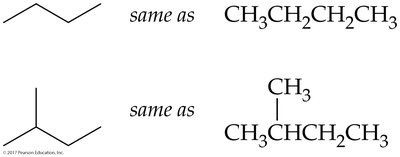
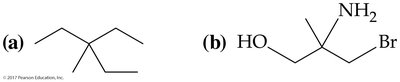
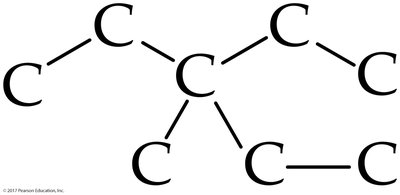
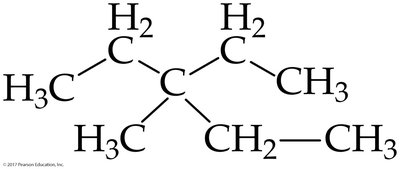
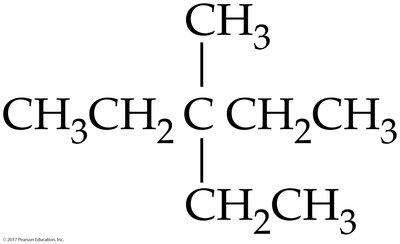
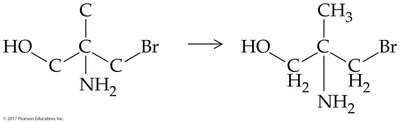
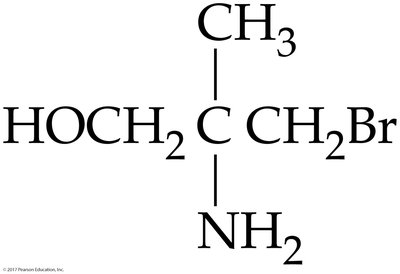
Organic structures can be represented in several ways: structural formulas, condensed formulas, and line (line-angle) structures.
Condensed structure: Bonds are implied; groups are written together (e.g., CH3CH2CH3).
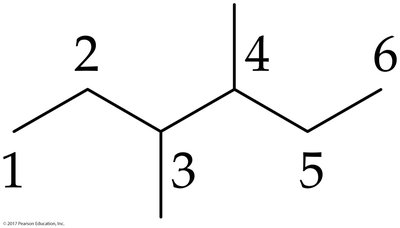
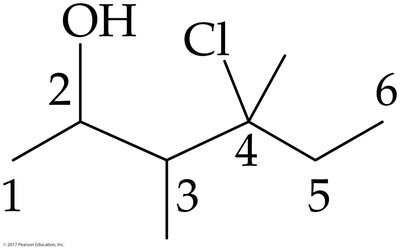
Line structure: Each vertex or line end represents a carbon; hydrogens on carbons are not shown.
Non-carbon/hydrogen atoms must be shown explicitly.
Parentheses and subscripts can indicate repeating groups (e.g., CH3(CH2)4CH3).


12.5 The Shapes of Organic Molecules
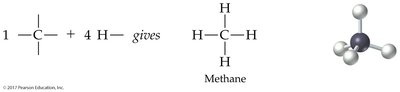
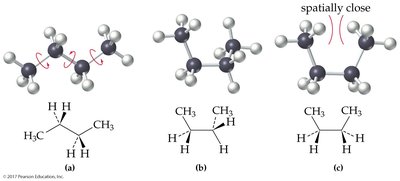
Alkanes have tetrahedral geometry around each carbon. Single bonds allow for free rotation, resulting in different conformations (conformers).
Conformers: Different spatial arrangements due to rotation around single bonds.
Most molecules adopt the lowest-energy, least crowded conformation.
Conformers are interconvertible and have the same connectivity.

12.6 Naming Alkanes
The IUPAC system provides a systematic way to name alkanes based on the number of carbons and the presence of substituents.
A chemical name has three parts: prefix (substituent location), parent (longest chain), suffix (family).
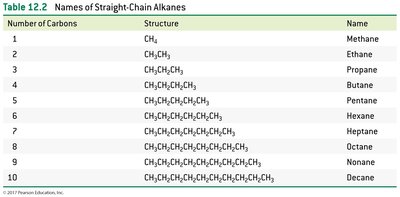
Straight-chain alkanes: Named by the number of carbons + "-ane" (e.g., methane, ethane, propane).
Branched-chain alkanes: Identify and number the main chain, then name and number substituents.
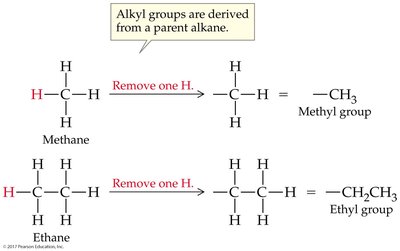
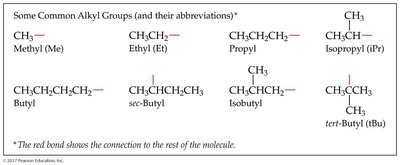
Alkyl groups: Derived from alkanes by removing one hydrogen (e.g., methyl, ethyl).
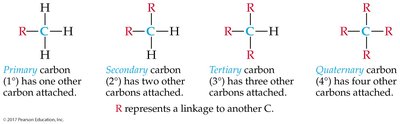
Carbons are classified as primary (1°), secondary (2°), tertiary (3°), or quaternary (4°) based on the number of other carbons attached.



12.7 Properties of Alkanes
Alkanes are nonpolar molecules with weak intermolecular forces (London dispersion forces). Their physical properties vary with molecular size.
First four alkanes (methane, ethane, propane, butane) are gases at room temperature.
Alkanes with 5–15 carbons are liquids; 16+ carbons are waxy solids.
Alkanes are odorless or have mild odor, colorless, tasteless, nontoxic, insoluble in water, and flammable.
12.8 Reactions of Alkanes
Alkanes undergo two main types of reactions: combustion and halogenation.
Combustion: Reaction with oxygen to produce CO2, H2O, and heat.
Halogenation: Replacement of a hydrogen atom by a halogen (Cl or Br) via free radical mechanism, often producing a mixture of products.
In halogenation, only one hydrogen is replaced at a time; prolonged reaction can replace all hydrogens.
12.9 Cycloalkanes
Cycloalkanes are alkanes with carbon atoms arranged in a ring. Their general formula is CnH2n.
Forming a ring requires an extra C–C bond and loss of two hydrogens.
Small rings (cyclopropane, cyclobutane) have bond angles less than the ideal tetrahedral angle, making them less stable.
Cyclopentane and cyclohexane are more stable and common in nature.
Cycloalkanes are nonpolar, insoluble in water, flammable, and more rigid than open-chain alkanes due to restricted rotation.
12.10 Drawing and Naming Cycloalkanes
Cycloalkanes are typically drawn using polygons to represent the ring. Naming follows the same rules as for open-chain alkanes, with the ring as the parent structure.
If only one substituent is present, numbering is unnecessary.
With multiple substituents, numbering starts at the group with alphabetical priority and proceeds to give the lowest possible numbers to substituents.
Summary Table: Names of Straight-Chain Alkanes
Number of Carbons | Structure | Name |
|---|---|---|
1 | CH4 | Methane |
2 | CH3CH3 | Ethane |
3 | CH3CH2CH3 | Propane |
4 | CH3CH2CH2CH3 | Butane |
5 | CH3CH2CH2CH2CH3 | Pentane |
6 | CH3CH2CH2CH2CH2CH3 | Hexane |
7 | CH3CH2CH2CH2CH2CH2CH3 | Heptane |
8 | CH3CH2CH2CH2CH2CH2CH2CH3 | Octane |
9 | CH3CH2CH2CH2CH2CH2CH2CH2CH3 | Nonane |
10 | CH3CH2CH2CH2CH2CH2CH2CH2CH2CH3 | Decane |
