 Back
BackIntroduction to Organic Chemistry and Functional Groups
Study Guide - Smart Notes
 Tailored notes based on your materials, expanded with key definitions, examples, and context.
Introduction to Organic Chemistry
What is Organic Chemistry?
Organic chemistry is the branch of chemistry that studies compounds primarily composed of carbon and hydrogen, often with oxygen, nitrogen, sulfur, and halogens. Organic compounds are the basis of all life and are found in fuels, medicines, plastics, and foods.
Organic compounds contain carbon atoms bonded to hydrogen and possibly other elements (O, N, S, halogens).
They are typically covalent, have low melting and boiling points, are flammable, and are soluble in nonpolar solvents but not in water.
Examples: gasoline, medicines, shampoos, plastics, perfumes, foods.
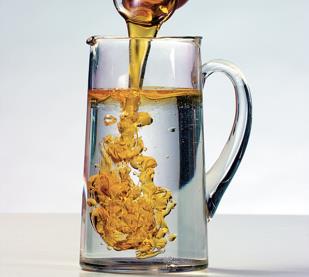
Organic vs. Inorganic Compounds
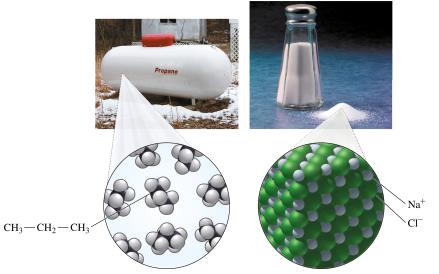
Organic and inorganic compounds differ in their composition, bonding, and properties.
Organic: C and H (sometimes O, S, N, P, or halogens), mostly covalent bonds, nonpolar, low melting/boiling points, flammable, not water soluble.
Inorganic: Metals and nonmetals, often ionic bonds, polar, high melting/boiling points, not flammable, water soluble.
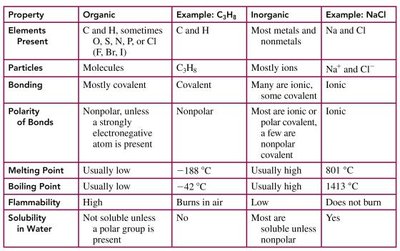
Property | Organic | Example: C3H8 | Inorganic | Example: NaCl |
|---|---|---|---|---|
Elements Present | C and H, sometimes O, S, N, P, or Cl (F, Br, I) | C and H | Most metals and nonmetals | Na and Cl |
Particles | Molecules | C3H8 | Mostly ions | Na+ and Cl- |
Bonding | Mostly covalent | — | Many are ionic, some covalent | — |
Polarity of Bonds | Nonpolar, unless a strongly electronegative atom is present | — | Most are ionic or polar covalent, a few are nonpolar covalent | Ionic |
Melting Point | Usually low | -188°C | Usually high | 801°C |
Boiling Point | Usually low | -42°C | Usually high | 1413°C |
Flammability | High | Burns in air | Low | Does not burn |
Solubility in Water | Not soluble unless a polar group is present | — | Most are soluble unless nonpolar | Yes |
Structure and Bonding in Organic Compounds
Covalent Bonds and the Octet Rule
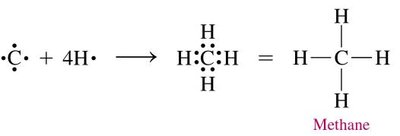
Carbon forms four covalent bonds to achieve a stable octet, while hydrogen forms one bond. Other elements commonly found in organic compounds have characteristic bonding patterns.
Carbon: 4 bonds
Hydrogen: 1 bond
Nitrogen: 3 bonds
Oxygen/Sulfur: 2 bonds
Halogens: 1 bond
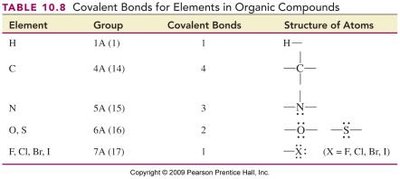
Element | Group | Covalent Bonds | Structure of Atoms |
|---|---|---|---|
H | 1A (1) | 1 | H— |
C | 4A (14) | 4 | —C— |
N | 5A (15) | 3 | —N— |
O, S | 6A (16) | 2 | —O— |
F, Cl, Br, I | 7A (17) | 1 | —X |
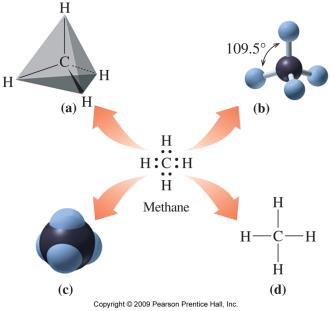
Tetrahedral Structure of Carbon
According to VSEPR theory, a carbon atom with four single bonds adopts a tetrahedral geometry with bond angles of 109.5°.
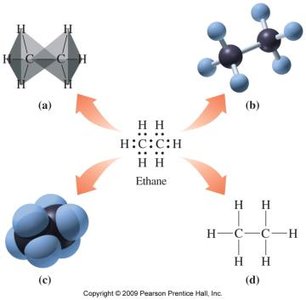
Alkanes: Structure and Nomenclature
Alkanes are saturated hydrocarbons with only single bonds. Their general formula is .
Names end in -ane (e.g., methane, ethane, propane).
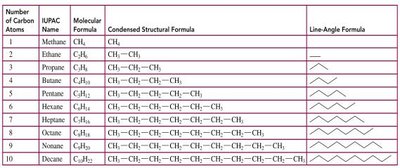
Can be represented by expanded, condensed, or line-angle formulas.
Number of Carbon Atoms | IUPAC Name | Molecular Formula | Condensed Structural Formula | Line-Angle Formula |
|---|---|---|---|---|
1 | Methane | CH4 | CH4 | — |
2 | Ethane | C2H6 | CH3—CH3 | — |
3 | Propane | C3H8 | CH3—CH2—CH3 | — |
4 | Butane | C4H10 | CH3—CH2—CH2—CH3 | — |
5 | Pentane | C5H12 | CH3—CH2—CH2—CH2—CH3 | — |
6 | Hexane | C6H14 | CH3—CH2—CH2—CH2—CH2—CH3 | — |
7 | Heptane | C7H16 | CH3—(CH2)5—CH3 | — |
8 | Octane | C8H18 | CH3—(CH2)6—CH3 | — |
9 | Nonane | C9H20 | CH3—(CH2)7—CH3 | — |
10 | Decane | C10H22 | CH3—(CH2)8—CH3 | — |
Cycloalkanes
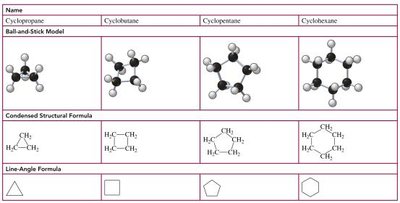
Cycloalkanes are saturated hydrocarbons with carbon atoms arranged in a ring. They have two fewer hydrogens than the corresponding open-chain alkane.
Name | Ball-and-Stick Model | Condensed Structural Formula | Line-Angle Formula |
|---|---|---|---|
Cyclopropane | Model | CH2CH2CH2 | Triangle |
Cyclobutane | Model | CH2CH2CH2CH2 | Square |
Cyclopentane | Model | CH2CH2CH2CH2CH2 | Pentagon |
Cyclohexane | Model | CH2CH2CH2CH2CH2CH2 | Hexagon |
Substituents and Alkyl Groups
Alkyl and Halo Substituents
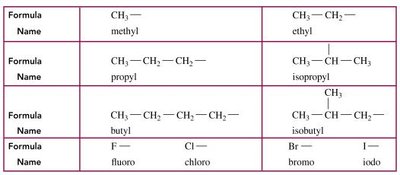
Substituents are groups attached to the main carbon chain. Alkyl groups are derived from alkanes by removing one hydrogen and are named with a -yl ending. Halogen substituents are named as halo- (fluoro, chloro, bromo, iodo).
Formula | Name | Formula | Name |
|---|---|---|---|
CH3— | methyl | CH3CH2— | ethyl |
CH3CH2CH2— | propyl | CH3CH2CH2CH2— | butyl |
F— | fluoro | Cl— | chloro |
Br— | bromo | I— | iodo |
Physical Properties and Uses of Alkanes
Physical Properties
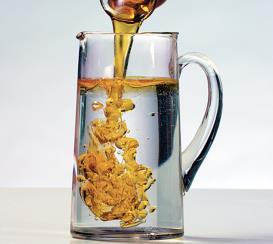
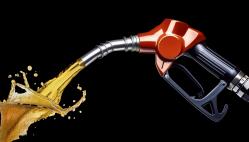
Alkanes are nonpolar, insoluble in water, less dense than water, and flammable.
Alkanes with 1–4 carbons are gases (e.g., methane, propane, butane).
Alkanes with 5–8 carbons are volatile liquids (e.g., gasoline components).
Alkanes with 9–17 carbons are higher boiling liquids (kerosene, diesel, jet fuel).
Alkanes with 18 or more carbons are waxy solids (used in coatings).

Combustion of Alkanes
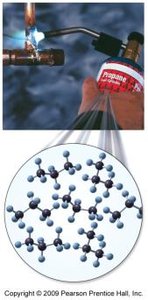
Alkanes undergo combustion reactions with oxygen to produce carbon dioxide, water, and energy.
General equation:

Functional Groups in Organic Chemistry
Definition and Importance
Functional groups are specific groups of atoms within molecules that determine the characteristic chemical reactions of those molecules. They are used to classify organic compounds into families.
Examples: alkanes, alkenes, alkynes, aromatics, alcohols, ethers, thiols, aldehydes, ketones, carboxylic acids, esters, amines, amides.
Hydrocarbons: Saturated and Unsaturated
Saturated Hydrocarbons
Saturated hydrocarbons (alkanes and cycloalkanes) have only single bonds and the maximum number of hydrogen atoms per carbon.
Examples: hexane, cyclohexane, branched alkanes.
Unsaturated Hydrocarbons
Unsaturated hydrocarbons have double or triple bonds, resulting in fewer hydrogens per carbon.
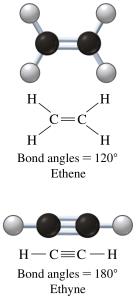
Alkenes: contain at least one C=C double bond (bond angle 120°).
Alkynes: contain at least one C≡C triple bond (bond angle 180°).
Alkenes, Alkynes, and Aromatic Compounds
Alkenes
Alkenes are named by replacing the -ane ending of the corresponding alkane with -ene. The simplest alkene is ethene (ethylene).
Example: (ethene/ethylene)
Alkynes
Alkynes are named by replacing the -ane ending with -yne. The simplest alkyne is ethyne (acetylene).
Example: (ethyne/acetylene)
Aromatic Compounds
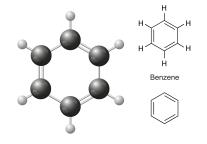
Aromatic compounds contain a benzene ring, a planar ring of six carbon atoms with alternating double and single bonds (delocalized electrons).

Cis-Trans Isomerism in Alkenes
Cis-Trans Isomers
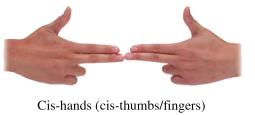
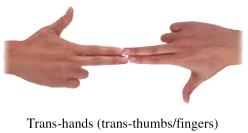
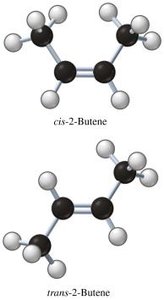
Alkenes can exhibit cis-trans isomerism due to restricted rotation around the double bond. In cis isomers, similar groups are on the same side; in trans isomers, they are on opposite sides.
Alcohols, Ethers, and Thiols
Alcohols
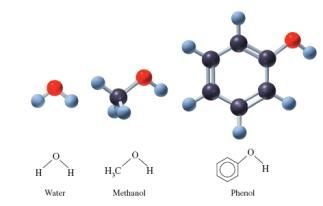
Alcohols contain a hydroxyl group (–OH) attached to a carbon atom. They are named by replacing the -e of the alkane with -ol (e.g., methanol, ethanol).
Alcohols with 1–4 carbons are soluble in water; those with more are less soluble.
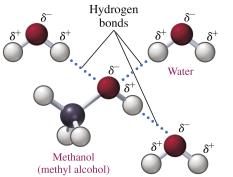
Alcohols have higher boiling points than alkanes due to hydrogen bonding.
Ethers
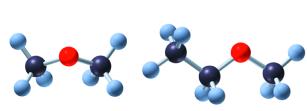
Ethers have an oxygen atom bonded to two carbon groups (R–O–R'). They are named by listing the alkyl groups followed by 'ether' (e.g., dimethyl ether).
Thiols
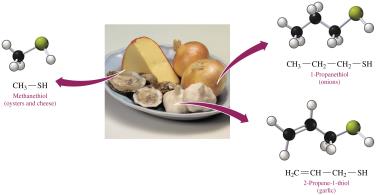
Thiols contain a sulfhydryl group (–SH) and often have strong odors. They are found in foods like onions and garlic and are used as odorants for gas leaks.
Aldehydes and Ketones
Structure and Properties
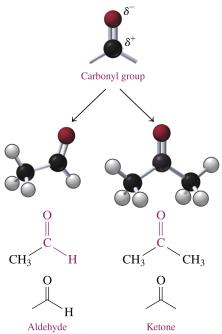
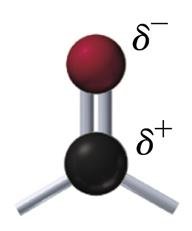
Aldehydes and ketones both contain a carbonyl group (C=O). In aldehydes, the carbonyl is at the end of the chain (R–CHO); in ketones, it is within the chain (RCOR').
Carboxylic Acids, Esters, and Amides
Carboxylic Acids
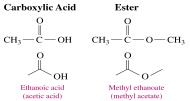
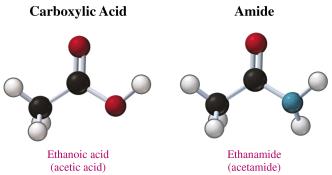
Carboxylic acids contain a carboxyl group (–COOH). They are weak acids and ionize in water to form carboxylate ions.

Esters
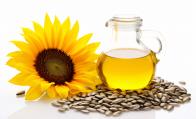
Esters are derived from carboxylic acids and alcohols. They are responsible for the aromas and flavors of many fruits and flowers.
Amides
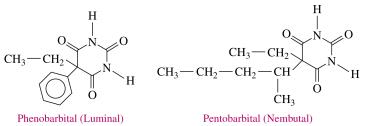
Amides are formed when the –OH group of a carboxylic acid is replaced by an –NH2 group. They are important in biology and medicine (e.g., urea, barbiturates).
Amines and Alkaloids
Amines
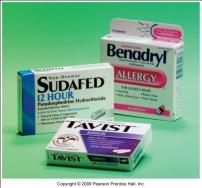
Amines are derivatives of ammonia (NH3) with one or more alkyl or aromatic groups attached to nitrogen. They have characteristic odors and can form amine salts when neutralized by acids.
Alkaloids
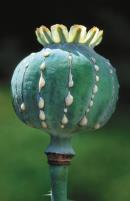
Alkaloids are naturally occurring amines found in plants. Many are physiologically active and used as drugs (e.g., morphine, codeine, caffeine, nicotine).

Chirality in Organic Molecules
Chiral and Achiral Objects
Chiral molecules are non-superimposable on their mirror images, much like left and right hands. Chirality is important in biological systems because enantiomers can have different biological activities.
A chiral carbon is bonded to four different groups.
Enantiomers are pairs of chiral molecules that are mirror images of each other.
