 Back
Introduction to Organic Chemistry: Hydrocarbons, Functional Groups, and Nomenclature
Study Guide - Smart Notes
 Tailored notes based on your materials, expanded with key definitions, examples, and context.
Organic Chemistry Fundamentals
Definition and Scope of Organic Chemistry
Organic chemistry is the branch of chemistry that studies compounds primarily composed of carbon. These compounds, known as organic compounds, are fundamental to life and are found in pharmaceuticals, plastics, fuels, and biological systems.
Organic compounds: Molecules containing carbon, often with hydrogen, oxygen, nitrogen, and other elements.
Hydrocarbons: The simplest organic compounds, consisting only of carbon and hydrogen.
Functional groups: Specific groups of atoms within molecules that determine chemical reactivity and properties.

Hydrocarbon Structures
Types of Hydrocarbon Backbones
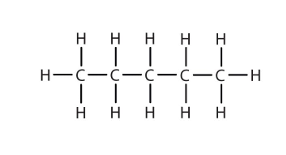
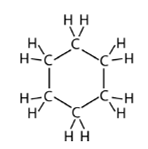
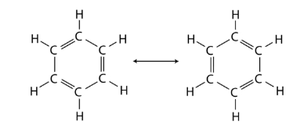
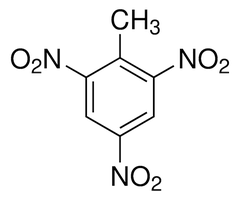
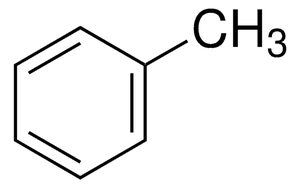
Hydrocarbons form the structural backbone of organic molecules. They can exist as chains, cyclic rings, or aromatic rings, each with distinct properties and reactivity.
Chains: Linear or branched arrangements of carbon atoms.
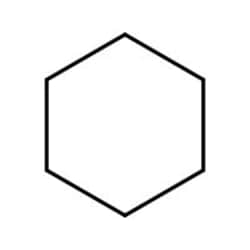
Cyclic rings: Carbon atoms arranged in a closed loop, forming ring structures.
Aromatic rings: Special cyclic structures with alternating double bonds, such as benzene.
Functional Groups in Organic Chemistry
Definition and Importance
Functional groups are specific atoms or groups of atoms attached to the hydrocarbon backbone. They are responsible for the characteristic chemical reactions of organic molecules.
Alcohols (–OH): Hydroxyl group attached to a carbon atom.
Alkenes (–C=C–): Carbon-carbon double bond.
Alkynes (–C≡C–): Carbon-carbon triple bond.
Halides (–Cl, –Br, –I): Halogen atoms attached to carbon.
IUPAC Nomenclature of Organic Compounds
Naming Hydrocarbon Chains
The International Union of Pure and Applied Chemistry (IUPAC) provides systematic rules for naming organic compounds. The name reflects the length of the carbon chain, the type of bonds, and the presence/location of functional groups.
Alkanes: Saturated hydrocarbons with only single bonds. Example: methane (CH4), ethane (C2H6).
Alkenes: Unsaturated hydrocarbons with at least one double bond. Example: 1-butene, 2-butene.
Alkynes: Unsaturated hydrocarbons with at least one triple bond. Example: 1-butyne.
Alcohols: Hydrocarbons with a hydroxyl group. Example: 2-butanol.
Halides: Hydrocarbons with halogen substituents. Example: 2-chlorobutane, bromoethane.
Structural Formulas and Line-Bond Notation
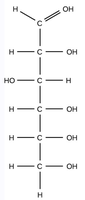
Organic molecules can be represented by structural formulas, showing all atoms and bonds, or by line-bond (zig-zag) notation, which simplifies the depiction of carbon chains.
Structural formula: Explicitly shows each atom and bond.
Line-bond notation: Each vertex represents a carbon atom; hydrogen atoms are often omitted for clarity.
Naming Chains with Functional Groups
Rules for Naming and Numbering
When functional groups are present, the chain is numbered to give the lowest possible number to the substituent. The type of functional group is indicated by a suffix or prefix.
Alkenes: Suffix "-ene"; number indicates position of double bond (e.g., 1-butene, 2-butene).
Alkynes: Suffix "-yne"; number indicates position of triple bond (e.g., 1-butyne).
Alcohols: Suffix "-ol"; number indicates position of hydroxyl group (e.g., 2-butanol).
Halides: Prefix (e.g., chloro-, bromo-) and number if needed (e.g., 2-chlorobutane).
Cyclic Alkanes and Their Nomenclature
Naming Cyclic Compounds
Cyclic alkanes are named by adding the prefix "cyclo-" to the alkane name. Functional groups are named and numbered according to their position on the ring.
Cycloalkanes: Saturated rings (e.g., cyclobutane, cyclohexane).
Cycloalkenes: Rings with double bonds (e.g., cyclooctyne).
Substituted rings: Functional groups are named as prefixes or suffixes (e.g., chlorocyclobutane).
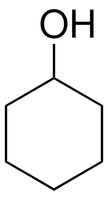
Summary Table: Common Hydrocarbon Names and Structures
Type | Example Name | Structure |
|---|---|---|
Alkane | Pentane | CH3CH2CH2CH2CH3 |
Alkene | 1-Butene | CH2=CHCH2CH3 |
Alkyne | 1-Butyne | CH≡CCH2CH3 |
Alcohol | 2-Butanol | CH3CH(OH)CH2CH3 |
Halide | 2-Chlorobutane | CH3CH(Cl)CH2CH3 |
Cycloalkane | Cyclohexane | C6H12 |
Key Equations and Notation
General Formula for Alkanes
Alkanes follow the general formula:
General Formula for Cycloalkanes
General Formula for Alkenes
General Formula for Alkynes
Examples and Applications
Structural formula of propane: CH3CH2CH3
Line-bond notation of butane: Four vertices connected in a zig-zag, each representing a carbon atom.
Cyclooctyne: Eight-membered ring with a triple bond.
Chlorocyclobutane: Four-membered ring with a chlorine substituent.
Additional info: The notes expand on the lecture objectives by providing definitions, examples, and systematic nomenclature rules for organic compounds, including hydrocarbon chains, rings, and functional groups. The included images directly illustrate hydrocarbon structures, functional groups, and cyclic compounds, reinforcing the textual explanations.
