 Back
19.2 Lipid Metabolism: Digestion, Transport, Catabolism, and Ketogenesis
Study Guide - Smart Notes
 Tailored notes based on your materials, expanded with key definitions, examples, and context.
Lipid Metabolism
Digestion of Lipids
Lipid digestion is a multi-step process that transforms dietary fats into absorbable molecules. Lipids are hydrophobic and require special mechanisms to remain soluble during digestion.
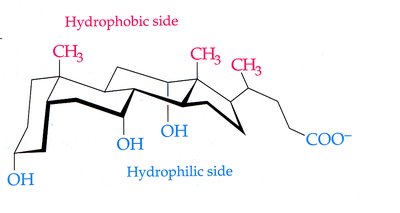
Bile acids are the primary chemicals that keep lipids soluble by emulsifying fat droplets in the small intestine, allowing enzymes to act efficiently.
Pancreatic lipase breaks down triacylglycerols (TAGs) into monoacylglycerols, diacylglycerols, fatty acids, and glycerol.
Emulsification increases the surface area for enzymatic action.
Example: Bile acids act like soap, forming micelles that solubilize fats for digestion. 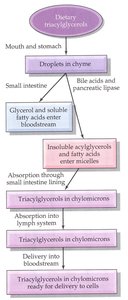
Absorption and Transport of Lipids
After digestion, lipids are absorbed and transported in the body via specialized structures.
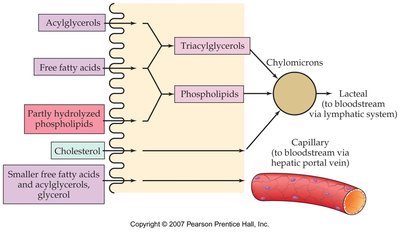
Glycerol and soluble fatty acids enter the bloodstream directly.
Insoluble acylglycerols and fatty acids form micelles for absorption.
Triacylglycerols are reassembled in intestinal cells and packaged into chylomicrons for transport.
Chylomicrons enter the lymphatic system and then the bloodstream.
Example: The villi of the small intestine facilitate absorption into the lymphatic and circulatory systems. 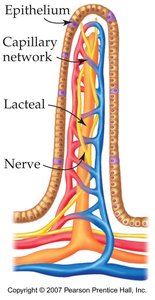
Lipoproteins: Classes and Functions
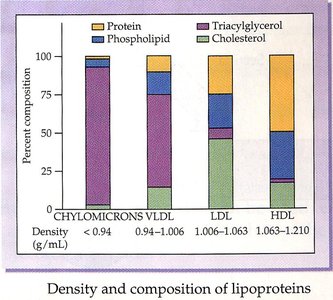
Lipoproteins are complexes that transport lipids in the blood. They differ in density, composition, and function.
Chylomicrons: Transport dietary lipids from the intestine to tissues.
VLDL (Very Low-Density Lipoprotein): Transport TAGs synthesized in the liver.
LDL (Low-Density Lipoprotein): Deliver cholesterol to tissues; associated with atherosclerosis.
HDL (High-Density Lipoprotein): Remove cholesterol from tissues and return it to the liver; anti-atherogenic.
Example: Lipoproteins have a core of neutral lipids surrounded by phospholipids, proteins, and cholesterol. 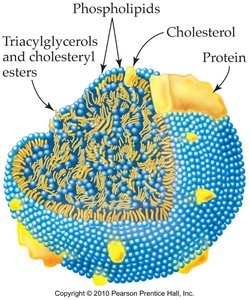
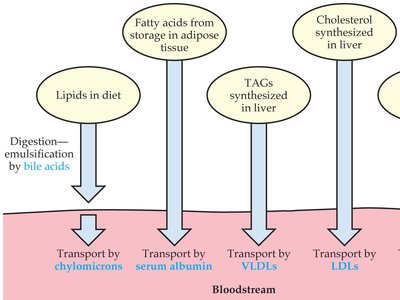
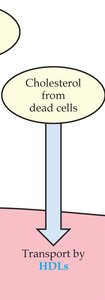
Lipoprotein | Main Function |
|---|---|
Chylomicron | Transport dietary lipids |
VLDL | Transport liver-synthesized TAGs |
LDL | Deliver cholesterol to tissues |
HDL | Remove cholesterol from tissues |
TAG Metabolism: Synthesis and Hydrolysis
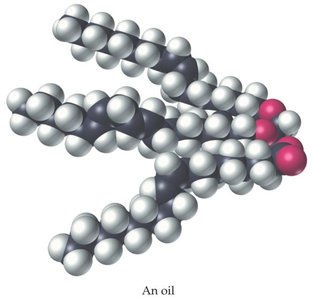
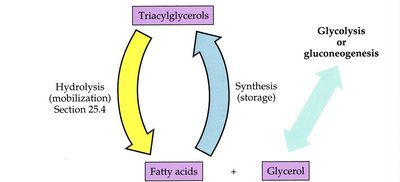
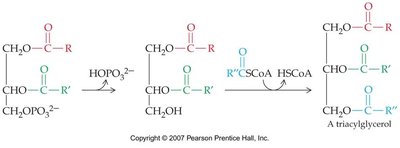
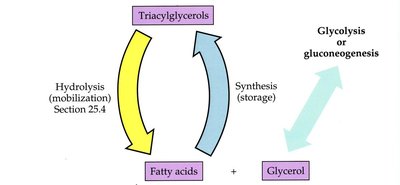
Triacylglycerols (TAGs) are synthesized and broken down in response to hormonal signals.
Insulin stimulates TAG synthesis (storage).
Glucagon stimulates TAG hydrolysis (mobilization).
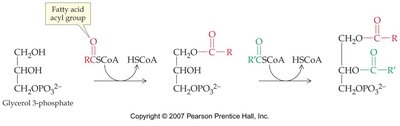
TAGs are synthesized from glycerol-3-phosphate and fatty acids.
Hydrolysis releases fatty acids and glycerol for energy or gluconeogenesis.
Example: TAG metabolism links glycolysis and gluconeogenesis via the intermediate DHAP (dihydroxyacetone phosphate). 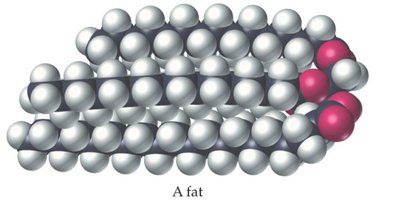
Fates of Fatty Acids in the Cell
Upon entry into the cell, fatty acids can be used for various purposes depending on cellular needs.
Storage as TAGs
Incorporation into phospholipids (membranes)
Conversion to cholesterol esters
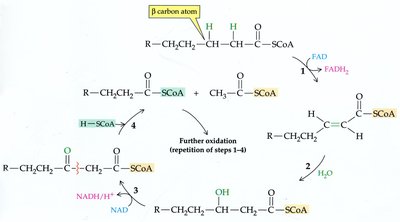
Degradation via β-oxidation to produce energy
Example: Fatty acids are activated by CoA and transported into mitochondria for β-oxidation. 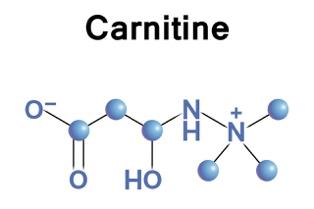
Energy Yield from Fatty Acid Oxidation
Complete oxidation of fatty acids produces significant amounts of ATP.
Activation of fatty acid costs 2 ATP.
Each round of β-oxidation produces 1 NADH and 1 FADH2.
Acetyl-CoA enters the TCA cycle, generating more NADH, FADH2, and ATP.
For a 4-carbon saturated fatty acid: 27 ATP are produced after accounting for activation cost.
Example: Fatty acids are more efficient long-term energy storage molecules than glucose.
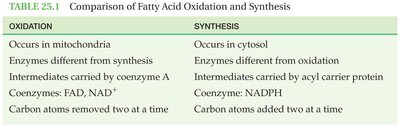
Comparison of Fatty Acid Oxidation and Synthesis
Oxidation | Synthesis |
|---|---|
Occurs in mitochondria | Occurs in cytosol |
Enzymes different from synthesis | Enzymes different from oxidation |
Intermediates carried by coenzyme A | Intermediates carried by acyl carrier protein |
Coenzymes: FAD, NAD+ | Coenzyme: NADPH |
Carbon atoms removed two at a time | Carbon atoms added two at a time |
Metabolic Links: Acetyl-CoA
Acetyl-CoA is a central metabolite linking carbohydrate, lipid, and protein metabolism.
Produced from glycolysis, fatty acid oxidation, and amino acid catabolism.
Used for energy production, fatty acid synthesis, and ketogenesis.
Example: Acetyl-CoA overload leads to ketone body production during fasting or diabetes.
Ketogenesis and Ketone Bodies
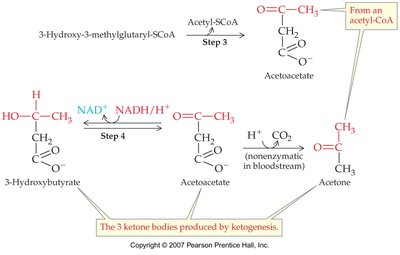
Ketogenesis occurs when acetyl-CoA accumulates beyond the capacity of the TCA cycle, typically during fasting, prolonged exercise, or diabetes.
Ketone bodies (acetoacetate, 3-hydroxybutyrate, acetone) are produced in the liver.
Ketone bodies can be used as fuel by muscle and brain tissue.
Excess ketone bodies cause ketoacidosis, lowering blood pH.
Example: The synthesis of ketone bodies from acetyl-CoA is illustrated below. 
Summary Table: Preferred Fuel Sources
Tissue | Preferred Fuel |
|---|---|
Skeletal muscle (active) | Glucose |
Skeletal muscle (resting) | Fatty acids |
Cardiac muscle | Fatty acids |
Brain | Glucose, ketone bodies (during fasting) |
Kidneys | Fatty acids |
Adipose tissue | Fatty acids |
Liver | Fatty acids |
Red blood cells | Glucose |
Additional info: These notes expand on brief lecture points to provide a comprehensive overview of lipid metabolism, including digestion, transport, catabolism, and ketogenesis, suitable for GOB Chemistry students.
