 Back
BackMicrobial Growth and Its Control: Structured Study Notes
Study Guide - Smart Notes
 Tailored notes based on your materials, expanded with key definitions, examples, and context.
Cell Chemistry and Nutrition
Macronutrients and Micronutrients
Microbial cells require a variety of nutrients for growth, which are classified as macronutrients (needed in large amounts) and micronutrients (needed in trace amounts). These nutrients serve as monomers or precursors for cellular components.
Macronutrients: Carbon, nitrogen, phosphorus, sulfur, potassium, magnesium, calcium, sodium
Micronutrients: Trace elements such as iron, vitamins, amino acids, purines, and pyrimidines
Carbon: Major element in all classes of macromolecules; heterotrophs use organic carbon, autotrophs fix CO2
Nitrogen: Key element in proteins, nucleic acids, and other cell constituents
Phosphorus: Required for nucleic acids and phospholipids
Sulfur: Found in certain amino acids and vitamins
Potassium, Magnesium, Calcium, Sodium: Essential for enzyme activity, cell wall stability, and other cellular functions
Iron: Component of cytochromes and FeS proteins involved in electron transport
Growth factors are organic compounds required in small amounts by certain organisms, often functioning as coenzymes.
Media and Laboratory Culture
Types of Culture Media
Microbes are cultivated in nutrient solutions called culture media. The choice of media depends on the nutritional requirements of the organism.
Defined media: Precise chemical composition is known
Complex media: Contains digests of chemically undefined substances (e.g., yeast extract)
Enriched media: Complex media with additional nutrients (e.g., blood agar)
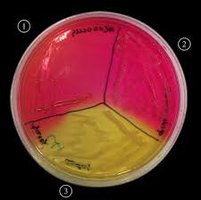
Selective media: Contains compounds that inhibit growth of some microbes but not others (e.g., MacConkey Agar)
Differential media: Contains indicators to detect specific chemical reactions (e.g., Mannitol Salt Agar)
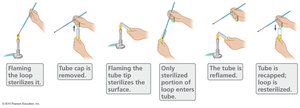
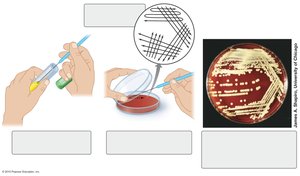
Proper aseptic technique and sterilization are critical to prevent contamination.
Microbial Growth and Cell Division
Binary Fission
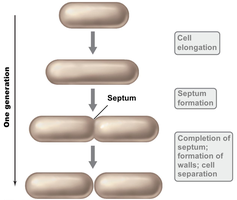
Microbial growth refers to an increase in cell number, primarily through binary fission, where a cell divides after enlarging to twice its minimum size. The generation time is the time required for a cell population to double.
Each daughter cell receives a chromosome and sufficient cell constituents to exist independently.
Fts Proteins and Cell Division
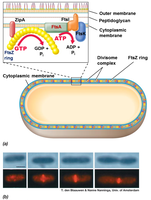
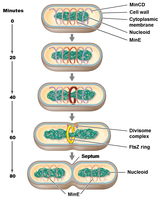
Fts proteins are essential for cell division in prokaryotes, forming the divisome apparatus. FtsZ forms a ring at the cell center, stabilized by ZipA and FtsA, and FtsI mediates cell wall separation.
DNA replicates before FtsZ ring formation.
Min proteins (MinC, MinD, MinE) ensure the FtsZ ring forms at the mid-cell.
FtsK mediates chromosome separation.
Cell Cytoskeleton and Shape Determination
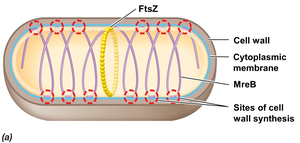
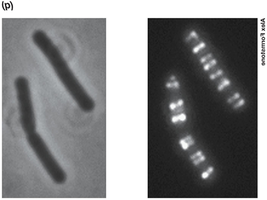
Prokaryotes possess a dynamic cytoskeleton. MreB is a major shape-determining factor, forming spiral bands and localizing cell wall synthesis in rod-shaped bacteria. Cocci lack MreB and grow cell walls outward from the FtsZ ring.
Quantitative Aspects of Microbial Growth
Exponential Growth
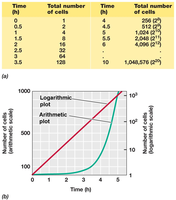
Exponential growth occurs when cell numbers double at regular intervals. Generation time depends on medium and conditions.
Exponential growth is initially slow but accelerates rapidly.
Growth Phases
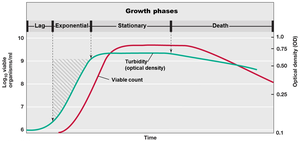
Bacterial populations exhibit distinct growth phases: lag, exponential, stationary, and death. Each phase reflects changes in nutrient availability and waste accumulation.
Lag phase: Interval before growth begins
Exponential phase: Cells are healthiest
Stationary phase: Growth rate is zero
Death phase: Cells die if incubation continues
Continuous Culture and Chemostat
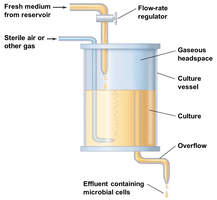
Continuous culture maintains microbial populations in an open system. The chemostat allows independent control of growth rate and population density by adjusting dilution rate and limiting nutrient concentration.
Growth rate is controlled by dilution rate.
Growth yield is controlled by limiting nutrient concentration.
Measurement of Microbial Growth
Microscopic Counts
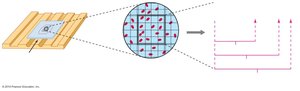
Microscopic counting chambers (e.g., Petroff–Hausser) are used to enumerate cells, but results can be unreliable due to inability to distinguish live/dead cells and other limitations.
Flow Cytometry
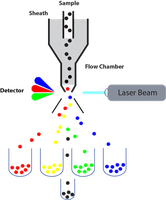
Flow cytometry uses laser beams and fluorescent dyes to count and sort cells in liquid samples.
Viable Counts (Plate Counts)
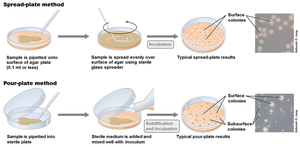
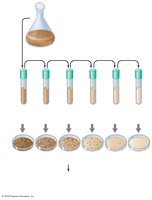
Viable cell counts measure living, reproducing populations using spread-plate or pour-plate methods. Serial dilutions are used to obtain countable colony numbers.
Plate counts may underestimate total cell numbers due to selective media and growth conditions.
Spectrophotometry
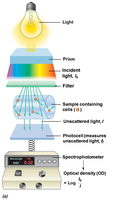
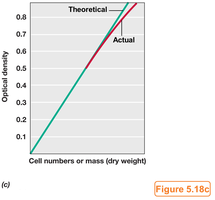
Turbidity measurements using a spectrophotometer provide rapid, indirect estimates of microbial growth. Optical density (OD) is related to cell concentration via a standard curve.
Quick and non-destructive, but problematic for clumping or biofilm-forming microbes.
Environmental Factors Affecting Microbial Growth
Temperature
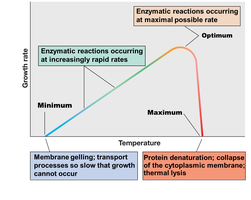
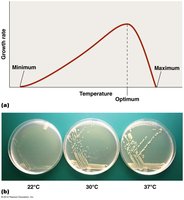
Microbial growth is strongly influenced by temperature. Cardinal temperatures define minimum, optimum, and maximum growth temperatures.
Microorganisms are classified as psychrophiles, mesophiles, thermophiles, or hyperthermophiles based on their temperature optima.
Molecular Adaptations to Temperature
Psychrophiles produce enzymes and membrane lipids adapted to cold, while thermophiles have heat-stable proteins and saturated fatty acids.
Enzyme flexibility and membrane fluidity are key adaptations.
pH
The pH of the environment affects microbial growth. Most organisms are neutrophiles (pH 6–8), but acidophiles and alkaliphiles thrive at extreme pH values.
Osmolarity
Microbes are affected by solute concentration. Halophiles require high NaCl, halotolerant organisms tolerate some salt, osmophiles thrive in high sugar, and xerophiles grow in dry environments.
Oxygen Requirements
Microbes are classified by their oxygen requirements: aerobes, anaerobes, facultative, microaerophiles, and aerotolerant anaerobes. Special media and techniques are used to cultivate each type.
Toxic Oxygen Species and Enzymatic Defense
Cells produce enzymes such as catalase, peroxidase, superoxide dismutase, and superoxide reductase to neutralize toxic oxygen species.
Control of Microbial Growth
Physical Methods
Heat sterilization, pasteurization, radiation, and filtration are used to control microbial growth. The autoclave uses steam under pressure for sterilization; UV and ionizing radiation damage DNA and are used for decontamination.
Chemical Methods
Antimicrobial agents are classified as bacteriostatic, bacteriocidal, or bacteriolytic. Minimum inhibitory concentration (MIC) and minimum bactericidal concentration (MBC) tests determine effectiveness. Disc diffusion assays measure zones of inhibition.
Method | Purpose | Example |
|---|---|---|
Heat sterilization | Kill all viable organisms | Autoclave |
Pasteurization | Reduce microbial load | Milk treatment |
UV radiation | Decontaminate surfaces | Laboratory benches |
Filtration | Remove microbes from liquids/gases | HEPA filters |
Chemical agents | Inhibit or kill microbes | Disinfectants, antiseptics |
Sterilization is the removal of all viable organisms; disinfection targets pathogens; decontamination makes objects safe to handle; inhibition limits growth.
Decimal reduction time (D): Time required to reduce viability tenfold at a given temperature.
Zone of inhibition: Area of no growth around an antimicrobial disc in a diffusion assay.
Interpretive criteria: Zone diameter is used to classify organisms as susceptible, intermediate, or resistant to an agent.
Additional info: These notes cover microbial growth, environmental factors, laboratory techniques, and control methods, directly relevant to GOB college-level chemistry and biology courses.
