 Back
Mixtures: Homogeneous vs. Heterogeneous – GOB Chemistry Study Guidance
Study Guide - Smart Notes
 Tailored notes based on your materials, expanded with key definitions, examples, and context.
Q1. Why can Maria separate sand from water in her bottle?
Background
Topic: Mixtures and Physical Separation
This question tests your understanding of mixtures, specifically how the properties of substances in a mixture allow for physical separation without changing the substances themselves.
Key Terms and Concepts:
Mixture: A combination of two or more substances where each retains its own properties.
Physical Separation: The process of separating substances in a mixture without changing their chemical identities.
Step-by-Step Guidance
Recall what happens when sand is mixed with water: does either substance change its chemical identity?
Think about whether sand and water can be separated by physical means (like filtration) and what that tells you about their properties.
Review the answer choices and identify which one correctly describes the relationship between the properties of sand and water in the mixture.
Try solving on your own before revealing the answer!
Final Answer: A. The properties of sand and water do not change when they are mixed, so they can be separated from each other without the substance changing.
Sand and water form a physical mixture, not a new substance. Their properties remain unchanged, so they can be separated by physical means like filtration.
Q2. Jose is separating a mixture he cannot see individual elements in, but can still separate them. Which examples could this be? (Choose 2)
Background
Topic: Homogeneous vs. Heterogeneous Mixtures
This question tests your ability to distinguish between homogeneous (uniform throughout) and heterogeneous (not uniform) mixtures, and to identify examples of each.
Key Terms and Concepts:
Homogeneous Mixture: A mixture with a uniform composition throughout; individual components are not visible.
Heterogeneous Mixture: A mixture where the different components are visible and not uniform throughout.
Step-by-Step Guidance
Review the definition of a homogeneous mixture: can you see the different parts, or does it look the same throughout?
Go through each example and ask: if you look at it, can you see the different substances, or does it appear uniform?
Remember, Jose can separate the components, but he cannot see them individually. This means the mixture is homogeneous, not heterogeneous.
Identify which two examples from the list fit the description of a homogeneous mixture.
Try solving on your own before revealing the answer!
Final Answer: A. Saltwater and C. Chocolate
Saltwater and chocolate are both homogeneous mixtures: their components are not visible, but they can be separated by physical means (e.g., evaporation for saltwater, melting for chocolate).
Q3. Which of the following is an example of a homogeneous mixture?
Background
Topic: Identifying Homogeneous Mixtures
This question asks you to identify which pictured or described item is a homogeneous mixture, meaning it has a uniform composition throughout.
Key Terms and Concepts:
Homogeneous Mixture: Uniform composition; cannot see individual components.
Heterogeneous Mixture: Non-uniform; individual components are visible.
Step-by-Step Guidance
Review the definition of a homogeneous mixture and compare it to each option.
Look at the images and descriptions: does the mixture look the same throughout, or can you see different parts?
Consider the composition of air, salad dressing, cereal, and a balloon filled with helium. Which one is uniform throughout?
Match the correct image and description to the concept of a homogeneous mixture.

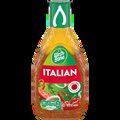

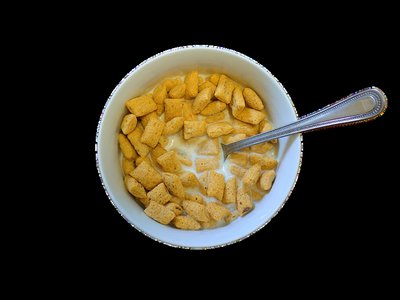
Try solving on your own before revealing the answer!
Final Answer: D. Air, because it contains several gases, and they are uniform throughout.
Air is a homogeneous mixture because its composition is uniform and you cannot see the individual gases. The other options are either heterogeneous or incorrectly described.
