 Back
Nucleic Acid Structure: DNA, RNA, and Protein Interactions
Study Guide - Smart Notes
 Tailored notes based on your materials, expanded with key definitions, examples, and context.
Nucleic Acids: Structure and Function
Nucleotides: The Building Blocks
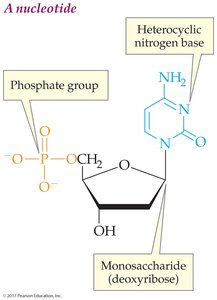
Nucleotides are the fundamental units of nucleic acids, such as DNA and RNA. Each nucleotide consists of three main components: a phosphate group, a five-carbon sugar (ribose or deoxyribose), and a heterocyclic nitrogenous base. These components are joined together through condensation reactions, forming nucleosides (sugar + base) and nucleotides (nucleoside + phosphate).
Phosphate group: Provides negative charge and enables linkage between nucleotides.
Sugar: Ribose in RNA, deoxyribose in DNA.
Nitrogenous base: Purines (adenine, guanine) and pyrimidines (cytosine, thymine, uracil).
Nucleoside vs. Nucleotide: Nucleosides lack phosphate; nucleotides contain phosphate.
Condensation and Hydrolysis Reactions
Condensation reactions join biomolecules by removing water, while hydrolysis breaks them apart by adding water. Formation of nucleosides and nucleotides involves condensation, similar to acetal and phosphate ester formation.
Condensation: Joins sugar and base, then phosphate to nucleoside.
Hydrolysis: Breaks nucleotides into their components.
Nitrogenous Bases and Hydrogen Bonding
Nitrogenous bases are aromatic, planar, and contain hydrogen bond donors and acceptors. Purines (A, G) and pyrimidines (C, T, U) pair specifically in nucleic acids, enabling the double helix structure.
Purines: Adenine (A), Guanine (G)
Pyrimidines: Cytosine (C), Thymine (T, DNA only), Uracil (U, RNA only)
Hydrogen bonding: Enables base pairing specificity
Polynucleotides: DNA and RNA
Formation and Structure
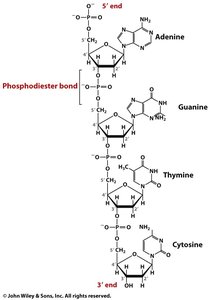
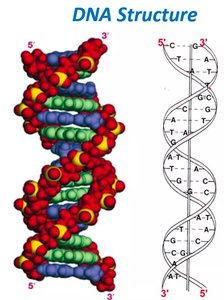
Polynucleotides are linear chains of nucleotides connected by phosphodiester bonds. The backbone consists of alternating sugar and phosphate groups, with bases projecting inward. The sequence is written from the 5' phosphate end to the 3' hydroxyl end.
Phosphodiester bond: Links 3' carbon of one sugar to 5' phosphate of another.
Directionality: 5' to 3'
DNA vs. RNA
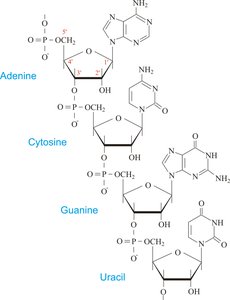
DNA and RNA differ in their sugar, bases, and structure. DNA is double-stranded, uses deoxyribose, and contains thymine. RNA is single-stranded, uses ribose, and contains uracil.
DNA: Deoxyribose, bases A, G, C, T, double-stranded
RNA: Ribose, bases A, G, C, U, single-stranded
3D Structure: The Double Helix
Key Features of Double-Stranded DNA
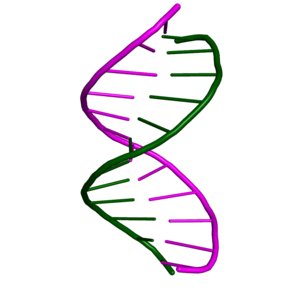
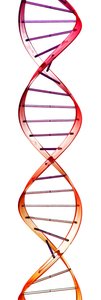
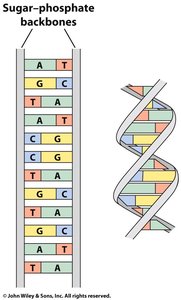
The double helix consists of two antiparallel strands, with the phosphate backbone on the outside and bases paired in the center. The bases are perpendicular to the backbone, forming the steps of a spiral staircase.
Antiparallel strands: One strand runs 5' to 3', the other 3' to 5'
Phosphate backbone: Negative charges on the outside
Base pairing: A-T (2 H-bonds), G-C (3 H-bonds)
Stacking interactions: Dispersion forces between aromatic bases stabilize the helix
Base Pairing and Stability
Base pairs are formed by hydrogen bonds: A pairs with T (or U in RNA), G pairs with C. Stacking interactions between bases provide additional stability, especially between GC pairs.
Isosteric base pairs: All standard pairs are the same size
Hydrogen bonds: Specificity and stability
Protein-DNA Interactions
General Principles
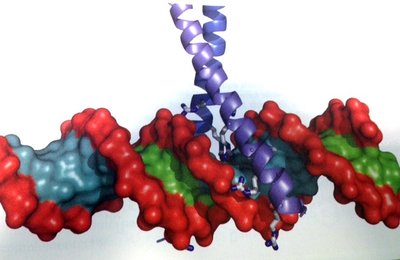
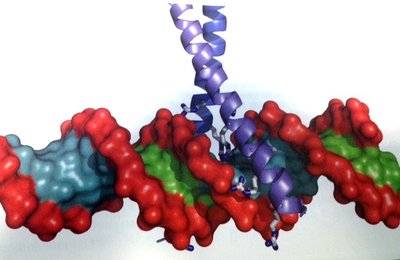
Proteins interact with DNA primarily through ionic interactions between positively-charged amino acids (arginine, lysine, histidine) and the negatively-charged phosphate backbone. Sequence-specific recognition occurs via unique patterns of hydrogen bond donors and acceptors in the major groove of DNA.
Salt bridges: Ionic interactions between protein side chains and DNA phosphates
Major groove: Site of sequence-specific protein binding
Sequence-Specific Recognition
Proteins such as transcription factors recognize DNA sequences by reading the unique hydrogen bonding patterns in the major groove. This enables regulation of gene expression and other cellular processes.
Recognition: Major groove provides access to base pair identity
Example: Transcription factor binding to DNA
Summary Table: DNA vs. RNA
Feature | DNA | RNA |
|---|---|---|
Sugar | Deoxyribose | Ribose |
Strands | Double-stranded | Single-stranded |
Bases | A, G, C, T | A, G, C, U |
Function | Genetic storage | Genetic decoding, catalysis |
Central Dogma and Mutations
Information Flow
The central dogma describes the flow of genetic information: DNA is replicated, transcribed into RNA, and translated into protein. Mutations can occur during replication, often caused by mutagens such as radiation or chemicals. If not repaired, mutations are propagated in subsequent generations.
Replication: DNA → DNA (semiconservative)
Transcription: DNA → RNA
Translation: RNA → Protein
Mutation: Change in DNA sequence, may affect protein function
Key Equations and Concepts
Phosphodiester bond formation:
Base pairing:
Chargaff's rules: in double-stranded DNA
Additional info: These notes cover Chapter 26: Nucleic Acids and Protein Synthesis, directly relevant to GOB Chemistry college courses.
