 Back
Proteins and Their Amino Acid Building Blocks: Structure and Function in Biochemistry
Study Guide - Smart Notes
 Tailored notes based on your materials, expanded with key definitions, examples, and context.
Biochemistry and Biomacromolecules
What is Biochemistry?
Biochemistry is the study of the chemical processes and substances that occur within living organisms. It bridges biology and chemistry, focusing on the molecular mechanisms that underpin life, including metabolism, cellular signaling, and genetic information transfer.
Key Point: Biochemistry examines all chemical reactions in living organisms.
Key Point: It is foundational for fields such as medicine, pharmacology, physiology, and cell biology.
The Four Classes of Biomacromolecules
Biomacromolecules are large molecules essential for life, classified into four main types:
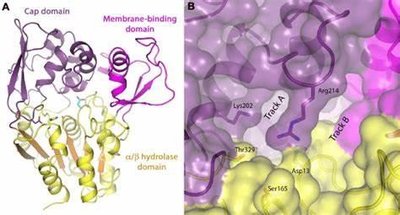
Proteins: Polymers of amino acids, responsible for structure, function, and regulation of tissues and organs.
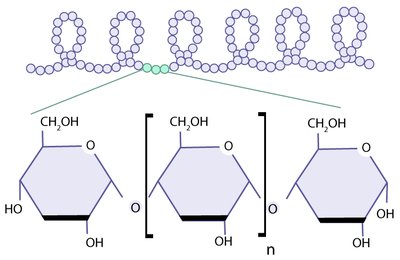
Carbohydrates: Polymers of sugars, serve as energy sources and structural components.
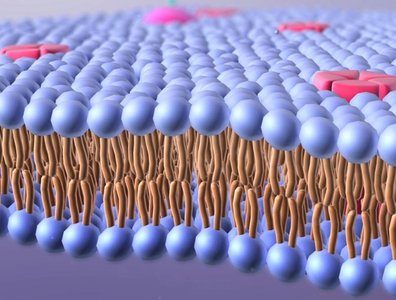
Lipids: Include fats, oils, and membranes, important for energy storage and cell membrane structure.
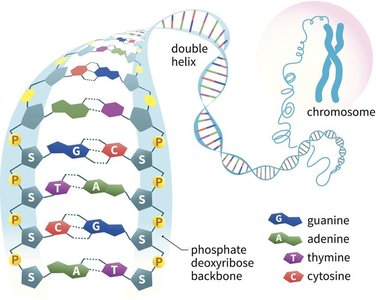
Nucleic Acids: DNA and RNA, carriers of genetic information.
Proteins: Structure and Function
Roles of Proteins in the Body
Proteins are versatile biomolecules with diverse functions:
Enzymes: Biological catalysts that accelerate biochemical reactions.
Hormones: Chemical messengers regulating physiological processes.
Storage Proteins: Store essential substances (e.g., ovalbumin, casein, ferritin).
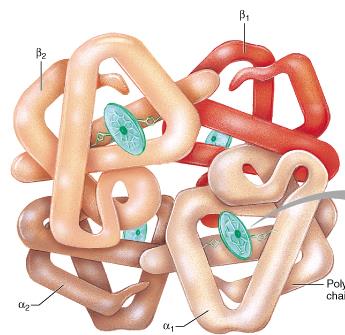
Transport Proteins: Move substances across membranes and in blood (e.g., hemoglobin, serum albumin).
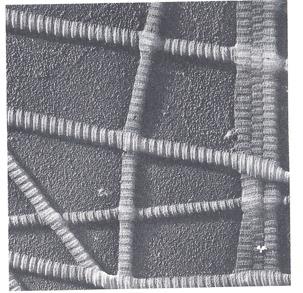
Structural Proteins: Provide support and shape (e.g., actin, myosin, collagen, elastin, keratin).
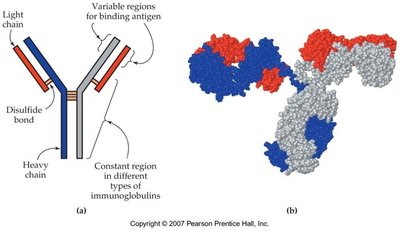
Protective Proteins: Defend against pathogens (e.g., antibodies).
Contractile Proteins: Enable movement (e.g., kinesin).
Importance of Protein Structure
Understanding protein structure is crucial because the function of a protein is determined by its shape, which is dictated by its sequence and interactions. Structural knowledge enables insights into disease mechanisms, drug design, and enzyme engineering.
Amino Acids: Building Blocks of Proteins
General Structure of an Amino Acid
Amino acids are organic molecules with a central (alpha) carbon bonded to four groups:
Amine group (–NH2): Basic functional group.
Carboxylic acid group (–COOH): Acidic functional group.
Side chain (R group): Variable group that determines the amino acid's properties.
Hydrogen atom: Completes the tetrahedral structure.
Most amino acids are chiral, meaning the alpha carbon is attached to four different groups, resulting in non-superimposable mirror images (enantiomers).
Chiral Carbon and Isomerism
A chiral carbon is a carbon atom bonded to four distinct groups. This chirality gives rise to stereoisomers:
Enantiomers: Mirror-image isomers (e.g., L- and D-amino acids).
Diastereoisomers: Stereoisomers that are not mirror images.
Constitutional Isomers: Isomers with different bonding orders.
Proteins in nature are composed almost exclusively of L-amino acids.
Classification of Amino Acids
Amino acids are grouped based on the properties of their side chains:
Nonpolar: Hydrophobic, side chains are alkanes or arenes.
Neutral Polar: Hydrophilic, side chains contain hydroxyl, thiol, or amide groups.
Acidic: Side chains have carboxylic acid groups, negatively charged at pH 7.
Basic: Side chains have amine groups, positively charged at pH 7.
Zwitterions and pH Dependence
Amino acids exist as zwitterions at physiological pH (~7), carrying both positive (amine) and negative (carboxylate) charges. The net charge of an amino acid depends on the pH of the environment:
At low pH: Fully protonated, positive charge.
At neutral pH: Zwitterionic, both charges present.
At high pH: Deprotonated, negative charge.
Protein Structure: Levels and Stabilizing Interactions
Primary Structure
The primary structure of a protein is its unique sequence of amino acids, linked by peptide bonds (amide bonds). Proteins are written from the N-terminus (amino end) to the C-terminus (carboxyl end).
Peptide Bond Formation: Covalent linkage between the carboxyl group of one amino acid and the amine group of another, releasing water.
Shape-Determining Amino Acids
Some amino acids play special roles in protein structure:
Glycine: Small, flexible, often found in turns.
Proline: Rigid, induces bends and turns.
Cysteine: Forms disulfide bonds, stabilizing tertiary and quaternary structure.
Secondary Structure
Secondary structure refers to local folding patterns stabilized by hydrogen bonds:
Alpha (α)-helix: Right-handed coil stabilized by hydrogen bonds between backbone amide groups four residues apart.
Beta (β)-sheet: Extended strands connected by hydrogen bonds between adjacent strands, forming pleated sheets.
Tertiary Structure
Tertiary structure is the overall three-dimensional shape of a single protein chain, stabilized by:
Hydrophobic interactions: Nonpolar side chains cluster away from water.
Hydrogen bonds: Between side chains and backbone atoms.
Electrostatic (ionic) interactions: Between charged side chains.
Disulfide bonds: Covalent bonds between cysteine residues.
Van der Waals forces: Weak attractions between all atoms.
Quaternary Structure
Quaternary structure arises when two or more protein chains (subunits) assemble into a functional complex. Stabilizing forces include interchain disulfide bonds, hydrophobic interactions, and ionic bonds.
Stabilizing Interactions Summary Table
Structure Level | Stabilizing Forces |
|---|---|
Primary | Covalent peptide bonds |
Secondary | Hydrogen bonds (backbone) |
Tertiary | Hydrophobic effect, hydrogen bonds, ionic bonds, disulfide bonds, Van der Waals |
Quaternary | Hydrophobic effect, hydrogen bonds, ionic bonds, interchain disulfide bonds |
Summary and Applications
Proteins are polymers of amino acids, classified by their side chain properties.
Protein structure is hierarchical: primary, secondary, tertiary, and quaternary.
Stabilizing interactions include covalent bonds, hydrogen bonds, ionic bonds, hydrophobic effect, and Van der Waals forces.
Understanding structure is essential for predicting function, designing drugs, and studying disease.
