 Back
Regulation of Enzyme Activity, Vitamins, and Diagnostic Testing in GOB Chemistry
Study Guide - Smart Notes
 Tailored notes based on your materials, expanded with key definitions, examples, and context.
Enzyme Inhibition
Types of Enzyme Inhibition
Enzyme inhibition is a critical concept in biochemistry, affecting how enzymes catalyze reactions. Inhibitors can decrease or halt enzyme activity by interacting with the enzyme or its substrate.
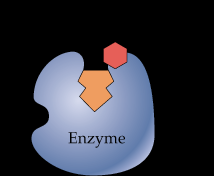
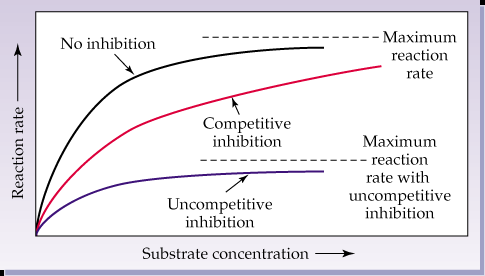
Competitive Inhibition: The inhibitor resembles the substrate and competes for the active site. This increases the Km (substrate concentration at half-max velocity) but does not affect Vmax (maximum velocity).
Noncompetitive Inhibition: The inhibitor binds to a site other than the active site, causing a conformational change that prevents substrate binding. Vmax is lowered, but Km remains unchanged.
Uncompetitive Inhibition: The inhibitor binds only to the enzyme-substrate complex, not to the free enzyme. Both Vmax and Km are lowered by the same ratio.
Irreversible Inhibition: The inhibitor covalently modifies the enzyme, rendering it permanently inactive.
Example: Sarin irreversibly inhibits serine in the active site of acetylcholinesterase, leading to toxic effects.

Enzyme Regulation
Mechanisms of Regulation
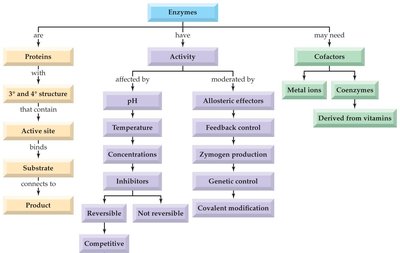
Enzymes in metabolic pathways are regulated to maintain homeostasis and respond to cellular needs. Regulation can be positive (activating) or negative (inhibiting).
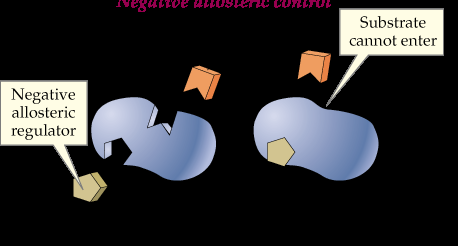
Allosteric Regulation: Molecules bind to sites other than the active site, altering enzyme activity. Positive regulators increase activity; negative regulators decrease it.
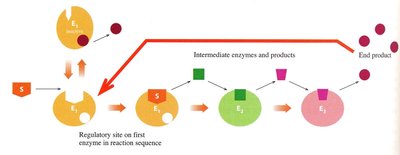
Feedback Control: The end product of a pathway acts as an allosteric regulator for the first enzyme, either inhibiting (negative feedback) or enhancing (positive feedback) its activity.
Covalent Modification: Addition or removal of functional groups (e.g., phosphorylation) changes enzyme activity.
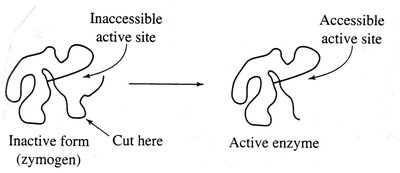
Zymogen Activation: Enzymes are synthesized in inactive forms (proenzymes) and activated by cleavage of specific peptide segments.
Genetic Control: Regulation of enzyme levels through gene expression, including transcription, translation, and protein processing.

Vitamins and Coenzymes
Classification of Vitamins
Vitamins are essential organic molecules required for various biological functions. They are classified based on their solubility:
Water-Soluble Vitamins: Hydrophilic, contain OH and COOH groups, not stored in the body, often form coenzymes. Examples: Vitamin C, B-complex vitamins.
Fat-Soluble Vitamins: Hydrophobic, mainly composed of carbon and hydrogen, stored in the liver. Examples: Vitamins A, D, E, K.
Vitamins are placed in these categories due to their chemical properties and storage mechanisms in the body.
Fat-Soluble Vitamins
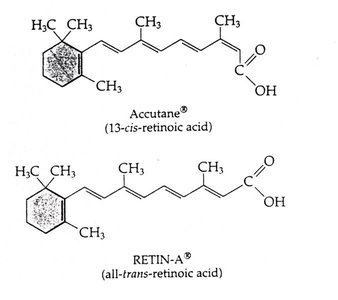
Vitamin A (Retinol): Provitamin: β-carotene. Function: Vision, cell growth, antioxidant for lipids. Deficiency: Blindness, growth retardation. Toxicity: Liver damage, birth defects.
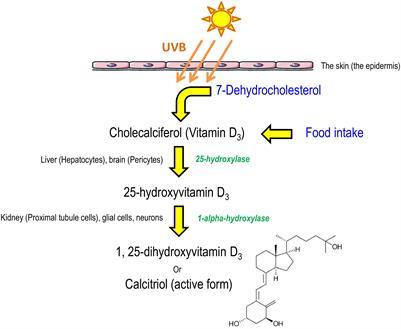
Vitamin D (Calciferol): Provitamin: 7-Dehydrocholesterol. Function: Bone growth, calcium and phosphate absorption. Deficiency: Rickets, bone deformities. Toxicity: Calcification, kidney stones.
Vitamin E (α-tocopherol): No provitamin. Function: Antioxidant, prevents oxidative damage. Deficiency: Rare. Toxicity: Interferes with blood clotting.
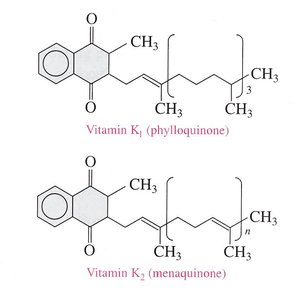
Vitamin K (Phylloquinone, Menaquinone): No provitamin. Function: Blood clotting, bone metabolism. Deficiency: Bleeding disorders. Toxicity: Liver dysfunction.
Water-Soluble Vitamins and Coenzymes
Vitamin B1 (Thiamine): Coenzyme: Thiamine pyrophosphate (TPP). Function: Carbohydrate metabolism, decarboxylation.
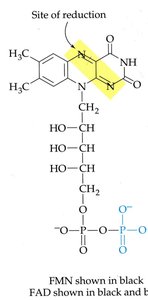
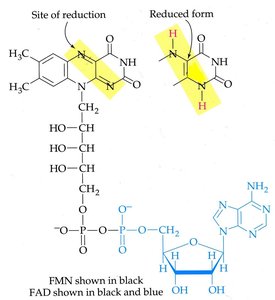
Vitamin B2 (Riboflavin): Coenzymes: FMN, FAD. Function: Redox reactions.
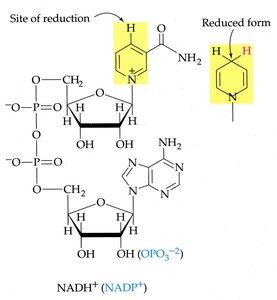
Vitamin B3 (Niacin): Coenzymes: NAD+, NADH, NADP+, NADPH. Function: Redox reactions.
Vitamin B5 (Pantothenic Acid): Coenzyme: Coenzyme A. Function: Acetyl group transfer.
Vitamin B6 (Pyridoxine): Coenzyme: Pyridoxal phosphate (PLP). Function: Amino acid metabolism.
Vitamin B7 (Biotin): Coenzyme: Biotin/Biocytin. Function: Carbon carrier in metabolism.
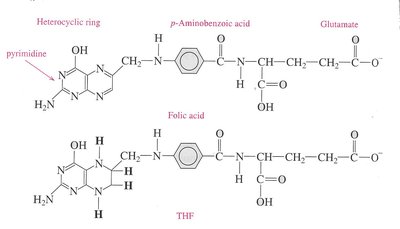
Vitamin B9 (Folic Acid): Coenzyme: Tetrahydrofolate (THF). Function: Carrier of one-carbon units, nucleic acid synthesis.
Vitamin B12 (Cobalamin): Coenzyme: Methylcobalamin. Function: Methyl transfer, nucleic acid metabolism.
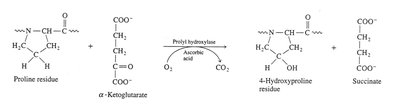
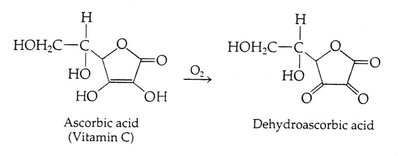
Vitamin C (Ascorbic Acid): Coenzyme: Self. Function: Antioxidant, collagen formation, disease prevention.
Summary Table: Water-Soluble Vitamins and Coenzymes
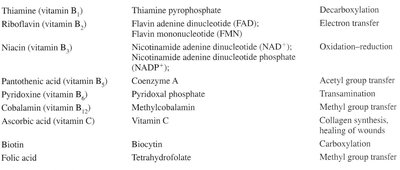
Vitamin | Coenzyme | Function |
|---|---|---|
Thiamine (B1) | Thiamine pyrophosphate | Decarboxylation |
Riboflavin (B2) | FAD, FMN | Electron transfer |
Niacin (B3) | NAD+, NADP+ | Oxidation-reduction |
Pantothenic acid (B5) | Coenzyme A | Acetyl group transfer |
Pyridoxine (B6) | Pyridoxal phosphate | Transamination |
Cobalamin (B12) | Methylcobalamin | Methyl group transfer |
Ascorbic acid (C) | Vitamin C | Collagen synthesis, healing |
Biotin (B7) | Biocytin | Carboxylation |
Folic acid (B9) | Tetrahydrofolate | Methyl group transfer |
Diagnostic Enzymes and Serological Testing
Enzyme Markers for Disease Diagnosis
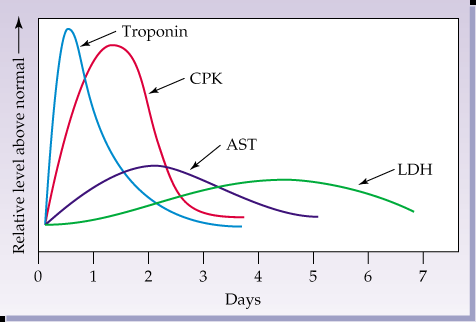
Specific enzymes in the blood can indicate organ damage or disease. For example, elevated levels of creatine kinase (CK), aspartate transaminase (AST), and lactate dehydrogenase (LDH) are used to diagnose heart attacks.
Heart Attack: CK, AST, LDH
Liver Disease: ALT, GGT, ALP
Pancreas: α-amylase
Prostate: PSA, acid phosphatase
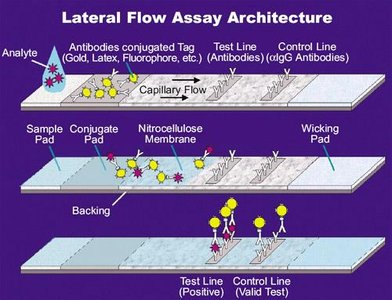
Lateral Flow Assay for COVID-19
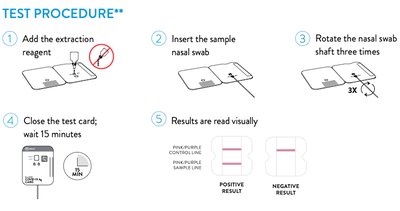
Lateral flow assays are rapid diagnostic tests that use antibodies (a class of protective proteins) to detect antigens, such as the spike protein of SARS-CoV-2, in a sample.
Principle: Antibodies on the test strip bind to the target antigen, producing a visible result.
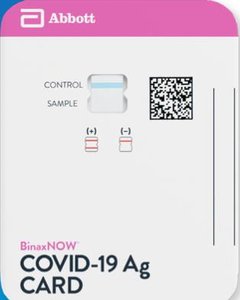
Applications: COVID-19 testing, pregnancy tests, and other rapid diagnostics.
Additional info:
Enzyme regulation and vitamin function are central to metabolic pathways and disease diagnosis, making them highly relevant to GOB Chemistry.
Coenzymes derived from vitamins are essential for catalysis in many biochemical reactions.
