 Back
BackSolutions and the Solution Process: Study Notes
Study Guide - Smart Notes
 Tailored notes based on your materials, expanded with key definitions, examples, and context.
Solutions and the Solution Process
Solutions: Definitions and Types
A solution is a homogeneous mixture of two or more substances in a single phase, with the same composition and properties throughout. Solutions consist of two main parts:
Solvent: The dissolving medium; the substance that dissolves another.
Solute: The substance that is dissolved.
Particles in solutions are very small (atoms, ions, molecules) and cannot be separated by filtration.
Types of solutions include:
Gas solutions: e.g., air (mixture of oxygen, nitrogen, etc.)
Solid solutions: e.g., brass (zinc and copper), sterling silver (silver and copper)
Liquid solutions: e.g., alcohol in water
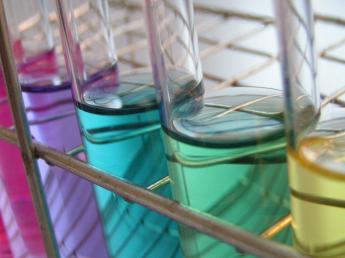
Types of Solutes: Electrolytes and Nonelectrolytes
Solutes can be classified based on their ability to conduct electricity when dissolved in water:
Electrolytes: Dissolve in water to give a solution that conducts electricity (e.g., Gatorade contains electrolytes).
Nonelectrolytes: Dissolve in water but do not conduct electricity (e.g., sugar).
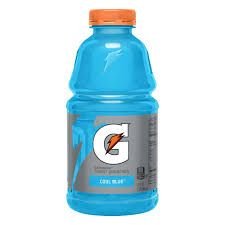
Electrolyte Conductivity and Dissociation
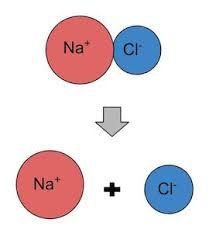
Electrolytes conduct electricity because they dissociate into ions in solution. Nonelectrolytes do not dissociate and thus do not conduct electricity.
Dissociation: The process by which ionic compounds split into their cations and anions when they dissolve.
The Solution Process: Dissolution
Dissolution is the process of dissolving a solute in a solvent. The rate of dissolution is affected by:
Surface Area: Greater surface area (e.g., powdered sugar vs. sugar cube) increases the rate.
Agitation/Stirring: Stirring allows more solvent to interact with the solute, increasing the rate.
Heating: Higher temperature generally increases the rate of dissolution.
Solubility and Solution Equilibrium
Solubility is the amount of a substance required to form a saturated solution with a specific amount of solvent at a specified temperature. Types of solutions based on solubility:
Unsaturated: Contains less solute than the maximum amount; more solute can be added.
Saturated: Contains the maximum amount of solute; no more can dissolve at those conditions.
Supersaturated: Contains more than the maximum amount of solute, usually made by heating and then slowly cooling the solution.
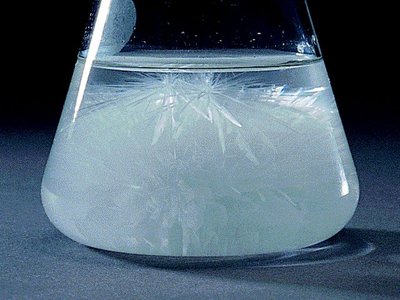
Solution Equilibrium occurs when the rate of dissolving equals the rate of crystallization, resulting in no net change in the system.
Solubility Curves
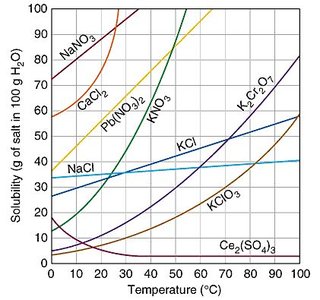
Solubility curves show how the solubility of different substances varies with temperature. These curves are useful for predicting how much solute can dissolve at a given temperature.
Solvent–Solute Interactions: "Like Dissolves Like"
The phrase "like dissolves like" summarizes how solubility depends on the nature of the solute and solvent:
Nonpolar solvents dissolve nonpolar solutes.
Polar solvents dissolve polar and ionic solutes.
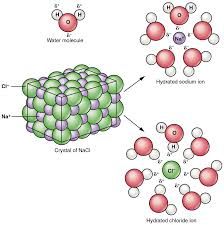
In aqueous solutions, water molecules surround and stabilize ions (hydration), with the positive ends of water attracting negative ions and vice versa.
Miscibility and Immiscibility
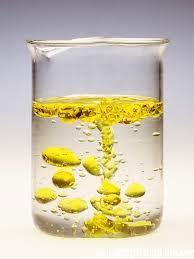
Miscible liquids mix in all proportions (e.g., alcohol and water), while immiscible liquids do not mix and form separate layers (e.g., oil and water).
Heats of Solution
Formation of solutions is always accompanied by a change in energy, called the heat of solution (measured in kJ/mol). The process involves three steps:
Separation of solute particles (energy absorbed)
Separation of solvent particles (energy absorbed)
Attraction and mixing of solute and solvent particles (energy released)
If the energy released in step 3 is greater than the energy absorbed in steps 1 and 2, the process is exothermic (releases heat). If less, it is endothermic (absorbs heat).
Exothermic: Solution feels warmer; energy is released to surroundings.
Endothermic: Solution feels colder; energy is absorbed from surroundings.
Example equations:
Endothermic:
Exothermic:
