 Back
BackThe Generation of Biochemical Energy: Photosynthesis, Cellular Respiration, and Metabolic Pathways
Study Guide - Smart Notes
 Tailored notes based on your materials, expanded with key definitions, examples, and context.
The Generation of Biochemical Energy
Introduction to Energy in Biological Systems
All living organisms require energy to perform essential life processes. The primary source of energy for most life on Earth is the sun, with plants converting solar energy into chemical energy through photosynthesis. This chemical energy is then utilized by both plants and animals through metabolic pathways that involve oxidation-reduction reactions, energy transfer, and the synthesis and breakdown of biomolecules.
Oxidation-Reduction Reactions in Biochemistry
Definition and Importance
Oxidation: The loss of electrons or an increase in the number of bonds to oxygen (or other electronegative atoms).
Reduction: The gain of electrons or an increase in the number of bonds to hydrogen.
These reactions are central to energy transformations in cells, especially in the metabolism of carbohydrates, lipids, and proteins.
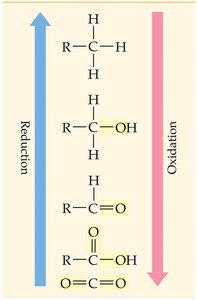
Example: The conversion of glucose to carbon dioxide during cellular respiration is an oxidation process, while the conversion of carbon dioxide to glucose during photosynthesis is a reduction process.
Energy in Chemical Reactions
Thermodynamics and Free Energy
First Law of Thermodynamics: Energy can be converted from one form to another but cannot be created or destroyed.
Gibbs Free Energy (ΔG): Determines whether a reaction is spontaneous (exergonic, ΔG < 0) or nonspontaneous (endergonic, ΔG > 0).
Equation:
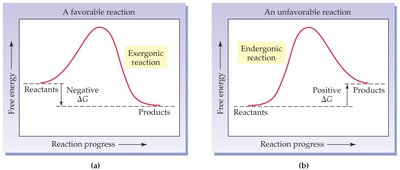
Exergonic reactions release free energy and are spontaneous, while endergonic reactions require an input of energy and are nonspontaneous.
Photosynthesis and Cellular Respiration
Photosynthesis: Energy Storage in Plants
Photosynthesis is the process by which plants, algae, and some bacteria convert light energy into chemical energy stored in carbohydrates. The overall reaction is:
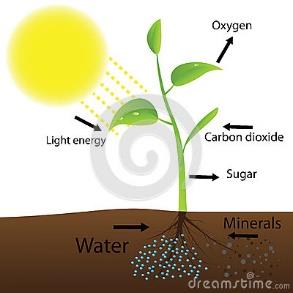
Photosynthesis is an endergonic process (ΔG > 0), requiring energy input from sunlight to convert carbon dioxide and water into glucose and oxygen.
Cellular Respiration: Energy Release in Cells
Cellular respiration is the process by which cells extract energy from glucose. The overall reaction is the reverse of photosynthesis:
This is an exergonic process (ΔG < 0), releasing energy that is used to produce ATP.

Metabolic Pathways: Catabolism and Anabolism
Definitions and Overview
Catabolism: The breakdown of complex molecules into simpler ones, releasing energy (exergonic).
Anabolism: The synthesis of complex molecules from simpler ones, requiring energy (endergonic).
Metabolism: The sum of all chemical reactions in an organism, including both catabolic and anabolic pathways.

Example: The breakdown of glucose during glycolysis and the citric acid cycle is catabolic, while the synthesis of proteins from amino acids is anabolic.
Cell Structure and Energy Production
Eukaryotic Cell Structure
Eukaryotic cells contain membrane-bound organelles, including a nucleus, mitochondria, and various other structures.
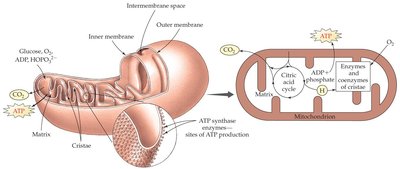
Mitochondria are the site of most ATP production in eukaryotic cells and are often called the "powerhouses" of the cell.
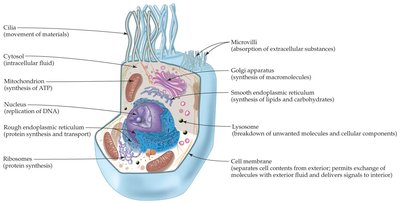
Mitochondria and ATP Production
The citric acid cycle (Krebs cycle) occurs in the mitochondrial matrix and is central to energy production.
Electron transport and ATP synthesis occur at the inner mitochondrial membrane, where most ATP is generated.
ATP: The Energy Currency of the Cell
Structure and Function of ATP
Adenosine triphosphate (ATP) consists of adenosine and three phosphate groups.
Hydrolysis of the terminal phosphate group releases energy:
ATP is regenerated from ADP by phosphorylation, a process that requires energy input.
Coupled Reactions and Energy Transfer
Mechanism of Coupling
Unfavorable (endergonic) reactions can proceed when coupled to favorable (exergonic) reactions, such as ATP hydrolysis.
This coupling ensures that essential cellular processes can occur even if they are not energetically favorable on their own.
Example: The phosphorylation of glucose to glucose-6-phosphate is coupled to ATP hydrolysis to make the overall reaction favorable.
Coenzymes in Oxidation-Reduction Reactions
Electron Carriers
NAD+/NADH and FAD/FADH2 are coenzymes that shuttle electrons during metabolic reactions.
These coenzymes cycle between oxidized and reduced forms, transferring energy and electrons between reactions.
Example: NAD+ is reduced to NADH during glycolysis and the citric acid cycle, carrying electrons to the electron transport chain.
The Citric Acid Cycle (Krebs Cycle)
Overview and Steps
The citric acid cycle is a series of enzyme-catalyzed reactions that oxidize acetyl-CoA to CO2 and transfer energy to NADH, FADH2, and GTP (converted to ATP).
Key steps include the formation of citrate, isomerization to isocitrate, oxidative decarboxylations, substrate-level phosphorylation, and regeneration of oxaloacetate.
Net result: For each acetyl-CoA, the cycle produces 3 NADH, 1 FADH2, 1 GTP (ATP), and 2 CO2.
Electron Transport Chain and ATP Synthesis
Mechanism and Importance
Electrons from NADH and FADH2 are transferred through a series of protein complexes in the inner mitochondrial membrane.
The energy released is used to pump protons (H+) into the intermembrane space, creating a proton gradient.
ATP synthase uses the energy stored in this gradient to synthesize ATP from ADP and inorganic phosphate.
Oxygen is the final electron acceptor, forming water and allowing the electron transport chain to continue.
Summary Table: Key Energy-Releasing Phosphate Compounds
Compound | Hydrolysis Product | ΔG (kcal/mol) | Where Seen |
|---|---|---|---|
Phosphoenolpyruvate | Pyruvate + HOPO32– | -14.8 | Glycolysis |
1,3-Bisphosphoglycerate | 3-phosphoglycerate + HOPO32– | -11.8 | Glycolysis |
Creatine-Phosphate | Creatine + HOPO32– | -10.3 | Muscle energy storage |
ATP | ADP + HOPO32– | -7.3 | Universal energy carrier |
Glucose-1-Phosphate | Glucose + HOPO32– | -5.0 | Starch breakdown |
Glucose-6-Phosphate | Glucose + HOPO32– | -3.3 | Glycolysis |
Fructose-6-Phosphate | Fructose + HOPO32– | -3.3 | Glycolysis |
Conclusion
The generation of biochemical energy involves a complex interplay of oxidation-reduction reactions, metabolic pathways, and energy transfer mechanisms. ATP serves as the universal energy currency, linking catabolic and anabolic processes. The citric acid cycle and electron transport chain are central to aerobic energy production, efficiently converting the chemical energy in nutrients into usable cellular energy.
