 Back
BackBlood: Structure, Function, and Homeostasis in Human Biology
Study Guide - Smart Notes
 Tailored notes based on your materials, expanded with key definitions, examples, and context.
The Circulatory System
Overview and Functions
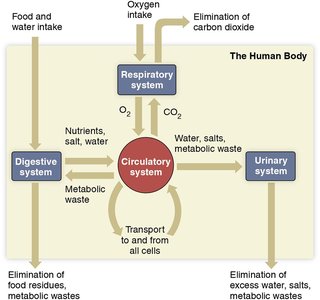
The circulatory system is essential for maintaining homeostasis by transporting nutrients, gases, and wastes throughout the body. It consists of the heart, blood vessels, and blood, which together ensure the delivery of oxygen and nutrients to cells and the removal of metabolic wastes.
Primary Function: Transport materials to and from all cells.
Other Functions: Regulation of body temperature, defense against disease and injury, and maintenance of water and pH balance.
Blood: A Specialized Connective Tissue
Composition and Properties
Blood is a specialized connective tissue composed of cells and cell fragments suspended in a watery solution of molecules and ions. It originates from bone marrow and constitutes about 8% of body weight.
Volume: Adult men have 5-6L; women have 4-5L.
Uniform Appearance: Blood is uniform in color but contains components of varying densities.
Functions of Blood
Transportation: Delivers oxygen, nutrients, and hormones; removes carbon dioxide and wastes.
Regulation: Maintains body temperature, water levels, and pH.
Defense: Protects against pathogens and prevents excessive blood loss through clotting.
Blood Composition
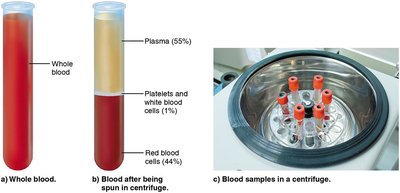
Formed Elements (45%)
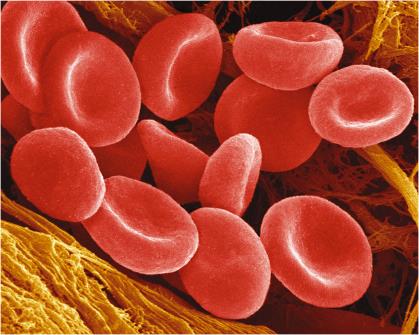
Red Blood Cells (RBCs): Transport oxygen to tissues and remove carbon dioxide.
White Blood Cells (WBCs): Defend the body against pathogens and abnormal cells.
Platelets: Involved in blood clotting and natural defense against blood loss.
Plasma (55%)
Water: Main component, serves as a solvent.
Electrolytes: Sodium, potassium, chloride, bicarbonate, calcium, hydrogen, magnesium—regulate cell function and excitability.
Proteins: Albumins, globulins, and clotting proteins.
Hormones: Chemical messengers for regulation.
Gases: Oxygen and carbon dioxide.
Nutrients & Wastes: Glucose, urea, and other metabolic products.
Plasma Proteins
Types and Functions
Albumins: Maintain water balance and assist in transport of molecules like bilirubin and fatty acids.
Globulins: Transport substances; beta globulins form lipoproteins (LDL and HDL); gamma globulins are antibodies.
Clotting Proteins: Essential for blood clotting and minimizing blood loss.
Red Blood Cells (Erythrocytes)
Structure and Function
Red blood cells are highly specialized for oxygen and carbon dioxide transport. They are flexible, lack a nucleus and organelles, and are packed with hemoglobin.
Shape: Biconcave, flexible, allowing passage through tiny vessels.\
Hemoglobin: Each RBC contains about 300 million hemoglobin molecules.
Viscosity: RBCs contribute to the thickness of blood.
Hemoglobin Structure and Function
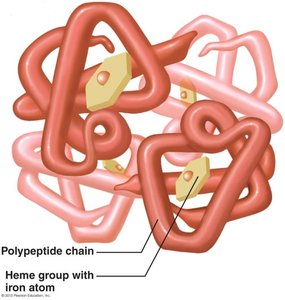
Oxygen Binding: Hemoglobin consists of four polypeptide chains, each with a heme group containing an iron atom that binds oxygen.
Oxyhemoglobin: Hemoglobin bound to oxygen; forms in the lungs where oxygen concentration is high and pH is neutral.
Deoxyhemoglobin: Hemoglobin without oxygen; releases oxygen in tissues with low oxygen concentration, low pH, or increased temperature.
Carbon Dioxide Transport: Hemoglobin also carries about 25% of CO2 at a different binding site.
Hematocrit
Definition and Clinical Significance
Hematocrit: Percentage of blood volume occupied by RBCs; indicates oxygen-carrying capacity.
Normal Ranges: Men: 43-49%; Women: 37-43%.
Low Hematocrit: May indicate anemia or low RBC production.
High Hematocrit: May indicate excessive RBC production, increasing risk of clots.
Altitude Effect: Higher altitudes stimulate increased hematocrit as a homeostatic adjustment.
Blood Cell Production
Hematopoiesis in Red Bone Marrow
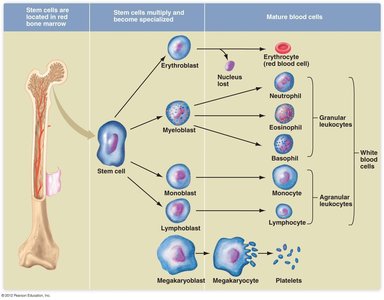
Stem Cells: Unspecialized cells in red bone marrow produce immature cells (blasts) that mature into blood cells (cytes).
Erythroblasts: Immature RBCs that fill with hemoglobin and lose their nucleus to become erythrocytes.
Megakaryoblasts: Immature cells that develop into megakaryocytes, which fragment to form platelets.
White Blood Cells: Derived from myeloblasts (granular leukocytes) and monoblasts/lymphoblasts (agranular leukocytes).
Red Blood Cell Lifespan and Recycling
Destruction and Recycling
Lifespan: RBCs live about 120 days; cannot repair or reproduce due to lack of nucleus.
Destruction: Old RBCs are engulfed and digested by macrophages in the liver and spleen (phagocytosis).
Recycling:
Peptide chains are broken down into amino acids for new proteins.
Iron is returned to bone marrow for new hemoglobin.
Heme group is converted to bilirubin, which is excreted in bile.
Bilirubin: Gives urine and feces their yellow color; buildup causes jaundice.
Regulation of RBC Production
Erythropoietin and Negative Feedback
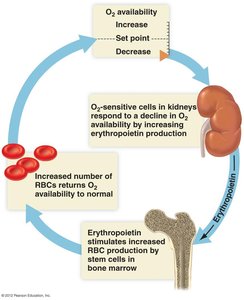
Regulation: Controlled by the effect of RBCs on oxygen delivery, not by their number.
Kidneys: Monitor blood oxygen; low O2 triggers release of erythropoietin.
Erythropoietin: Hormone stimulates red bone marrow to increase RBC production.
Negative Feedback: When O2 levels normalize, erythropoietin release decreases.
Blood Doping
Definition: Artificially increasing RBC count to enhance athletic performance.
Risks: Increased blood viscosity, higher risk of clots, heart attack, and stroke.
Platelet Production and Regulation
Formation and Hormonal Control
Platelets: Small cell fragments from megakaryocytes; essential for blood clotting.
Thrombopoietin: Hormone produced in liver and kidneys; regulates platelet formation in bone marrow.
White Blood Cells (Leukocytes)
Types and Functions
Granular Leukocytes (Granulocytes): Neutrophils, eosinophils, basophils; short lifespan (hours to days).
Agranular Leukocytes (Agranulocytes): Monocytes (months), lymphocytes (days to years; B and T cells).
Functions: Defense against pathogens, removal of abnormal cells, immune response.
Structure: Larger than RBCs, have a nucleus, lack hemoglobin.
Hemostasis: Stopping Blood Loss
Stages of Hemostasis
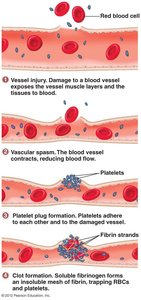
Vascular Spasms: Smooth muscle contraction constricts blood vessels to reduce blood flow.
Platelet Plug Formation: Platelets become sticky, adhere to each other and the injury site, forming a temporary seal.
Blood Clotting (Coagulation): Involves 12 clotting factors; key steps include conversion of prothrombin to thrombin, and fibrinogen to fibrin, forming a stable clot.
Blood Clotting Mechanism
Prothrombin Activator: Released upon vessel damage, converts prothrombin to thrombin.
Thrombin: Converts fibrinogen to fibrin.
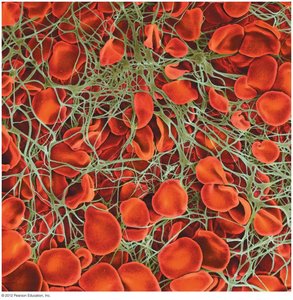
Fibrin: Forms a mesh that traps blood cells and platelets, stabilizing the clot.
Summary Table: Main Components of Blood
Component | Percentage | Main Function |
|---|---|---|
Plasma | ~55% | Transport of nutrients, wastes, hormones, and proteins |
Red Blood Cells | ~44% | Oxygen and carbon dioxide transport |
White Blood Cells | <1% | Defense against pathogens |
Platelets | <1% | Blood clotting |
Key Equations
Hematocrit Calculation:
Oxygen Transport:
Additional info: This guide covers the structure, function, and regulation of blood and its components, as well as the mechanisms of hemostasis, providing a comprehensive overview for Human Biology students.
