 Back
BackBlood Transfusions, Blood Types, and Blood Disorders: Study Notes for Human Biology
Study Guide - Smart Notes
 Tailored notes based on your materials, expanded with key definitions, examples, and context.
Blood Transfusions
Overview of Blood Transfusions
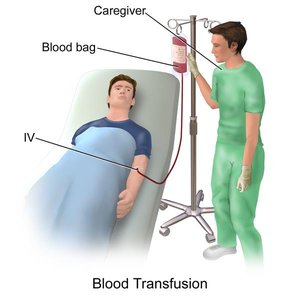
Blood transfusions involve the administration of blood from one person directly into the bloodstream of another. This medical procedure is essential for treating various conditions, such as severe blood loss, anemia, and certain blood disorders. Early attempts at transfusions often failed due to lack of understanding of blood compatibility, but modern transfusions are safe due to knowledge of blood types.
Blood transfusion: Transfer of blood or blood products from a donor to a recipient.
Compatibility: Matching blood types prevents adverse reactions.
Historical context: Animal-to-human transfusions were unsuccessful; human-to-human transfusions have been practiced since the early 1800s.
Blood Types: Antigen and Antibody
ABO Blood Types and Immune Response
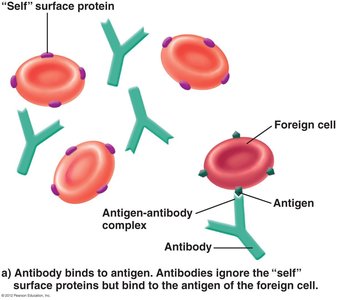
The ABO blood type system classifies blood based on the presence of antigens and antibodies on red blood cells. Antigens are non-self proteins that stimulate the immune system, while antibodies are proteins produced by the immune system to counteract foreign antigens.
Antigen: A protein on the surface of red blood cells that marks cells as "self" or "invader".
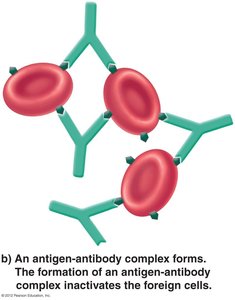
Antibody: A protein produced by the immune system that binds to foreign antigens, forming an antigen-antibody complex.
Immune response: Antibodies bind to antigens on foreign cells, causing them to clump (agglutinate) and be destroyed.
ABO Blood System: Blood Type Classification
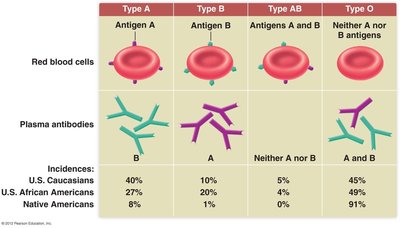
There are four main blood types in the ABO system, each with specific antigens and antibodies. Compatibility is crucial for safe transfusions.
Type A: Has A antigens and B antibodies; can receive A or O blood.
Type B: Has B antigens and A antibodies; can receive B or O blood.
Type AB: Has both A and B antigens, no antibodies; universal receiver.
Type O: Has no antigens, A and B antibodies; universal donor.
Incidence of Blood Types
Blood type distribution varies among populations.
Blood Type | Red Blood Cell Antigens | Plasma Antibodies | Incidence (U.S. Caucasians) | Incidence (U.S. African Americans) | Incidence (Native Americans) |
|---|---|---|---|---|---|
Type A | Antigen A | B | 40% | 27% | 8% |
Type B | Antigen B | A | 10% | 20% | 1% |
Type AB | Antigens A and B | Neither A nor B | 5% | 4% | 0% |
Type O | Neither A nor B | A and B | 45% | 49% | 91% |
Blood Transfusion Reactions
Mechanism and Consequences
Antibodies appear early in life and attack red blood cells with foreign antigens, causing agglutination. Severe clumping can block blood vessels, cause organ damage, or lead to death. Hemoglobin released from damaged RBCs may cause kidney failure.
Transfusion reaction: Adverse effects caused by incompatible blood transfusions.
Agglutination: Clumping of red blood cells due to antibody-antigen interaction.
Rhesus Factor (Rh)
Rh Factor and Its Clinical Importance
The Rh factor is a second surface antigen found on red blood cells. Most people (85%) are Rh positive (Rh+), meaning they have the antigen; 15% are Rh negative (Rh-), lacking the antigen. Rh compatibility is important in transfusions and childbirth.
Rh+: Has Rh antigen.
Rh-: Lacks Rh antigen; can develop anti-Rh antibodies after exposure.
Transfusion risk: Rh- individuals may have severe reactions if exposed to Rh+ blood more than once.
Rh Factor in Childbirth
If an Rh- mother carries an Rh+ fetus, fetal blood may mix with maternal blood during birth, causing the mother to develop antibodies against Rh antigen. In subsequent pregnancies, these antibodies can attack the fetus's red blood cells, leading to hemolytic disease of the newborn. 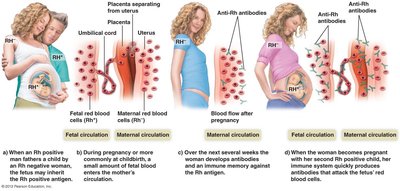
Hemolytic Disease at Birth
Pathophysiology and Treatment
Hemolytic disease of the newborn results from maternal antibodies attacking fetal red blood cells, decreasing RBCs and causing toxic hemoglobin levels.
Treatment: Rh- mothers are given RhoGAM injections to prevent antibody formation.
RhoGAM: Anti-Rh antibodies administered at 28 weeks gestation and after childbirth if the baby is Rh+.
Blood Substitutes
Types and Limitations
Whole blood is not always ideal due to disease risk, storage limitations, and matching requirements. Blood substitutes are developed to address these issues.
Type 1: Modified hemoglobin in solution (from animals or genetically produced).
Type 2: Perfluorocarbons (PFCs), colorless liquids with high oxygen-carrying capacity and no disease risk.
Disadvantages: Disease transmission, toxicity, short lifespan, and safety concerns.
Blood Disorders
Mononucleosis
Mononucleosis is a contagious viral infection caused by the Epstein-Barr virus, most common in adolescents.
Symptoms: Fever, headache, sore throat, fatigue, swollen tonsils and lymph nodes, increased monocytes and lymphocytes.
No cure: Supportive treatment only.
Blood Poisoning (Septicemia)
Blood poisoning is a bacterial infection of the blood, often developing from wounds, burns, urinary infections, or dental work.
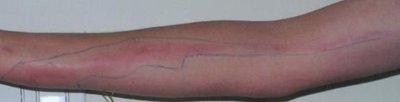
Symptoms: Sudden appearance of red streaks on skin near infection site, indicating inflammation of veins and lymph vessels.
Anemia
Anemia is a reduction in blood's oxygen-carrying capacity, with several types:
Iron-deficiency anemia: Lack of iron prevents proper hemoglobin synthesis.
Hemorrhagic anemia: Blood loss from injuries, parasites, ulcers, or heavy menstrual flow.
Pernicious anemia: Vitamin B12 deficiency impairs RBC production.
Hemolytic anemia: Rupture or lysis of RBCs (e.g., sickle-cell anemia).
Anemia due to renal failure: Reduced erythropoietin production.
Symptoms of Anemia
Pale skin
Headaches
Fatigue
Dizziness
Difficulty breathing
Heart palpitations
Weird cravings
Restless legs
Brittle hair and nails
Leukemia: Cancer of White Blood Cells
Leukemia is characterized by uncontrolled production of immature or abnormal white blood cells in the bone marrow.
Types: Acute (rapid onset) and chronic (slow development).
Effects: Crowds out normal blood cell production, interferes with organ function.
Multiple Myeloma: Cancer of Plasma Cells
Multiple myeloma involves uncontrolled division of plasma cells in the bone marrow, producing abnormal antibodies and weakening bones.
Symptoms: Increased infection risk, weak bones, high blood calcium.
Thrombocytopenia
Thrombocytopenia is a reduction in platelet count, leading to increased bleeding risk.
Causes: Viral infection, anemia, leukemia, blood disorders, X-rays, drug reactions.
Symptoms: Bruising, nosebleeds, bleeding in mouth, blood in urine, heavy menstrual periods.
References
Johnson, M.D & Long, S. (2021). Human biology: Concepts and current issues (9th ed.). Pearson Education Inc.
