 Back
Body Organization and Homeostasis: Animal Histology and Human Biology
Study Guide - Smart Notes
 Tailored notes based on your materials, expanded with key definitions, examples, and context.
Body Organization and Homeostasis
Hierarchical Organization of the Animal Body
The structure of the animal body is organized in a hierarchical manner, where each level builds upon the previous one to create complex living systems. Understanding this organization is fundamental to the study of human biology.
Anatomy: The study of body structures.
Physiology: The study of how those structures function.
Hierarchy of Organization:
Cell
Tissue
Organ
Organ System
Organism
Histology: The study of tissues, which are groups of similar cells working together for a common function.
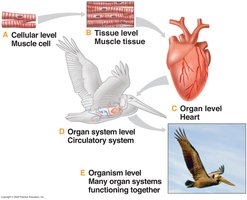
Animal Tissues
Overview of Tissue Types
Tissues are groups of cells with a common structure and function. In animals, there are four primary categories of tissues, each with specialized roles in the body.
Epithelial tissue: Covers surfaces and lines cavities.
Connective tissue: Supports, binds, and protects other tissues and organs.
Muscle tissue: Contracts to produce movement.
Nervous tissue: Detects stimuli and transmits signals.
Epithelial Tissue
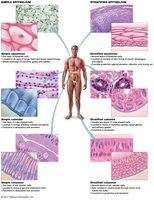
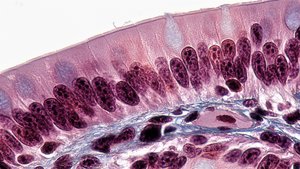
Epithelial tissue, or epithelium, forms the outer layer of the body and lines internal organs and cavities. It is classified by the number of cell layers and the shape of the cells.
Cell Layers:
Simple: One layer of cells.
Stratified: Two or more layers.
Pseudostratified: Appears layered but is actually a single layer.
Cell Shapes:
Squamous: Flat cells.
Cuboidal: Cube-shaped cells.
Columnar: Tall and narrow cells.
Connective Tissue
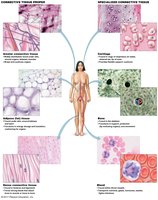
Connective tissue is characterized by cells embedded in an extracellular matrix, which provides support, strength, and cushioning. It is the most diverse tissue type in the body.
Major Types of Connective Tissue:
Loose connective tissue
Dense connective tissue
Adipose tissue (fat storage)
Cartilage
Bone
Blood
Muscle Tissue
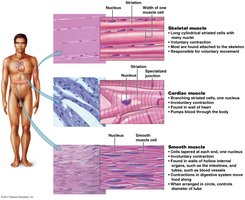
Muscle tissue is specialized for contraction, enabling movement of the body and its parts. There are three types of muscle tissue, each with distinct structure and function.
Skeletal muscle: Voluntary movement, attached to bones.
Smooth muscle: Involuntary movement in internal organs.
Cardiac muscle: Involuntary contraction of the heart.
Nervous Tissue
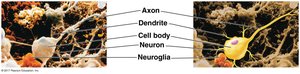
Nervous tissue is responsible for detecting stimuli and transmitting electrical and chemical signals throughout the body. It is composed of two main cell types:
Neurons: Transmit signals.
Glial cells: Support, protect, and nourish neurons.
Basic Anatomy of a Neuron:
Cell body: Contains the nucleus.
Dendrites: Receive signals.
Axon: Sends signals.
Cell-Cell Junctions
Types of Cell-Cell Junctions
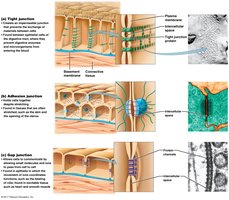
Cell-cell junctions are specialized structures that connect neighboring cells in tissues, providing structural integrity and communication.
Tight junctions: Create seals between cells, controlling passage of substances.
Desmosomes (adhesion junctions): Anchor cells together, providing strength in tissues under stress.
Gap junctions: Form channels for cell-to-cell communication.
Body Cavities and Membranes
Major Body Cavities
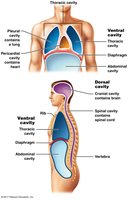
Body cavities are spaces within the body that house and protect organs. They are lined with membranes that serve various protective and functional roles.
Dorsal cavity: Includes cranial and spinal cavities.
Ventral cavity: Includes thoracic and abdominal cavities.
Pleural cavities: Surround the lungs.
Pericardial cavity: Surrounds the heart.
Types of Body Membranes:
Mucous membranes: Line passages open to the outside.
Serous membranes: Line closed body cavities and cover organs.
Synovial membranes: Line movable joints.
Cutaneous membrane: Forms the skin.
Organs and Organ Systems
Organs
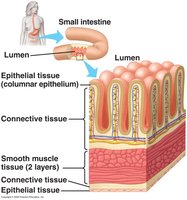
An organ is composed of two or more tissue types working together to perform specific functions that individual tissues cannot accomplish alone.
Example: The small intestine contains epithelial, connective, and smooth muscle tissue, which work together for digestion, absorption, and movement of food.
Organ Systems
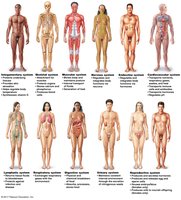
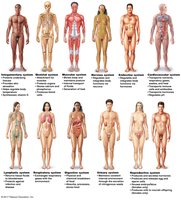
Organ systems are groups of organs that work together to perform major body functions. These systems are interdependent, with each relying on the others for overall function and homeostasis.
Examples of functions: Protection, support, movement, coordination, transport, exchange, digestion, waste removal, and reproduction.
The Integumentary System
Components and Functions
The integumentary system consists of the skin, hair, nails, sweat glands, and sebaceous glands. It serves as the body's first line of defense and plays a role in temperature regulation and sensation.
Protects against injury, pathogens, and water loss.
Regulates body temperature.
Detects touch, pressure, pain, and temperature.
Supports vitamin D production.
The skin is the largest organ in the body.
Structure of the Skin
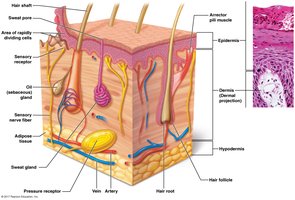
The skin is composed of two main layers, with additional structures beneath and within these layers.
Epidermis: Outer protective layer.
Dermis: Connective tissue layer with blood vessels, nerves, glands, and hair follicles.
Hypodermis: Adipose-rich layer beneath the skin, providing cushioning and insulation.
Accessory structures: Hair follicles, glands, sensory receptors, blood vessels, and nerves.
Skin Color
Skin color is determined by pigments, primarily melanin, and by blood flow through the dermis.
Melanin: Produced by melanocytes, protects against UV damage.
Increased UV exposure stimulates melanin production.
Blood flow changes can make skin appear redder, paler, or bluish.
Hair, Nails, and Glands
Hair and nails are composed mainly of keratin, providing protection and aiding sensation. Glands in the skin have specialized functions.
Hair: Grows from follicles, protects, and aids sensation.
Nails: Protect the ends of fingers and toes.
Sweat glands: Regulate body temperature and remove waste.
Sebaceous glands: Produce sebum, lubricating and protecting skin and hair.
Acne
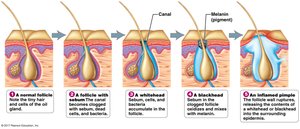
Acne is a common skin condition resulting from blocked hair follicles and sebaceous glands, leading to the accumulation of sebum, dead skin cells, and bacteria.
Blockage can form whiteheads or blackheads.
Inflammation may result in pimples.
Homeostasis
Definition and Importance
Homeostasis is the process by which the body maintains stable internal conditions, allowing cells to function optimally despite external changes.
Variables regulated include body temperature, blood glucose, blood pressure, blood pH, and water balance.
Components of a Homeostatic System
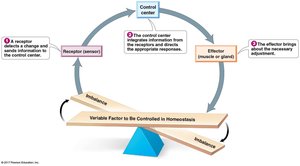
Homeostatic systems detect changes and initiate responses to restore balance. The main components are:
Stimulus: Change in the environment.
Receptor: Detects the change.
Control center: Compares condition to set point.
Effector: Carries out the response.
Response: Returns variable toward normal range.
Negative Feedback
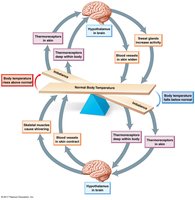
Negative feedback is the primary mechanism for maintaining homeostasis. It works by reversing deviations from a set point, keeping internal conditions within a narrow range.
Examples: Regulation of body temperature, blood glucose, blood pressure, and water balance.
Summary Table: Types of Animal Tissues
Tissue Type | Main Function | Examples |
|---|---|---|
Epithelial | Covering, lining, protection, absorption, secretion | Skin, lining of gut, glands |
Connective | Support, binding, protection, transport | Bone, blood, cartilage, adipose |
Muscle | Movement, contraction | Skeletal muscle, heart, digestive tract |
Nervous | Signal transmission, coordination | Brain, spinal cord, nerves |
