 Back
Cell Signaling and Signal Transduction Pathways
Study Guide - Smart Notes
 Tailored notes based on your materials, expanded with key definitions, examples, and context.
Cellular Communication and Signaling
Overview of Cell Communication
Cell-to-cell communication is essential for the function, growth, and development of multicellular organisms. Cells communicate through direct contact, local signaling, and long-distance signaling, each involving specific mechanisms and molecules.
Direct Signaling: Involves direct contact between cells, often through cell junctions or juxtacrine signaling.
Local Signaling: Utilizes local regulators that travel short distances to affect nearby cells.
Long-Distance Signaling: Employs hormones that travel through the circulatory system to reach distant target cells.
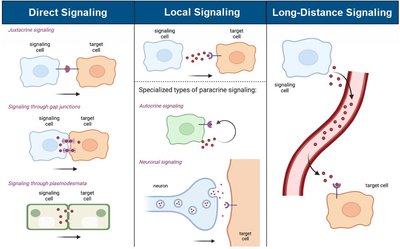
Direct Signaling
Direct signaling occurs through cell junctions or juxtacrine interactions.
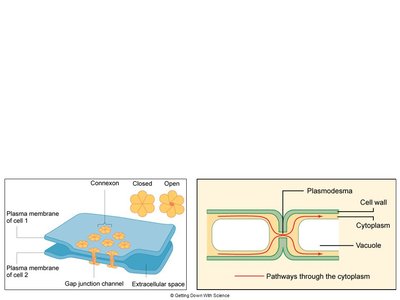
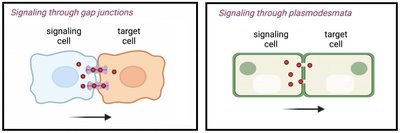
Gap Junctions (Animal Cells): Channels that allow substances to pass directly between adjacent cells.
Plasmodesmata (Plant Cells): Channels through cell walls that connect the cytoplasm of neighboring plant cells.
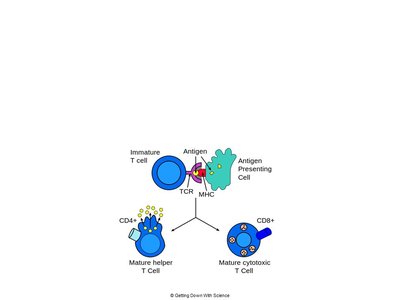
Juxtacrine Signaling: Involves ligand-receptor interactions on adjacent cells, important in immune responses.
Local Signaling
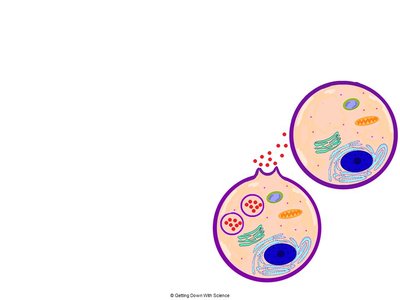
Local signaling involves ligands that affect nearby cells.
Paracrine Signaling: Cells secrete local regulators (e.g., growth factors) that diffuse to adjacent cells.
Quorum Sensing: Bacteria communicate to coordinate responses based on population density.
Synaptic Signaling: Neurons release neurotransmitters across synaptic clefts to target cells.
Long-Distance Signaling
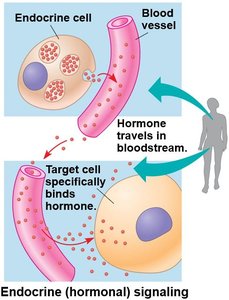
Long-distance signaling is mediated by hormones in both plants and animals.
Endocrine Signaling: Hormones released into the bloodstream reach distant target cells.
Example: Insulin released by the pancreas regulates blood glucose throughout the body.
Signal Transduction Pathways
Stages of Cell Signaling
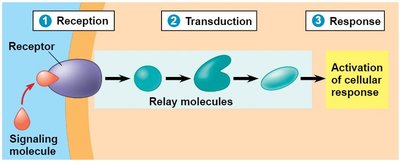
Cell signaling involves three main stages:
Reception: The ligand binds to a specific receptor on the target cell.
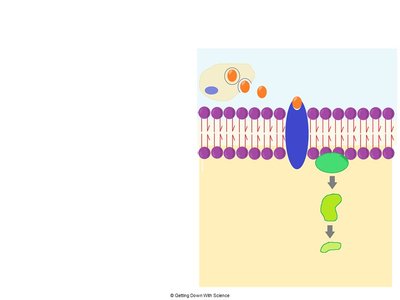
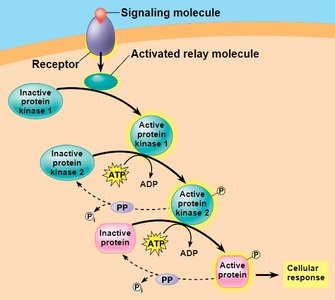
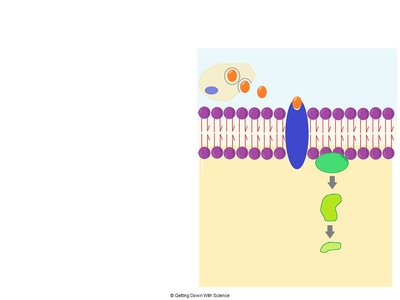
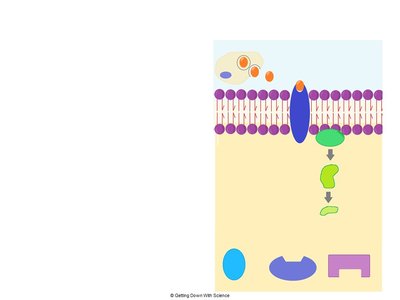
Transduction: The signal is converted to a form that can elicit a cellular response, often through a cascade of relay molecules.
Response: The cell carries out a specific activity, such as gene expression or metabolic change.
Reception
Reception is the detection of a signaling molecule (ligand) by a receptor.
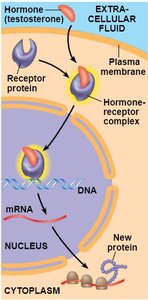
Receptors: Proteins that bind ligands with high specificity. Can be located on the plasma membrane or inside the cell.
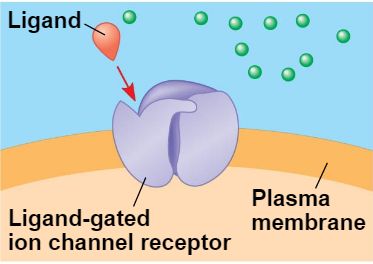
Plasma Membrane Receptors: Bind polar, water-soluble, or large ligands (e.g., GPCRs, ligand-gated ion channels).
Intracellular Receptors: Bind hydrophobic ligands (e.g., steroids, hormones) that can cross the cell membrane.
Transduction
Transduction converts the extracellular signal into an intracellular response via a signal transduction pathway.
Relay Molecules: Proteins and other molecules that transmit the signal inside the cell.
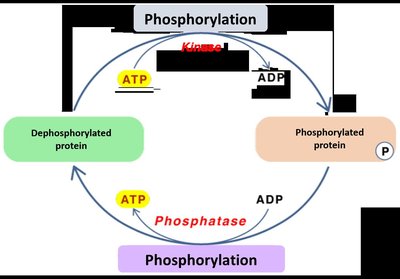
Phosphorylation: Addition of a phosphate group by protein kinases, activating proteins.
Dephosphorylation: Removal of a phosphate group by protein phosphatases, deactivating proteins.
Second Messengers: Small molecules (e.g., cAMP) that amplify the signal.
Response
The final step leads to regulation of cellular activities.
Protein Synthesis: Activation or repression of gene expression.
Metabolic Changes: Alteration of enzyme activity or membrane permeability.
Cellular Outcomes: Growth, division, apoptosis, or changes in phenotype.
Types of Cell Membrane Receptors
G Protein Coupled Receptors (GPCRs)
GPCRs are membrane receptors that activate G proteins upon ligand binding, leading to the production of second messengers and cellular responses.
Location: Cell membrane
Function: Initiate phosphorylation of G-protein, activating second messengers
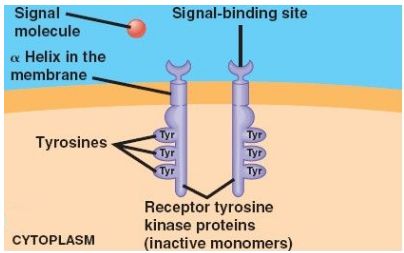
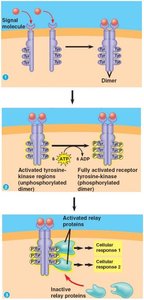
Tyrosine Kinase Receptors (TKRs)
TKRs are unique membrane receptors that can activate multiple cellular responses from a single ligand binding event.
Mechanism: Ligand binding forms a dimer, tyrosine residues are phosphorylated, and relay proteins are activated.
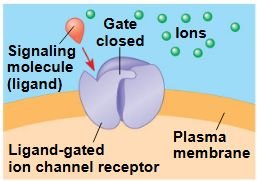
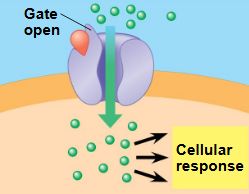
Ligand-Gated Ion Channels
These receptors act as gates for ions, opening or closing in response to ligand binding, crucial in nervous system signaling.
Mechanism: Ligand binding opens the channel, allowing ion flow and triggering a cellular response.
Feedback Mechanisms and Homeostasis
Homeostasis and Feedback Loops
Homeostasis is the maintenance of stable internal conditions. Feedback loops regulate physiological variables to maintain balance.
Negative Feedback: Counteracts changes, restoring homeostasis (e.g., sweating, blood sugar regulation).
Positive Feedback: Amplifies changes, driving processes to completion (e.g., childbirth, lactation).
Type of Feedback | Effect | Examples |
|---|---|---|
Negative Feedback | Reduces stimulus | Sweating, blood sugar |
Positive Feedback | Amplifies stimulus | Childbirth, breastfeeding |
Cell Signaling in Homeostasis
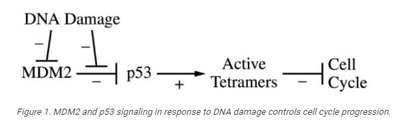
Signal transduction pathways are essential for cells to communicate and maintain homeostasis. Disruptions in signaling can lead to disease, such as cancer or diabetes.
Genetic Disorders: Can impair signaling pathways.
Environmental Factors: Extreme conditions or substance abuse can disrupt homeostasis.
Summary Table: Types of Cell Signaling
Type | Mechanism | Distance | Examples |
|---|---|---|---|
Direct | Cell junctions, juxtacrine | Adjacent cells | Gap junctions, plasmodesmata |
Local | Paracrine, synaptic, quorum sensing | Nearby cells | Growth factors, neurotransmitters |
Long-Distance | Hormonal (endocrine) | Distant cells | Insulin, plant hormones |
Key Terms and Concepts
Ligand: A signaling molecule that binds to a receptor.
Receptor: A protein that specifically binds a ligand to initiate a response.
Phosphorylation: Addition of a phosphate group to a protein, often activating it.
Second Messenger: Small molecules that amplify the signal within the cell (e.g., cAMP).
Homeostasis: Maintenance of stable internal conditions.
Feedback Loop: Mechanism for regulating physiological variables.
Important Equations
Phosphorylation Reaction:
Dephosphorylation Reaction:
Practice Questions
What are the three stages of cell signaling?
How do gap junctions and plasmodesmata facilitate direct signaling?
What is the role of second messengers in signal transduction?
How does negative feedback help maintain homeostasis?
