 Back
Cellular Reproduction: Mechanisms and Significance
Study Guide - Smart Notes
 Tailored notes based on your materials, expanded with key definitions, examples, and context.
Cellular Reproduction
Introduction to Cellular Reproduction
Cellular reproduction is a fundamental process that enables life to persist and evolve. According to the cell theory, cells are the basic unit of structure and function in living organisms, and new cells arise only from pre-existing cells. This principle underlies both the continuity of life and the diversity of living forms.
Cell theory: All living things are composed of cells; new cells are produced from existing cells.
Cell division is essential for growth, development, and reproduction in all organisms.
Abiogenesis: Origin of Life from Non-living Matter
Abiogenesis and Experimental Evidence
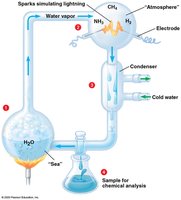
Abiogenesis refers to the study of how living organisms originated from non-living matter. Key experiments, such as the Miller-Urey experiment, have demonstrated that organic molecules can form spontaneously under conditions thought to resemble early Earth.
Miller-Urey experiment: Simulated early Earth conditions, producing amino acids and other organic molecules.
Other experiments have shown the spontaneous formation of simple proteins, RNAs, and lipid membranes.
These findings support the hypothesis that life could have arisen from a "proto-cell" encased in a lipid membrane.
Types of Cellular Division
Overview of Cell Division Mechanisms
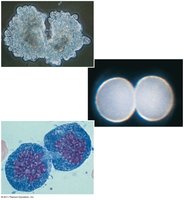
Cells reproduce by dividing, and there are several distinct mechanisms of cell division, each serving different biological purposes.
Binary fission: Used by prokaryotes (bacteria and archaea); produces two identical cells.
Mitosis: Occurs in eukaryotic cells; results in two genetically identical daughter cells.
Meiosis: Occurs in eukaryotes; produces four genetically diverse cells, important for sexual reproduction.
Cell division is crucial for both unicellular and multicellular organisms:
In unicellular organisms, cell division is the mechanism of reproduction.
In multicellular organisms, cell division enables growth, development, and tissue repair.
Reproduction: Asexual and Sexual
Asexual Reproduction
Asexual reproduction involves the production of offspring that are genetically identical to the parent. This can occur in both unicellular and some multicellular organisms.
Unicellular organisms: Divide to produce identical offspring.
Multicellular organisms: Some can reproduce asexually through mechanisms such as fragmentation, budding, or vegetative propagation.
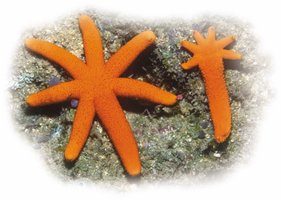
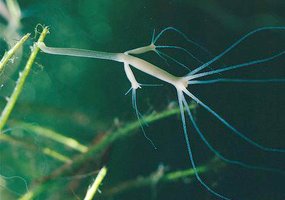
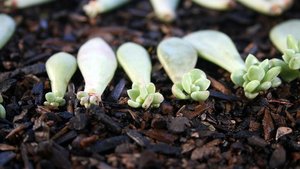
Example: The starfish can regenerate lost limbs, and hydra can produce new individuals by budding. Many plants propagate asexually through runners or leaf cuttings.
Pando – The Trembling Giant
Pando is a clonal colony of quaking aspen trees, considered the largest single organism by mass on Earth. It reproduces asexually by root propagation, resulting in genetically identical trees.
Clonal colony: All trees are genetically identical, connected by a shared root system.
Pando weighs approximately 13 million pounds.


Sexual Reproduction
Sexual reproduction involves the mixing of genetic material from two individuals, resulting in genetically diverse offspring. This process alternates between meiosis (reduction of chromosome number) and fertilization (restoration of chromosome number).
Meiosis: Produces haploid gametes (egg and sperm) with half the chromosome number.
Fertilization: Combines gametes to form a diploid zygote.
Genetic variation is introduced, which is important for evolution and adaptation.
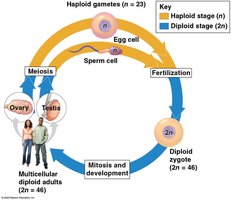
Example: Humans and most animals reproduce sexually, alternating between haploid and diploid stages.
Binary Fission in Prokaryotes
Mechanism of Binary Fission
Binary fission is the primary method of reproduction in prokaryotic cells (bacteria and archaea). It is a form of asexual reproduction that results in two genetically identical daughter cells.
Prokaryotes are small, lack internal membrane compartments, and possess a single circular chromosome.
Binary fission involves chromosome duplication, cell elongation, and division.
Steps of Binary Fission
The process of binary fission can be divided into three main steps:
Chromosome duplication: The single circular chromosome is copied, and the two copies move to opposite sides of the cell.
Cell elongation: The cell grows longer, and the chromosomes continue to separate.
Division: The cell splits into two daughter cells, each with a complete chromosome.
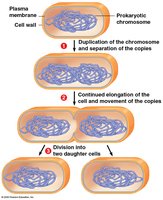
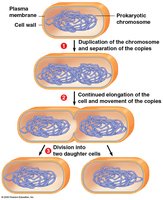
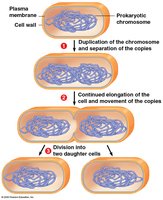
Example: Most bacteria reproduce by binary fission, allowing rapid population growth under favorable conditions.
Comparison of Cell Division Types
Summary Table: Cell Division Mechanisms
The following table summarizes the main features of binary fission, mitosis, and meiosis:
Type of Division | Organisms | Number of Daughter Cells | Genetic Identity | Main Purpose |
|---|---|---|---|---|
Binary Fission | Prokaryotes | 2 | Identical | Reproduction |
Mitosis | Eukaryotes | 2 | Identical | Growth, repair |
Meiosis | Eukaryotes | 4 | Diverse | Sexual reproduction |
Additional info: Mitosis and meiosis are exclusive to eukaryotic cells, while binary fission is characteristic of prokaryotes.
