 Back
Cellular Respiration, Fermentation, and Mitochondria: Study Guide
Study Guide - Smart Notes
 Tailored notes based on your materials, expanded with key definitions, examples, and context.
Cellular Respiration
Overview of Cellular Respiration
Cellular respiration is a fundamental metabolic process in which cells convert glucose and oxygen into carbon dioxide, water, and energy in the form of adenosine triphosphate (ATP). This process is essential for both prokaryotic and eukaryotic organisms to perform cellular work and maintain homeostasis.
Glucose is the primary carbon skeleton used as an energy source.
Oxygen acts as the final electron acceptor in aerobic respiration.
ATP is the energy currency used by cells for various functions.
In eukaryotes, respiration occurs mainly in the mitochondria.
Aerobic respiration requires oxygen; anaerobic respiration occurs without oxygen.
Cellular Respiration Equation:
Oxygen Consumption as a Measure of Metabolic Rate
Respiration rate can be measured quantitatively by assessing oxygen consumption. This is a direct indicator of metabolic activity in organisms. The experiment described uses rats to measure oxygen consumption, comparing their rates to other animals.
Metabolic rate is often expressed as ml O2/h/g (milliliters of oxygen per hour per gram).
Smaller animals typically have higher metabolic rates per gram than larger animals.
Example Table: Quantitative Differences in Respiration Between Organisms
Animal | Average Mass (g) | ml O2/h/g |
|---|---|---|
Hamster | 80-120 | 2.3 |
Dog | 3200-54,000 | 0.32 |
Man | 67,500-88,600 | 0.22 |
Elephant | 2,050,000-6,000,000 | 0.07 |
Key Points:
Oxygen consumption is measured in units: mass (g), volume (ml O2), and time (h).
Potassium hydroxide (KOH) pellets are used to absorb CO2 produced, ensuring only O2 consumption affects water movement in the apparatus.
Example: Rats are expected to have a higher oxygen consumption rate per gram than larger animals due to their higher metabolic rate.
CO2 Production in Plant Embryos
Respiration in Germinating Seeds
Plant embryos, especially during germination, require energy and thus perform aerobic respiration, converting stored carbohydrates into ATP. This process also produces carbon dioxide, which can be detected using phenol red as a pH indicator.
Phenol red turns yellow in acidic conditions (presence of CO2), and pink-purple in alkaline conditions.
Boiled seeds are used as a control to compare respiration activity.
Key Points:
Independent variable: Seed treatment (boiled vs. non-boiled).
Dependent variable: Color change in phenol red (indicates CO2 production).
Example Table: Qualitative Detection of CO2 in Germinating Peas
Sample | Coloration |
|---|---|
Germinated | Yellow (CO2 produced) |
Germinated-Boiled | Purple/Pink (no CO2 produced) |
Example: Only non-boiled germinated peas produce CO2, turning phenol red yellow, indicating active respiration.
Fermentation (Anaerobic Process in Yeast)
Fermentation Pathways in Yeast
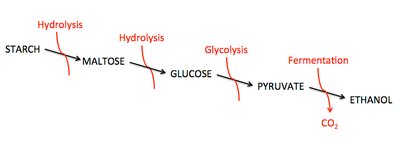
Under anoxic conditions, yeast and other eukaryotic cells can produce energy via fermentation. Fermentation begins with glycolysis and results in either lactic acid or ethanol plus carbon dioxide, depending on the organism.
Glycolysis breaks down glucose into pyruvate.
Fermentation regenerates NAD+ from NADH, allowing glycolysis to continue.
Yeast fermentation produces ethanol and CO2.
Key Points:
Independent variable: Type and concentration of carbohydrate (glucose, starch, water).
Dependent variable: Amount of CO2 produced (measured as bubbles).
Example Table: Measurement of Yeast Fermentation
Time (min) | diH2O | 1% Glucose | 1% Starch |
|---|---|---|---|
0 | 0 | 0 | 0 |
20 | 0 | High | Moderate |
Example: Yeast produces more CO2 when fermenting glucose than starch, as glucose is more readily metabolized.
Mitochondria
Structure and Function of Mitochondria
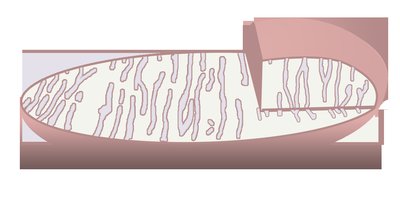
Mitochondria are specialized organelles in eukaryotic cells responsible for aerobic cellular respiration. They convert energy stored in glucose into ATP through a series of biochemical pathways.
Outer membrane: Encloses the organelle.
Inner membrane: Highly folded into cristae, increases surface area for ATP production.
Matrix: Contains enzymes for the citric acid cycle.
Cristae: Folds of the inner membrane where electron transport and ATP synthesis occur.
Example: The mitochondrion's structure is optimized for efficient energy conversion.
Discussion Points
Comparisons and Applications
Starch vs. Glucose: Starch is a polysaccharide requiring hydrolysis to glucose before fermentation; glucose is immediately available for glycolysis.
Size and Respiration Rate: Smaller organisms generally have higher metabolic rates per gram, but other factors (activity, temperature) also influence respiration.
Phenol Red Results: Color change indicates CO2 production and thus active respiration.
Germination and Water: Seeds require water to activate metabolism; dry seeds do not respire actively.
Additional info: The study notes expand on the original lab manual by providing definitions, context, and examples for each experiment and concept.
