 Back
Cellular Respiration: Harvesting Energy from Carbohydrates and Other Fuel Molecules
Study Guide - Smart Notes
 Tailored notes based on your materials, expanded with key definitions, examples, and context.
Cellular Respiration: Overview
Introduction to Cellular Respiration
Cellular respiration is a fundamental metabolic process by which cells extract energy from carbohydrates and other fuel molecules to produce ATP, the energy currency of the cell. This process involves a series of enzyme-catalyzed reactions that occur in both the cytoplasm and mitochondria. - ATP (adenosine triphosphate) is the primary molecule used to power cellular work. - Cellular respiration includes both substrate-level and oxidative phosphorylation for ATP production. 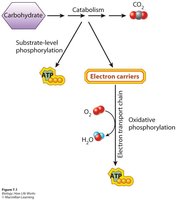
Stages of Cellular Respiration
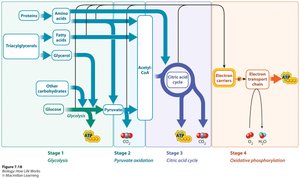
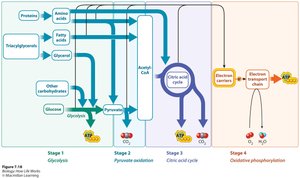
Cellular respiration is divided into four main stages, each with distinct roles and locations within the cell. - Stage 1: Glycolysis (cytoplasm) - Stage 2: Pyruvate Oxidation (mitochondria) - Stage 3: Citric Acid Cycle (mitochondria) - Stage 4: Oxidative Phosphorylation (mitochondria) 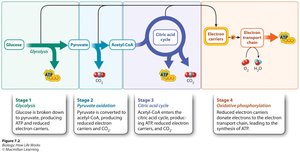
ATP Production Mechanisms
Substrate-Level vs. Oxidative Phosphorylation
ATP is generated through two primary mechanisms: substrate-level phosphorylation and oxidative phosphorylation. - Substrate-level phosphorylation: Direct transfer of a phosphate group to ADP from a phosphorylated intermediate. - Oxidative phosphorylation: ATP synthesis powered by the energy released from electron transport and chemiosmosis.
Redox Reactions in Cellular Respiration
Oxidation and Reduction
Cellular respiration relies on oxidation-reduction (redox) reactions to transfer energy. - Oxidation: Loss of electrons from a molecule. - Reduction: Gain of electrons by a molecule. - Mnemonic: OIL RIG (Oxidation Is Loss, Reduction Is Gain) - Electron carriers: NAD+ and FAD are reduced to NADH and FADH2 as they accept electrons. 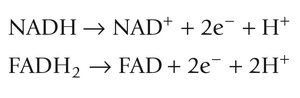
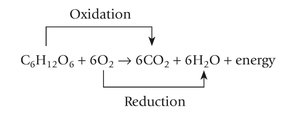
Electron Carriers and Energy Transfer
NADH and FADH2
NADH and FADH2 are crucial electron carriers that store high-energy electrons and protons, which are later used in the electron transport chain to generate ATP. - Equation:
Glycolysis
Phases of Glycolysis
Glycolysis is the first stage of cellular respiration and occurs in the cytoplasm. It is an anaerobic process, meaning it does not require oxygen. - Preparatory phase: Energy is consumed to activate glucose. - Cleavage phase: Glucose is split into two three-carbon molecules. - Payoff phase: ATP and NADH are produced. - Net gain: 2 ATP and 2 NADH per glucose molecule.
Pyruvate Oxidation
Conversion to Acetyl-CoA
Pyruvate, produced from glycolysis, is transported into the mitochondria and oxidized to acetyl-CoA, CO2, and NADH. - Occurs in the mitochondrial matrix. - Each glucose yields two pyruvate, thus two acetyl-CoA, two CO2, and two NADH.
Citric Acid Cycle (Krebs Cycle)
Cycle Characteristics
The citric acid cycle completes the oxidation of acetyl-CoA, producing CO2, ATP (or GTP), NADH, and FADH2. - Oxaloacetate is regenerated, making it a cycle. - Most energy is transferred to NADH and FADH2.
Oxidative Phosphorylation and Electron Transport Chain
Electron Transport Chain (ETC)
The ETC is a series of protein complexes in the inner mitochondrial membrane that transfer electrons from NADH and FADH2 to oxygen, creating a proton gradient. - Oxygen is the final electron acceptor, forming water. - The proton gradient powers ATP synthase, converting ADP and Pi to ATP. 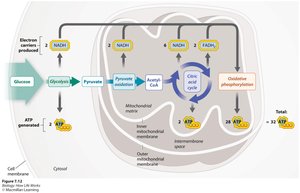
Fermentation
Life Without Oxygen
When oxygen is unavailable, cells use fermentation to regenerate NAD+ and produce ATP. - Lactic acid fermentation: Pyruvate is reduced to lactic acid. - Ethanol fermentation: Pyruvate is converted to ethanol and CO2 in plants and fungi. 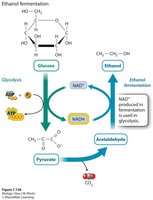
Glucose and Glycogen Storage
Glycogen Structure and Function
Excess glucose is stored as glycogen, a branched polymer, in muscle and liver cells. - Glycogen can be broken down to release glucose for glycolysis. 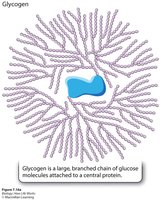
Fats as Energy Storage
Triacylglycerol and β-Oxidation
Fats are stored as triacylglycerols and can be broken down via β-oxidation to produce acetyl-CoA, NADH, and FADH2. - β-oxidation does not directly produce ATP but generates electron carriers for the ETC. 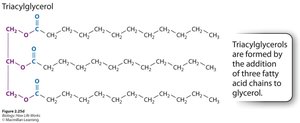
Regulation of Cellular Respiration
Regulatory Mechanisms
Cellular respiration is tightly regulated based on the cell's energy needs. - High concentrations of ATP and NADH inhibit key enzymes, slowing respiration. - High concentrations of ADP and NAD+ stimulate respiration. 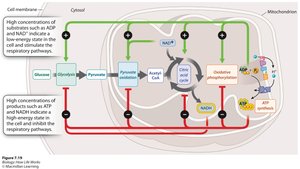
Summary Table: Inventory of Key Molecules
Tracking Molecules Through Cellular Respiration
Molecule | Glycolysis | Pyruvate Oxidation | Citric Acid Cycle | Oxidative Phosphorylation |
|---|---|---|---|---|
Glucose | Consumed | - | - | - |
ATP | Produced | - | Produced | Produced |
NADH | Produced | Produced | Produced | Used |
FADH2 | - | - | Produced | Used |
O2 | - | - | - | Consumed |
CO2 | - | Produced | Produced | - |
H2O | - | - | - | Produced |
Key Terms and Concepts
- Cellular respiration: The process of extracting energy from organic molecules. - ATP: The main energy currency of the cell. - Electron carriers: Molecules like NADH and FADH2 that transport electrons. - Glycolysis: The breakdown of glucose in the cytoplasm. - Citric acid cycle: Completes the oxidation of acetyl-CoA. - Oxidative phosphorylation: ATP production using the electron transport chain and chemiosmosis. - Fermentation: Anaerobic process regenerating NAD+ and producing ATP. Additional info: Academic context was added to clarify the stages, regulatory mechanisms, and the role of electron carriers in cellular respiration.
