 Back
Chapter 1: Biology – The Study of Scientific Life
Study Guide - Smart Notes
 Tailored notes based on your materials, expanded with key definitions, examples, and context.
Chapter 1: Biology – The Study of Scientific Life
Scientific Method
The scientific method is a systematic approach used by biologists and other scientists to investigate natural phenomena. It involves making observations, forming hypotheses, conducting experiments, analyzing data, and drawing conclusions. This process ensures that scientific knowledge is based on evidence and repeatable results.
Properties of Life
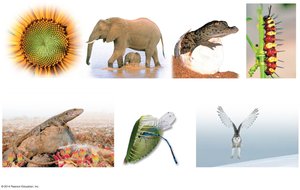
All living organisms share a set of fundamental properties that distinguish them from nonliving matter. These properties are essential for defining life and understanding biological processes.
Order: Life exhibits highly ordered structures, from cellular organization to complex body systems.
Reproduction: Organisms reproduce their own kind, ensuring the continuation of species.
Growth and Development: Organisms grow and develop in a controlled manner, guided by inherited DNA.
Energy Processing: Living things use chemical energy to power activities and reactions.
Regulation: Organisms regulate their internal environment to maintain conditions suitable for life (homeostasis).
Response to the Environment: Organisms respond to environmental stimuli.
Evolutionary Adaptation: Over generations, populations adapt to their environments through natural selection.
Organization of Life
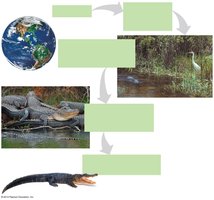
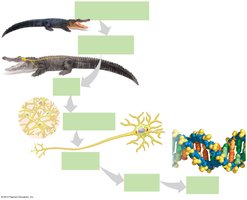
Biological organization is hierarchical, with each level exhibiting emergent properties not found at lower levels. This hierarchy helps scientists understand how complex systems arise from simpler components.
Biosphere: The global ecosystem, including all life and environments on Earth.
Ecosystem: All living and nonliving components in a specific area (e.g., Florida Everglades).
Community: All organisms in an ecosystem.
Population: All individuals of a species in a given area.
Organism: An individual living thing.
Organ System: Groups of organs working together (e.g., nervous system).
Organ: Structures composed of tissues (e.g., brain).
Tissue: Groups of similar cells performing a function.
Cell: The fundamental unit of life.
Organelle: Membrane-enclosed structures within cells (e.g., nucleus).
Molecule: Clusters of atoms held together by chemical bonds.
Atom: The smallest unit of matter.
Cells: The Structural and Functional Units of Life
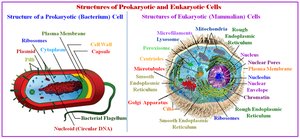
Cells are the basic units of life, capable of performing all life functions. They regulate their internal environment, use energy, respond to stimuli, and reproduce. All cells are enclosed by a membrane and use DNA as their genetic material.
Prokaryotic Cells: Simpler, smaller cells without a nucleus (e.g., bacteria).
Eukaryotic Cells: Larger, more complex cells with a nucleus and organelles (e.g., plants, animals, fungi, protists).
Unity and Diversity of Life: DNA and the Genetic Code
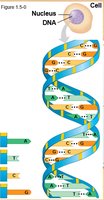
All living organisms share a common genetic code based on DNA. DNA is the molecule that carries genetic information, organized into genes and chromosomes. The diversity of life arises from variations in DNA sequences.
Genes: Units of inheritance that transmit information from parents to offspring.
Genome: The complete set of genetic instructions in an organism.
DNA Structure: Double helix composed of four types of nucleotides (A, T, C, G).
Protein Synthesis: All life uses the same code to translate DNA into proteins.
Energy Flow and Chemical Cycling in Ecosystems
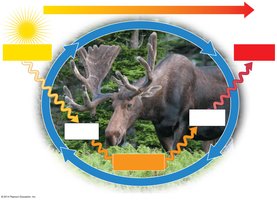
Organisms interact with their environment by exchanging matter and energy. Ecosystems are characterized by the flow of energy and the recycling of nutrients.
Producers: Plants and other photosynthetic organisms that create food from sunlight.
Consumers: Animals that eat plants and other animals.
Decomposers: Organisms that recycle nutrients by breaking down dead matter.
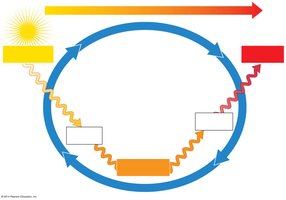
Energy Flow: Energy enters ecosystems as sunlight, is converted to chemical energy by producers, and exits as heat.
Chemical Cycling: Nutrients are recycled between organisms and the environment.
Biology, Technology, and Society
Biology is closely connected to technology and society. Scientific discoveries often lead to technological advances, which can impact society in various ways. The goal of science is to understand natural phenomena, while technology aims to apply scientific knowledge for practical purposes.
Example: DNA manipulation technologies are based on scientific understanding of DNA structure and function.
Summary Table: Properties of Life
Property | Description |
|---|---|
Order | Highly organized structure |
Reproduction | Ability to produce offspring |
Growth & Development | Controlled by DNA |
Energy Processing | Use of chemical energy |
Regulation | Maintaining internal environment |
Response to Environment | Reacting to stimuli |
Evolutionary Adaptation | Adapting over generations |
Summary Table: Levels of Biological Organization
Level | Example |
|---|---|
Biosphere | Earth |
Ecosystem | Florida Everglades |
Community | All organisms in wetlands |
Population | All alligators in wetlands |
Organism | American alligator |
Organ System | Nervous system |
Organ | Brain |
Tissue | Nervous tissue |
Cell | Nerve cell |
Organelle | Nucleus |
Molecule | DNA |
Atom | Carbon atom |
Key Formula: DNA Structure
The structure of DNA can be represented as:
Key Formula: Energy Flow in Ecosystems
Energy flow in ecosystems can be summarized as:
Additional info: Academic context was added to expand brief points and clarify the hierarchical structure, cell types, and DNA concepts for introductory biology students.
