 Back
Chapter 6: DNA—The Molecule of Life (Introductory Biology Study Notes)
Study Guide - Smart Notes
 Tailored notes based on your materials, expanded with key definitions, examples, and context.
DNA: The Molecule of Life
6.1 Introduction to DNA
Deoxyribonucleic acid (DNA) is the molecule that holds the instructions for all living things. It is found in every cell and is responsible for heredity and the functioning of organisms.
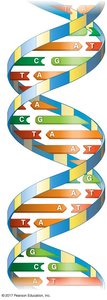
DNA Structure: DNA is a double helix composed of two strands made up of long chains of nucleotides.
Nucleotide: Each nucleotide consists of a sugar (deoxyribose), a phosphate group, and a nitrogenous base.
Bases: There are four bases in DNA: adenine (A), thymine (T), guanine (G), and cytosine (C).
Base Pairing Rules: Adenine pairs with thymine (A-T), and guanine pairs with cytosine (G-C). Each strand is complementary to the other.
Universality: All living organisms, from protists and fungi to plants and animals, share the same genetic code, demonstrating the unity of life.
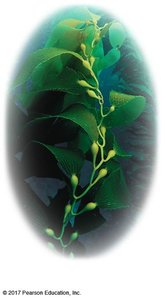
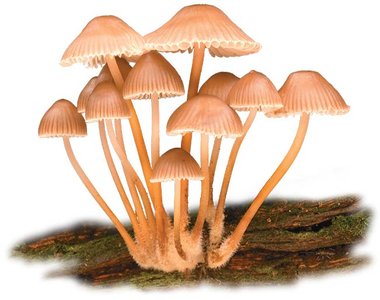
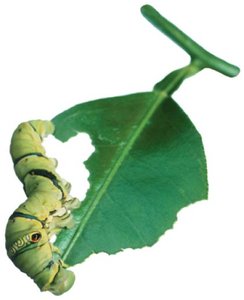


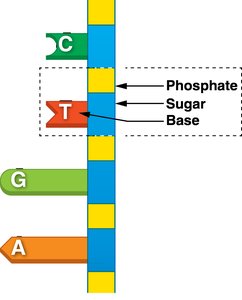
Example: The DNA in a human and a banana is about 50% identical, highlighting the shared ancestry of life.
6.2 DNA Replication
DNA replication is the process by which a cell duplicates its DNA before cell division. This ensures that each new cell receives an exact copy of the genetic material.
Complementarity: Because DNA strands are complementary, knowing one strand allows the other to be built using base-pairing rules.
Semi-Conservative Replication: Each new DNA molecule consists of one original (parental) strand and one newly synthesized strand.
Process: The DNA double helix unwinds, and each strand serves as a template for the formation of a new complementary strand.
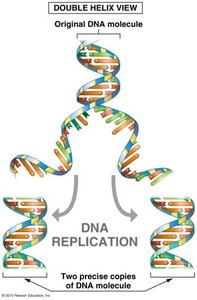
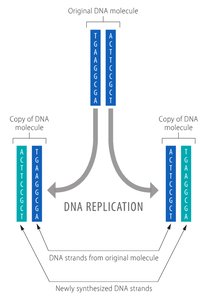
Example: If a DNA strand has the sequence AGTC, the complementary strand will be TCAG.
6.3 DNA Directs the Production of Proteins
DNA contains the instructions for building proteins, which perform most cellular functions and determine physical traits.
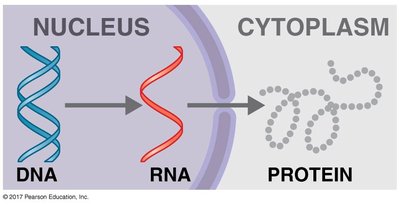
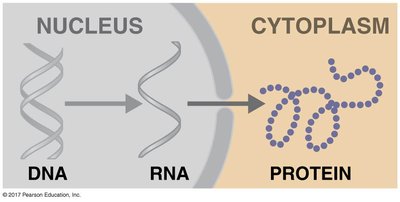
Central Dogma: The flow of genetic information is from DNA to RNA to protein.
RNA: Ribonucleic acid (RNA) is a nucleic acid like DNA but differs in three ways: it is single-stranded, contains ribose sugar, and uses uracil (U) instead of thymine (T).
Proteins: Proteins are synthesized based on the instructions encoded in DNA, via an RNA intermediate.
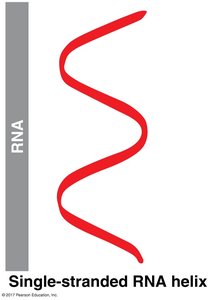


Example: The gene for eye color in DNA is transcribed into RNA, which is then translated into a protein that produces pigment in the eye.
6.4 Flow from DNA to RNA to Protein
The process by which genetic information flows from DNA to RNA to protein involves two main steps: transcription and translation.
Transcription: The DNA code is rewritten into messenger RNA (mRNA), which then leaves the nucleus.
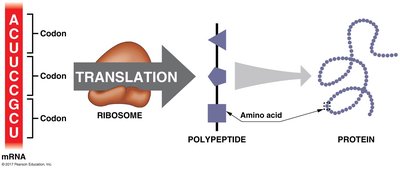
Translation: The mRNA serves as instructions for assembling amino acids into a protein at the ribosome.


Example: The sequence of bases in DNA determines the sequence of amino acids in a protein, which in turn determines the protein's function.
6.5 Transcription
Transcription is the process of creating an RNA copy from a DNA template. This RNA is processed into mRNA, which carries the genetic message to the cytoplasm.
Steps: The DNA double helix separates, and one strand is used to synthesize a complementary RNA strand.
mRNA: Messenger RNA is the processed RNA that exits the nucleus through a nuclear pore.
Definition of Gene: A gene is a discrete unit of hereditary information consisting of a specific nucleotide sequence in DNA.
6.6 Translation
Translation is the process by which the sequence of bases in mRNA is converted into the sequence of amino acids in a protein. This occurs in the cytoplasm at the ribosome.
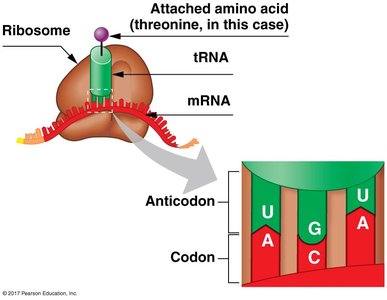
Types of RNA: Translation involves three types of RNA: ribosomal RNA (rRNA), messenger RNA (mRNA), and transfer RNA (tRNA).
tRNA: Transfer RNA carries amino acids to the ribosome and matches them to the mRNA codon using its anticodon.
Genetic Code: The genetic code is read in triplets (codons), each specifying one amino acid.
Example: The mRNA sequence AUG codes for methionine, the start amino acid in protein synthesis.
6.7 Phases of Translation
Translation occurs in three phases: initiation, elongation, and termination. The process results in the formation of a polypeptide chain, which folds into a functional protein.
Initiation: Ribosome assembles on the mRNA.
Elongation: tRNAs bring amino acids to the ribosome, and the polypeptide chain grows.
Termination: The process ends when a stop codon is reached, and the completed polypeptide is released.
Example: The mRNA sequence AUG-ACU-AAA-GAG-UCA-UAA translates to the amino acids Met-Thr-Asn-Glu-Ser.
6.8 Regulation of Gene Expression
Gene expression is regulated at multiple levels, allowing cells to turn genes on or off as needed. This regulation ensures that different cell types produce different proteins.
Transcriptional Regulation: Special transcription factors must bind to DNA to initiate transcription.
RNA Processing: Before leaving the nucleus, RNA is modified by adding a cap and tail, removing introns, and rearranging exons.
Translational Regulation: The cell can control whether translation proceeds, how proteins are modified, and when they are degraded.
X-Chromosome Inactivation: In female mammals, one X chromosome in each cell is inactivated, an extreme form of gene regulation.
Example: The lactase gene is expressed only in cells that need to digest milk sugar.
6.9 Signal Transduction and Cell Communication
Cells communicate with each other to coordinate gene expression, especially during development. Signal transduction pathways relay signals from outside the cell to the nucleus, affecting gene activity.
Signal Molecules: Molecules released by one cell can bind to receptors on another cell, triggering a response.
Development: Cell-to-cell communication is crucial for proper development, influencing cell division, migration, and differentiation.
Homeotic Genes: These master control genes direct the formation of body parts during development.
Example: Inductive signals in embryos can cause cells to change shape or function.
6.10 Mutations and Their Effects
A mutation is any change in the nucleotide sequence of DNA. Mutations can have a range of effects, from no impact to causing diseases like cancer.
Types of Mutations: Point mutations (single nucleotide changes), frameshift mutations (insertions or deletions), and larger chromosomal changes.
Causes: Mutations can be spontaneous or induced by mutagens such as radiation or chemicals.
Effects: Mutations can be silent, missense (change one amino acid), or nonsense (introduce a stop codon).
Example: Sickle cell anemia is caused by a single nucleotide mutation in the hemoglobin gene.
6.11-6.12 Cancer: Loss of Gene Expression Control
Cancer results from the loss of normal control over cell division, often due to mutations in genes that regulate the cell cycle.
Proto-oncogenes: Genes that normally promote cell division. When mutated, they become oncogenes and can cause uncontrolled growth.
Tumor Suppressor Genes: Genes that normally inhibit cell division. Mutations can deactivate these genes, removing growth restraints.
Tumors: Benign tumors do not spread; malignant tumors invade other tissues (metastasis).
Treatments: Surgery, radiation, and chemotherapy are common cancer treatments.
Prevention: Healthy lifestyle choices can reduce cancer risk.
Example: Mutations in the BRCA1 gene increase the risk of breast and ovarian cancer.
6.13-6.14 Genetic Engineering and DNA Manipulation
Genetic engineering involves manipulating DNA for practical purposes, such as producing medicines or genetically modified organisms (GMOs).
Restriction Enzymes: Proteins that cut DNA at specific sequences, producing fragments for cloning.
DNA Cloning: Inserting a gene into a plasmid and allowing bacteria to produce large quantities of the gene or its protein product.
Genomic Library: A collection of cloned DNA fragments representing an organism's entire genome.
CRISPR-Cas9: A technology for precise gene editing within living cells.
cDNA: Complementary DNA synthesized from mRNA, representing expressed genes.
Example: Human insulin is produced by genetically engineered bacteria.
6.15 Genetically Modified Organisms (GMOs)
GMOs are organisms that have acquired one or more genes by artificial means. Transgenic organisms contain genes from other species.
Agriculture: Many crops, such as corn and soybeans, are genetically modified for pest resistance or improved nutrition.
Pharmaceuticals: Some animals are engineered to produce drugs in their milk or eggs.
Pros and Cons: GMOs can increase yield and reduce pesticide use but raise ethical and ecological concerns.
Example: Golden rice is engineered to produce beta-carotene, a precursor of vitamin A.
6.16 Polymerase Chain Reaction (PCR) and DNA Profiling
PCR is a technique used to amplify specific DNA regions, making it possible to analyze DNA from small samples.
Process: PCR uses cycles of heating and cooling, DNA polymerase, and primers to generate billions of copies of a target DNA sequence.
DNA Profiling: Compares specific regions of DNA (short tandem repeats, STRs) to identify individuals.
Gel Electrophoresis: Separates DNA fragments by size for comparison.
Example: DNA evidence can exonerate wrongfully convicted individuals.
6.18 Genome Mapping and Proteomics
Genome mapping involves sequencing and analyzing the complete DNA of an organism. Proteomics studies the proteins encoded by the genome.
Human Genome Project: Completed in 2003, it mapped all human genes, providing insights into development, evolution, and disease.
Whole-Genome Shotgun Method: A technique for sequencing entire genomes.
Proteomics: The study of all proteins produced by a genome, crucial for understanding cellular functions.
Example: The human genome contains about 21,000 genes encoding over 100,000 proteins.
6.19 Gene Therapy
Gene therapy aims to treat or cure genetic diseases by inserting the correct version of a gene into a patient's cells.
Process: The normal gene is isolated, converted to RNA, combined with a harmless virus, and used to infect patient cells.
Applications: Has been used to treat immune system disorders, but safety and effectiveness remain concerns.
Example: Some children with immune deficiencies have been cured by gene therapy, though risks remain.
