 Back
Chromosomal Basis of Inheritance: Study Guide
Study Guide - Smart Notes
 Tailored notes based on your materials, expanded with key definitions, examples, and context.
Chromosomal Basis of Inheritance
Chromosome Theory of Inheritance
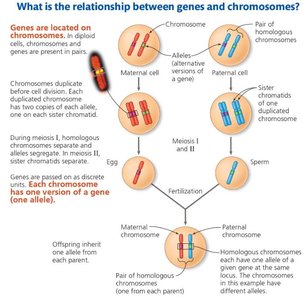
The chromosome theory of inheritance states that genes are located at specific positions (loci) on chromosomes, and the behavior of chromosomes during meiosis accounts for inheritance patterns observed by Mendel. Chromosomes duplicate before cell division, and each duplicated chromosome has two copies of each gene, one on each chromatid.
Chromosome: Structure consisting of one DNA molecule and associated proteins.
Gene: Segment of DNA that often codes for a protein.
Locus: Specific place on a chromosome where a gene is located.
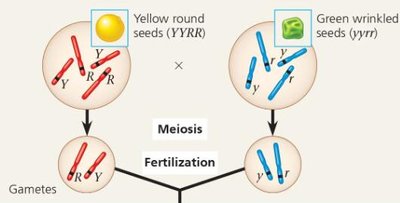
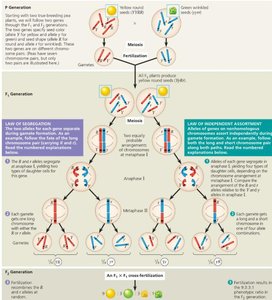
Law of Segregation: Each gamete receives only one allele for each gene.
Law of Independent Assortment: Genes on different chromosomes are inherited independently.
Chromosomal Basis of Sex
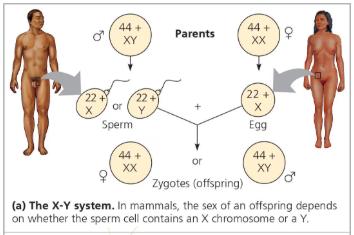
Sex is determined by sex chromosomes. In mammals, females have two X chromosomes (XX), and males have one X and one Y chromosome (XY). The SRY gene on the Y chromosome determines if testes develop. Some sex chromosomes also contain genes unrelated to sex.
XX: Female
XY: Male
SRY: Sex-determining region of Y chromosome
Sex-Linked Genes and X-Linked Inheritance
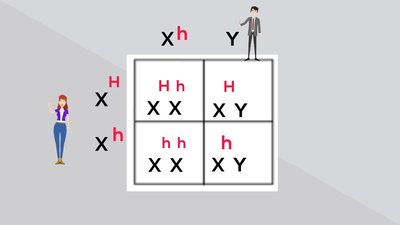
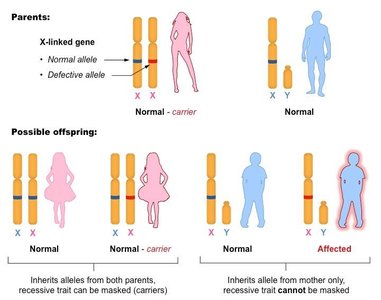
Sex-linked genes are located on either sex chromosome. The X chromosome carries many genes unrelated to sex, while the Y chromosome carries fewer genes. Fathers pass their X-linked genes to all daughters, but none to sons. Mothers pass X-linked genes to both sons and daughters. Males, having only one X chromosome, are more likely to express X-linked traits.
X-linked genes: ~1,100 genes on X chromosome
Y-linked genes: 78 genes on Y chromosome
Inheritance pattern: X-linked traits often impact males more than females
X-Linked Conditions
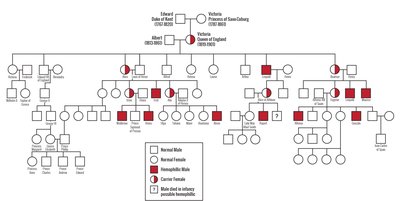
Some human health conditions are caused by recessive X-linked alleles, such as red-green color blindness and hemophilia. These conditions are more common in males due to their single X chromosome.
Red-green color blindness: Most common form of color blindness
Hemophilia: Absence of blood-clotting proteins, leading to excessive bleeding
Punnett Square Practice: X-Linked Traits
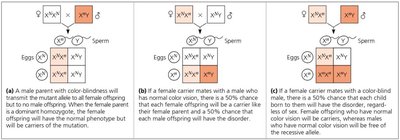
Punnett squares are used to predict the probability of offspring inheriting X-linked traits. For example, if a father carries the normal X-linked gene and the mother is heterozygous, the probability of having a colorblind son or daughter can be calculated.
Example: XBXb (mother) × XBY (father)
Probability: Sons have a higher chance of being affected by X-linked recessive traits
X Inactivation in Females
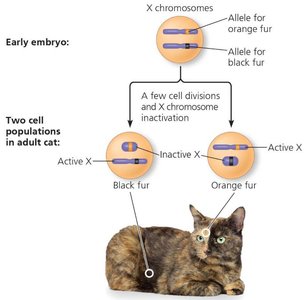
Female mammals inherit two X chromosomes, but only one is active in each cell. The other X chromosome is randomly inactivated, resulting in mosaic expression of X-linked traits. For example, tortoiseshell cats display patches of different fur colors due to X inactivation.
X inactivation: Random inactivation of one X chromosome in female cells
Mosaic expression: Heterozygous females express both alleles in different cells
Linked Genes
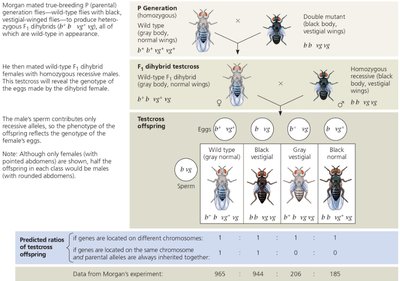
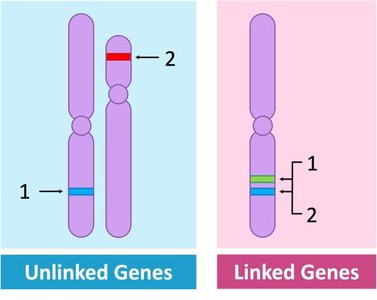
Linked genes are located close together on a chromosome and tend to be inherited together. This is different from sex-linked genes, which are located on sex chromosomes. Linkage can affect inheritance patterns and reduce independent assortment.
Linked genes: Genes inherited together due to proximity on chromosome
Example: Morgan's experiment with fruit flies
Large Scale Chromosomal Changes
Large scale changes to chromosomes can affect phenotype and lead to genetic disorders. These include polyploidy, nondisjunction, and alterations to chromosome structure.
Polyploidy: Organism possesses more than two complete chromosome sets
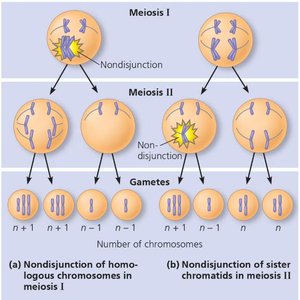
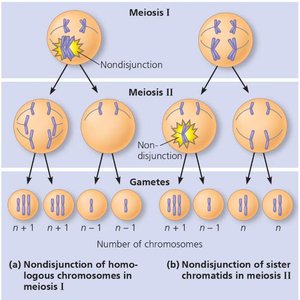
Nondisjunction: Failure of homologous chromosomes or sister chromatids to separate properly during meiosis
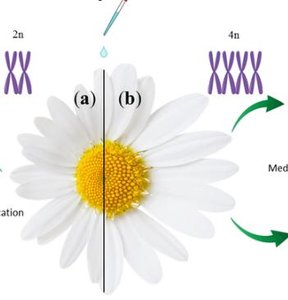
Human Conditions Due to Chromosomal Alterations
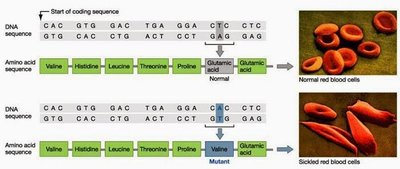
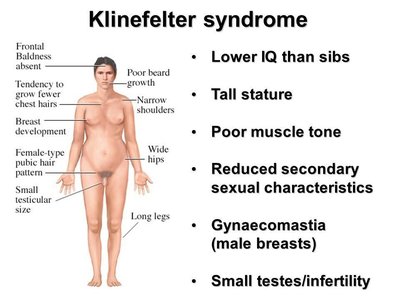
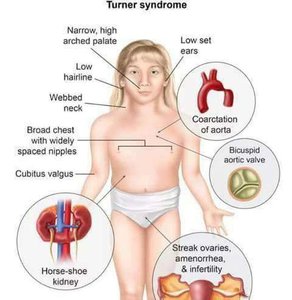
Nondisjunction can result in aneuploidy, where cells have abnormal numbers of chromosomes. Examples include Down syndrome (trisomy 21), Turner syndrome (X), Klinefelter syndrome (XXY), and others. These conditions are often associated with developmental and health issues.
Aneuploidy: Presence of extra or missing chromosomes
Monosomic cell: Only one copy of a chromosome
Trisomic cell: Three copies of a chromosome
Down syndrome: Trisomy 21
Turner syndrome: Single X chromosome
Klinefelter syndrome: XXY chromosomes
Alterations of Chromosome Structure
Errors in meiosis or damaging agents can cause chromosomes to break, leading to four types of structural changes: deletion, duplication, inversion, and translocation. Each can cause genetic disorders.
Deletion: Loss of a chromosome fragment (e.g., Cri du chat syndrome)
Duplication: Fusion with a fragment from a homologous chromosome (e.g., chondrodysplasia in dogs)
Inversion: Reattachment of a fragment in reverse orientation (e.g., hemophilia, white-throated sparrow morphs)
Translocation: Attachment of a fragment to a nonhomologous chromosome (e.g., some leukemias)
Mitochondrial Inheritance
Some organelles, such as mitochondria and chloroplasts, have their own genome. Mitochondrial genes are always passed through the maternal line, as paternal mitochondria are usually destroyed during fertilization.
Mitochondrial inheritance: Transmission of mitochondrial DNA from mother to offspring
Maternal inheritance: Offspring inherit mitochondrial genes only from the mother
Patterns of Inheritance: Pedigrees
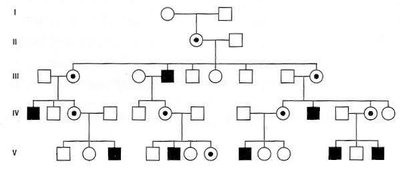
Pedigrees are used to identify inheritance patterns, including autosomal dominant, autosomal recessive, X-linked recessive, and mitochondrial inheritance. Each pattern has distinct characteristics in family trees.
Pattern | Description |
|---|---|
Autosomal dominant | Trait appears in every generation; affected individuals have at least one affected parent |
Autosomal recessive | Trait can skip generations; affected individuals may have unaffected parents |
X-linked recessive | More common in males; females can be carriers |
Mitochondrial | Trait passed from mother to all offspring |
Additional info: This guide expands on brief points with academic context, definitions, and examples to ensure completeness and clarity for exam preparation.
