 Back
Control of Gene Expression: Mechanisms and Biological Implications
Study Guide - Smart Notes
 Tailored notes based on your materials, expanded with key definitions, examples, and context.
Control of Gene Expression
Overview of Gene Expression
Gene expression is the process by which information from a gene is used to synthesize a functional gene product, typically a protein. The regulation of gene expression is essential for cellular function, development, and response to environmental signals. - Gene Expression: The process of converting genetic information into proteins. - Central Dogma of Molecular Biology: DNA → RNA → Protein. - Transcriptional Control: Regulation at the level of RNA synthesis. - Translational Control: Regulation at the level of protein synthesis. - Post-translational Control: Regulation after the protein is made. 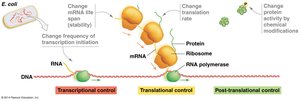
The Central Dogma of Molecular Biology
The central dogma describes the flow of genetic information within a biological system. - Transcription: DNA is transcribed into messenger RNA (mRNA). - Translation: mRNA is translated into protein. - Regulation Points: Control can occur at transcription, translation, and post-translation. 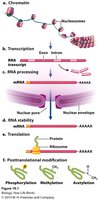
Mechanisms of Gene Expression Control
DNA Elements Involved in Expression Control
Several DNA sequences are crucial for regulating gene expression. - Promoters: DNA sequences where RNA polymerase and general transcription factors bind to initiate transcription. - Enhancers/Silencers: Regulatory DNA sequences that increase or decrease transcription rates by binding regulatory transcription factors. 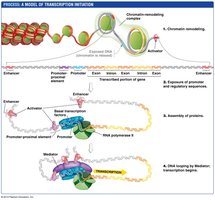
Protein Elements Involved in Expression Control
Proteins interact with DNA to regulate gene expression. - General Transcription Factors: Proteins required for transcription of all genes; bind to promoters. - Regulatory Transcription Factors: Proteins that bind to enhancers or silencers to modulate transcription of specific genes. - RNA Polymerase: Enzyme that synthesizes RNA from DNA template. 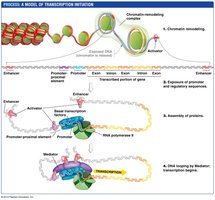
Transcription Initiation and Regulation
Transcription initiation is a complex process involving multiple DNA and protein elements. - Promoter: Every gene must have a promoter; contains sequences like the TATA box. - Enhancer: Enhancer sequences are unique to each gene and bind regulatory transcription factors. - General Transcription Factors: Common to all genes, bind to promoter. - Regulatory Transcription Factors: Bind to enhancers, vary by gene. - RNA Polymerase Complex: Recruited by general transcription factors to the promoter. 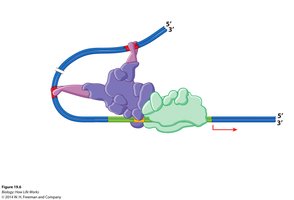
Transcriptional, Translational, and Post-Translational Control
Protein activity is regulated at multiple points: - Transcriptional Control: Determines if and when a gene is transcribed. - Translational Control: Regulates the translation of mRNA into protein. - Post-Translational Control: Modifies proteins after translation (e.g., phosphorylation, methylation, acetylation).
Studying Gene Expression
Experimental Approaches
- F.I.S.H. (Fluorescence In Situ Hybridization): Used to visualize where specific mRNAs are expressed in tissues. 
Mutations and Gene Regulation
Mutations in regulatory regions can have dramatic effects on gene expression and phenotype. - Antennapedia Mutation: In fruit flies, a mutation in the regulatory region of the antennapedia gene (a Hox gene) can cause legs to develop in place of antennae. - Hox Genes: Transcription factors that control body plan development. 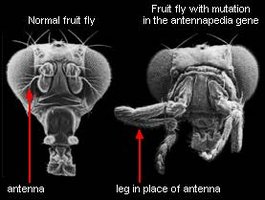
Gene Expression Differences Between Species
Comparative Gene Expression
Humans, chimpanzees, and bonobos share most of their genome, but differences in gene expression contribute to distinct phenotypes. - Homologous Genes: Genes with similar sequences across species. - Differential Expression: Genes expressed at different times or levels in different tissues. 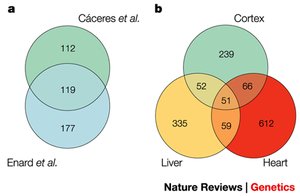
Regulatory DNA and Protein Components
Classification of DNA and Protein Elements
Component | Type |
|---|---|
Enhancer sequence | DNA |
Promoter | DNA |
Regulatory transcription factor | Protein |
General transcription factor | Protein |
RNA polymerase | Protein |
Effects of Regulatory Element Mutations
- Removing an enhancer can prevent proper transcription timing, leading to loss of gene expression when needed. - Mutations in transcription factor binding sites (enhancers) or transcription factor sequences can alter gene expression patterns.
Gene Expression Response to Signals
Hormone-Responsive Enhancers
Genes can be regulated by hormone-responsive enhancers, which activate transcription in response to specific signals. - Cortisone and Epinephrine Responsive Enhancers: Control expression of response proteins to these hormones. - Enhancer Swapping: Swapping enhancers can lead to misregulation, causing proteins to be expressed in response to the wrong signal.
Summary Table: DNA and Protein Elements in Gene Expression
Element | Made of | Function |
|---|---|---|
Promoter | DNA | Initiates transcription |
Enhancer | DNA | Regulates transcription rate |
General transcription factor | Protein | Required for transcription initiation |
Regulatory transcription factor | Protein | Modulates transcription of specific genes |
RNA polymerase | Protein | Synthesizes RNA from DNA |
Key Equations and Concepts
Central Dogma Equation
Gene Expression Regulation
Conclusion
The control of gene expression is a fundamental aspect of biology, underlying development, cellular function, and evolutionary differences. Understanding the mechanisms and components involved provides insight into how organisms respond to internal and external signals, and how mutations can lead to diverse phenotypes. Additional info: Academic context was added to clarify the role of enhancers, promoters, transcription factors, and the effects of mutations on gene expression.
