 Back
Energy and the Working Cell: Thermodynamics, ATP, and Enzyme Function
Study Guide - Smart Notes
 Tailored notes based on your materials, expanded with key definitions, examples, and context.
Energy and the Cell
Forms of Energy
Energy is the capacity to perform work and is essential for all cellular processes. There are two main forms of energy:
Kinetic Energy: The energy of motion. Examples include heat (thermal energy) and light (as in photosynthesis).
Potential Energy: Stored energy based on the location or structure of matter. Examples include water behind a dam, a cyclist at the top of a hill, and chemical energy stored in molecular bonds.
Chemical Energy is a type of potential energy stored in the bonds of molecules and is the most important form for living organisms, as it powers cellular work.
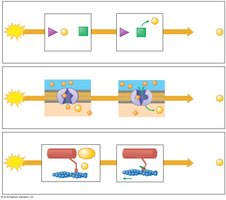
Cellular Work: Includes chemical (endergonic reactions), transport (active transport), and mechanical (movement) processes.


Energy Transformation in Cells
Cells act as chemical factories, transforming energy and matter to maintain themselves, manufacture cellular parts, and replicate. Life depends on the conversion of energy from one form to another.
Thermodynamics in Biological Systems
The Laws of Thermodynamics
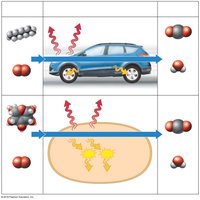
First Law: Energy in the universe is constant; it can be transferred and transformed but cannot be created or destroyed. Example: Plants transform light energy into chemical energy.
Second Law: Energy conversions increase the disorder (entropy) of the universe. Some energy is always lost as heat, the most random form of energy.
While the quantity of energy remains constant, its quality diminishes with each transformation.
Chemical Reactions and Energy
Exergonic and Endergonic Reactions
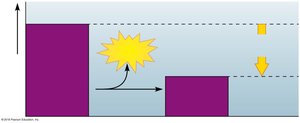
Exergonic Reactions: Release energy. The bonds of reactants contain more energy than the products. These are catabolic reactions (breakdown), such as burning, digestion, and cellular respiration.
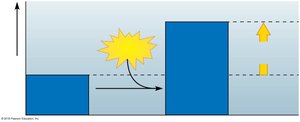
Endergonic Reactions: Require an input of energy. Products store more energy than reactants. These are anabolic reactions (synthesis), such as building polymers and photosynthesis.
Metabolism and Metabolic Pathways
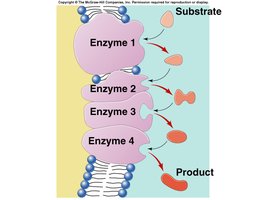
Metabolism is the sum of all chemical reactions in an organism. A metabolic pathway is a series of reactions that build up or break down complex molecules, each step catalyzed by a specific enzyme.
Energy Coupling
Cells use energy coupling to drive endergonic reactions with energy released from exergonic reactions, such as using ATP hydrolysis to power cellular work.
ATP: The Energy Currency of the Cell
Structure and Function of ATP
Adenosine Triphosphate (ATP) is the immediate source of energy for most cellular work. It consists of:
Adenine (a nitrogenous base)
Ribose (a five-carbon sugar)
Three phosphate groups
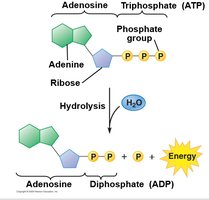

ATP Storage and Release of Energy
Energy is stored in the high-energy phosphate bonds.
ATP is unstable; phosphate groups are spring-loaded and easily released by hydrolysis.
ATP hydrolysis releases energy, converting ATP to ADP and inorganic phosphate (Pi).
Phosphorylation is the transfer of a phosphate group to another molecule, destabilizing it and making it more reactive.
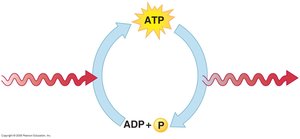
ATP Cycle
ATP is a renewable resource, regenerated by adding phosphate to ADP in an endergonic reaction, often powered by energy from cellular respiration.
Enzymes: Biological Catalysts
Activation Energy and Enzyme Function
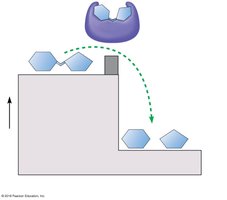
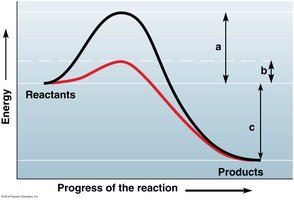
Large biomolecules are stable and require an initial input of energy (activation energy) to break bonds. Enzymes lower this activation energy, speeding up reactions without being consumed.
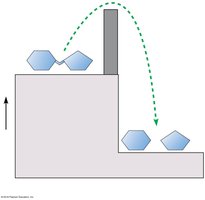
Enzyme Structure and Specificity
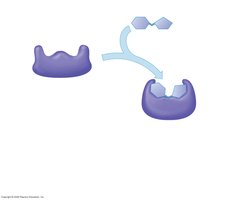
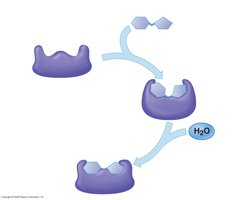
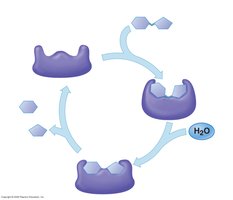
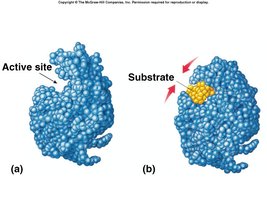
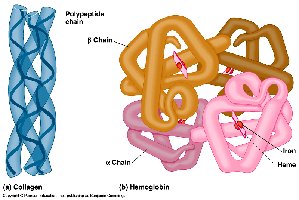
Enzymes are proteins with unique 3D shapes. The active site is where the substrate binds, forming an enzyme-substrate complex. Enzymes are highly specific for their substrates.
Mechanism of Enzyme Action
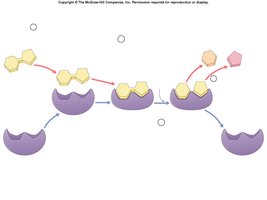
Substrate binds to the enzyme's active site (induced fit model).
Enzyme changes shape for a tighter fit, facilitating the reaction.
Products are released, and the enzyme is unchanged and reusable.
Factors Affecting Enzyme Function
Temperature: Optimal temperature increases molecular collisions. Human enzymes work best at 35–40°C. High temperatures cause denaturation; low temperatures slow reactions.
pH: Most human enzymes function at pH 6–8. Extreme pH disrupts bonds and denatures proteins. Examples: Pepsin (stomach) pH 2–3, Trypsin (intestines) pH 8.
Activators: Cofactors (inorganic ions) and coenzymes (organic molecules, often vitamins) help enzymes function.
Inhibitors: Molecules that reduce enzyme activity. Competitive inhibitors block the active site; noncompetitive inhibitors bind elsewhere, causing conformational changes.

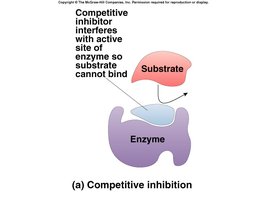
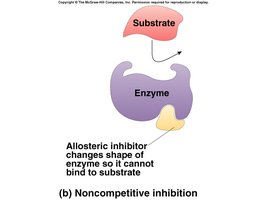
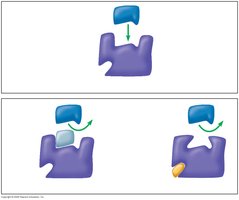
Enzyme Inhibition and Regulation
Irreversible Inhibition: Inhibitor permanently binds to enzyme, often with covalent bonds. Examples: nerve gas, insecticides.
Reversible Inhibition: Inhibitor binds temporarily with weaker attractions.
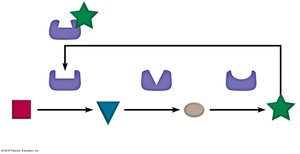
Feedback Inhibition: The final product of a metabolic pathway inhibits an earlier step, preventing unnecessary accumulation and regulating metabolism.
Tables: Enzyme Activity
The following tables illustrate how enzyme and substrate concentrations affect reaction rates:
Table A: Reaction Rate and Enzyme Concentration | ||
|---|---|---|
Lactose concentration | Enzyme concentration | Reaction rate |
10% | 0% | 0 |
10% | 1% | 25 |
10% | 2% | 50 |
10% | 4% | 100 |
10% | 8% | 200 |
Table B: Reaction Rate and Substrate Concentration | ||
|---|---|---|
Lactose concentration | Enzyme concentration | Reaction rate |
0% | 2% | 0 |
5% | 2% | 25 |
10% | 2% | 50 |
20% | 2% | 65 |
30% | 2% | 65 |
Summary
Energy transformation, ATP, and enzyme function are central to cellular processes. Understanding these concepts is essential for grasping how cells perform work, regulate metabolism, and maintain life.
