 Back
BackEssential Chemistry for Biology: Foundations for Life
Study Guide - Smart Notes
 Tailored notes based on your materials, expanded with key definitions, examples, and context.
Essential Chemistry for Biology
Biology and Society: The Importance of Water
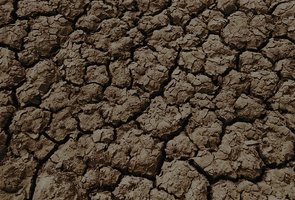
Water is fundamental to all life on Earth. Droughts, or periods of abnormally dry weather, can have devastating effects on ecosystems and human societies, leading to crop failure, water shortages, and even the collapse of civilizations. Life cannot exist without water, making it more precious than gold.

Some Basic Chemistry
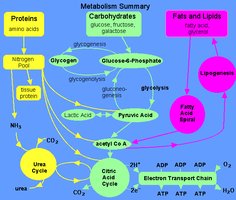
All biological systems are composed of chemical substances. Understanding biology requires a foundation in chemistry, as chemical reactions are constantly occurring within living organisms.
Matter: Elements and Compounds
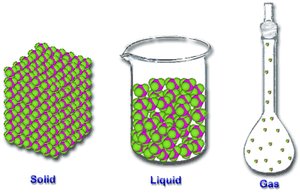
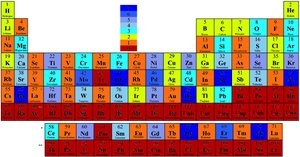
Matter is anything that occupies space and has mass. It exists in three physical states: solid, liquid, and gas. All matter is composed of chemical elements, which are substances that cannot be broken down into other substances by chemical reactions. There are 92 naturally occurring elements, all listed in the periodic table.
Elements and Compounds
Element: A pure substance consisting of only one kind of atom.
Compound: A substance containing two or more elements in a fixed ratio (e.g., H2O, NaCl).
Elements Essential to Life
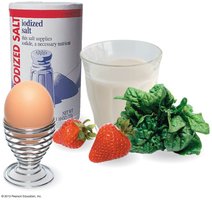
Twenty-five elements are essential for human life. Four elements—oxygen (O), carbon (C), hydrogen (H), and nitrogen (N)—make up about 96% of the weight of most cells. Other elements, such as calcium (Ca), phosphorus (P), potassium (K), sulfur (S), sodium (Na), chlorine (Cl), and magnesium (Mg), are also important. Trace elements are required in very small amounts but are essential for life (e.g., iron, iodine, fluorine).

Trace Elements
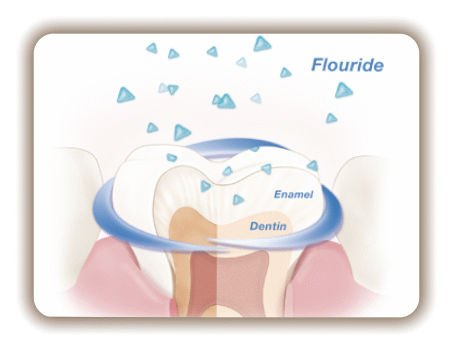
Fluorine: Added to dental products and drinking water to maintain healthy bones and teeth.
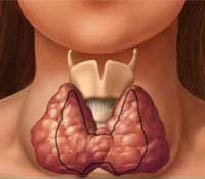
Iodine: Essential for thyroid function; deficiency can cause goiter.
The Structure of Atoms
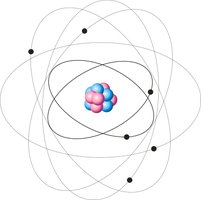
Atoms are the smallest units of matter that retain the properties of an element. They are composed of subatomic particles: protons (positive charge), neutrons (no charge), and electrons (negative charge). Protons and neutrons are packed into the nucleus, while electrons orbit the nucleus in electron shells.
Atomic Number and Mass Number
Atomic number: Number of protons in the nucleus; defines the element.
Mass number: Sum of protons and neutrons in the nucleus.
Isotopes
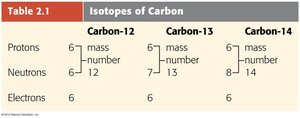
Isotopes are forms of an element with the same number of protons but different numbers of neutrons. Some isotopes are stable, while others are radioactive and decay over time, releasing particles and energy.
Carbon-12 | Carbon-13 | Carbon-14 | |
|---|---|---|---|
Protons | 6 | 6 | 6 |
Neutrons | 6 | 7 | 8 |
Electrons | 6 | 6 | 6 |
Radioactive Isotopes and Their Uses
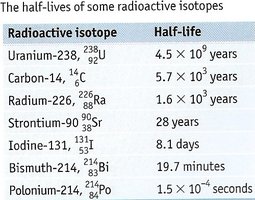
Radiometric dating: Used to estimate the age of fossils by measuring the decay of radioactive isotopes (e.g., carbon-14).
Medical applications: Used in PET scans to diagnose diseases.
Electron Arrangement and Chemical Properties
Electrons are arranged in shells around the nucleus. The chemical properties of an atom are determined by the number of electrons in its outermost shell (valence shell). Atoms with incomplete outer shells tend to react with other atoms to achieve stability.
Chemical Bonding and Molecules
Chemical bonds form when atoms interact to complete their outer electron shells. The main types of chemical bonds are ionic, covalent, and hydrogen bonds.
Ionic Bonds
Ionic bonds form when one atom donates electrons to another, resulting in oppositely charged ions that attract each other (e.g., NaCl).
Covalent Bonds
Covalent bonds form when two atoms share one or more pairs of electrons. These are the strongest chemical bonds and are responsible for holding atoms together in molecules (e.g., H2, O2, CH4).
Hydrogen Bonds
Hydrogen bonds are weak attractions between the slightly positive hydrogen atom of one molecule and the slightly negative atom of another molecule. Water molecules form hydrogen bonds due to their polarity, which is crucial for many of water's unique properties.
Chemical Reactions
Chemical reactions involve the breaking and forming of chemical bonds, resulting in the rearrangement of atoms. Reactants are the starting materials, and products are the end materials. Chemical reactions do not create or destroy matter but rearrange it.
Water and Life
Water is essential for life, making up 70–95% of cells. Its abundance on Earth is a key reason for the planet's habitability. Water's unique properties are due to its polarity and hydrogen bonding.
Water’s Life-Supporting Properties
Cohesion: Water molecules stick together, aiding in the transport of water in plants.
Surface tension: Water has a high surface tension due to hydrogen bonding.
Temperature moderation: Water resists temperature changes, helping to stabilize environments.
Ice floats: Solid water (ice) is less dense than liquid water, allowing aquatic life to survive under ice layers.
Solvent properties: Water dissolves many substances, making it the solvent of life.
Acids, Bases, and pH
Acids are substances that release hydrogen ions (H+) in solution, while bases accept H+ ions. The pH scale measures the concentration of H+ ions, ranging from 0 (most acidic) to 14 (most basic), with 7 being neutral. Buffers help maintain stable pH in biological systems by accepting or donating H+ ions as needed.
Environmental Impact: Ocean Acidification
Increases in atmospheric CO2 can lead to ocean acidification, threatening marine ecosystems and biodiversity.
Evolution Connection: The Search for Extraterrestrial Life
Water is considered essential for life as we know it. The search for extraterrestrial life often focuses on finding water on other planets, such as Mars, where evidence suggests water was once abundant.
