 Back
The Cell Cycle and Mitosis: Structure, Function, and Regulation
Study Guide - Smart Notes
 Tailored notes based on your materials, expanded with key definitions, examples, and context.
The Cell Cycle
Overview of the Cell Cycle
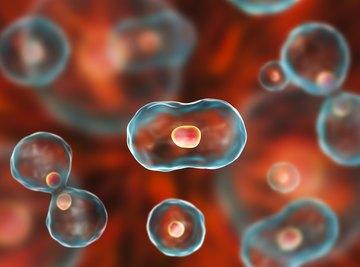
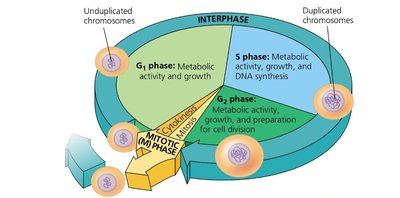
The cell cycle is an ordered sequence of events that leads to the formation of new cells. It begins with the formation of a cell from the division of a parent cell and ends with the division of that cell into two daughter cells. The cell cycle is essential for growth, development, tissue repair, and maintenance in multicellular organisms.
Cell cycle phases: Interphase (G1, S, G2) and Mitotic (M) phase
Purpose: Growth, development, replacement of damaged or old cells, and immune response
Functions of Cell Division
Cell division is crucial for several biological processes:
Growth: Increase in cell number for organismal growth
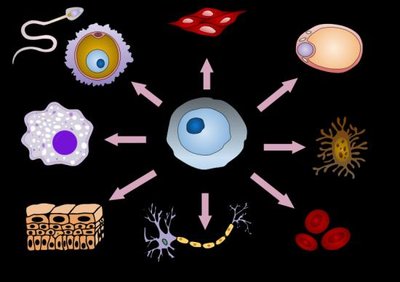
Development: Differentiation of stem cells into specialized cell types
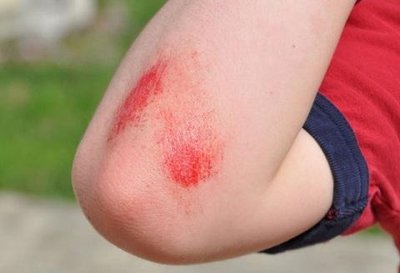
Repair: Replacement of damaged cells (e.g., healing a cut)
Maintenance: Replacement of old cells to maintain tissue health
Immune response: Production of immune cells to fight infections
Organization of Genetic Material
Genome and Chromosomes
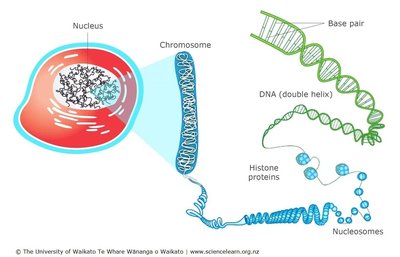
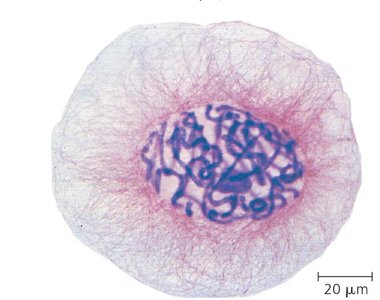
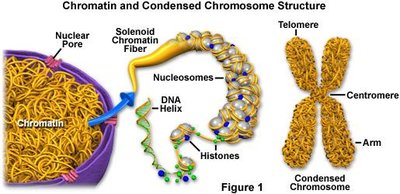
The genome is the sum total of all genetic material in an organism. In cells, the genome is organized into chromosomes, which are structures composed of DNA and associated proteins.
Chromosomes: Linear in eukaryotes, circular in prokaryotes
Histones: Proteins that package and condense DNA
Chromatin: Complex of DNA and proteins making up chromosomes
Human cells: 46 chromosomes (23 pairs)
Chromosome Replication and Structure
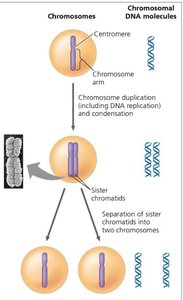
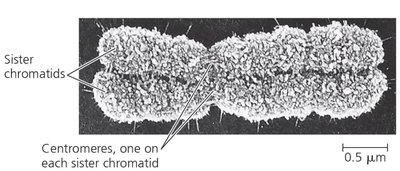
During cell division, chromatin condenses into chromosomes. Each chromosome replicates to form two identical sister chromatids, joined at the centromere.
Sister chromatids: Two identical copies of a chromosome
Centromere: Region where sister chromatids are attached
Types of Cell Division
Mitosis vs. Meiosis
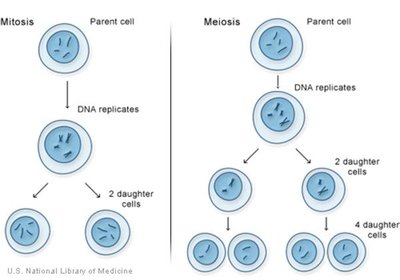
There are two main types of cell division:
Mitosis: Occurs in somatic cells, produces two genetically identical diploid cells
Meiosis: Occurs in gametes, produces four genetically unique haploid cells
Phases of the Cell Cycle
Interphase
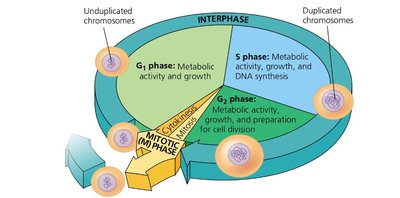
Interphase is the period when the cell is not dividing, accounting for about 90% of the cell cycle. It consists of three sub-phases:
G1 phase: Cell growth, protein synthesis, organelle duplication
S phase: DNA replication
G2 phase: Further growth, error checking, preparation for mitosis
Mitotic Phase (M Phase)
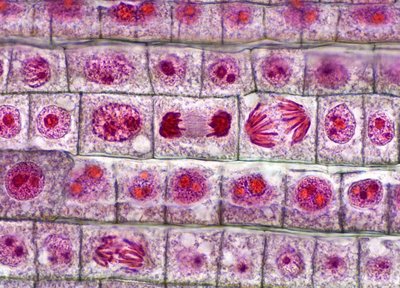
The mitotic phase includes mitosis and cytokinesis. Mitosis is divided into five stages:
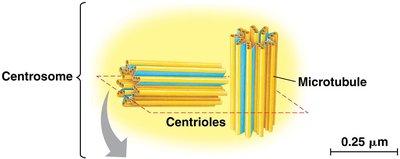
Prophase: Chromatin condenses, mitotic spindle forms, centrosomes migrate
Prometaphase: Chromosomes condense further, nuclear envelope fragments, microtubules attach to chromosomes
Metaphase: Chromosomes align at the metaphase plate, sister chromatids attach to microtubules from opposite poles
Anaphase: Sister chromatids separate and move to opposite poles, cell elongates
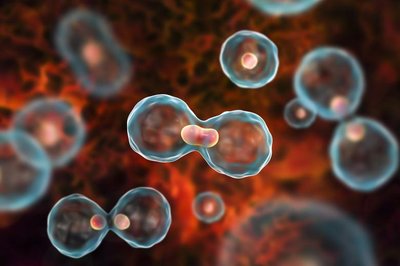
Telophase & Cytokinesis: Nuclear envelopes reform, chromosomes decondense, cytoplasm divides to form two daughter cells
Cell Cycle Regulation
Cell Cycle Control System
The cell cycle is regulated by a control system consisting of signaling proteins, including cyclins. These proteins act as checkpoints, ensuring proper progression through the cell cycle.
Cyclins: Regulate cell cycle transitions
Checkpoints: Ensure DNA is undamaged and properly replicated before division
G0 phase: Non-dividing, functional state
Consequences of Cell Cycle Abnormalities
When cell cycle regulation fails, cells may divide uncontrollably, leading to cancer.
Cancer: Disease caused by uncontrolled cell division
Tumor: Abnormal mass of tissue from unregulated division
Benign tumor: Localized, generally harmless
Malignant tumor: Can invade tissues and spread (metastasis)
Chemotherapy: Treatment targeting rapidly dividing cells
Summary Table: Cell Cycle Phases and Key Events
Phase | Main Events |
|---|---|
G1 | Cell growth, organelle duplication |
S | DNA replication |
G2 | Growth, error checking, preparation for mitosis |
Prophase | Chromatin condenses, spindle forms |
Prometaphase | Chromosomes condense, nuclear envelope fragments |
Metaphase | Chromosomes align at metaphase plate |
Anaphase | Sister chromatids separate |
Telophase & Cytokinesis | Nuclear envelopes reform, cytoplasm divides |
Key Terms and Definitions
Chromosome: Structure of DNA and proteins carrying genetic information
Chromatin: DNA-protein complex forming chromosomes
Chromatid: One of two identical halves of a duplicated chromosome
Centromere: Region joining sister chromatids
Mitotic spindle: Structure that separates chromosomes during mitosis
Cytokinesis: Division of cytoplasm after mitosis
Cyclin: Protein regulating cell cycle progression
Tumor: Mass of abnormal cells from unregulated division
Metastasis: Spread of cancer cells to distant sites
Equations and Academic Context
DNA Replication Formula
DNA replication during the S phase ensures each daughter cell receives a complete genome:
For a cell with n chromosomes, after DNA replication, there are 2n chromatids.
Cell Division Formula
Mitosis produces two genetically identical cells:
Comparison Table: Mitosis vs. Meiosis
Process | Cell Type | Number of Daughter Cells | Genetic Identity |
|---|---|---|---|
Mitosis | Somatic | 2 | Identical |
Meiosis | Gametes | 4 | Unique |
Summary
The cell cycle is fundamental to life, enabling growth, development, repair, and maintenance. Its regulation is critical for preventing diseases such as cancer. Understanding the phases, genetic material organization, and control mechanisms provides a foundation for further study in cell biology.
